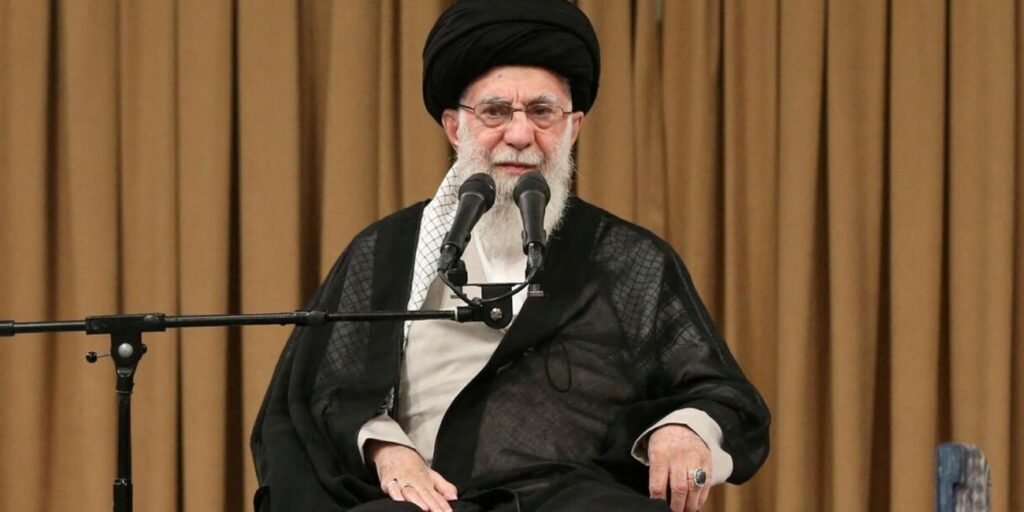
Iranian state media on Sunday confirmed that the country’s Supreme Leader, Ali Khamenei, has been killed following coordinated military strikes by the United States and Israel, marking a historic and deeply uncertain moment for the Islamic Republic.
The confirmation came after hours of speculation triggered by statements from U.S. President Donald Trump and Israeli officials. In a message posted online, Trump claimed the operation relied on advanced intelligence and tracking systems conducted in coordination with Israel. He described the killing as a turning point, saying it presented “the single greatest chance for the Iranian people to take back their Country.”
Trump also suggested that Iran’s Islamic Revolutionary Guard Corps (IRGC) and police should “peacefully merge with Iranian patriots,” framing the development as an opportunity for political transformation within Iran.
Israeli Prime Minister Benjamin Netanyahu had earlier indicated there were “growing signs” that Khamenei had not survived the strikes. Reuters, citing a senior Israeli official, reported that the Iranian leader’s body had been located before Tehran’s official confirmation.
Khamenei had served as Iran’s Supreme Leader since 1989, succeeding Ruhollah Khomeini, who led the 1979 Islamic Revolution. As Supreme Leader, he exercised ultimate authority over Iran’s government branches, commanded the armed forces, oversaw the IRGC, and functioned as the nation’s highest religious authority.
Following the announcement, Iranian authorities declared a 40-day national mourning period. His death now triggers a constitutional succession process that has long existed in theory but has never been implemented under active wartime conditions.
Analysts say contingency plans were likely prepared in anticipation of such a scenario, particularly amid escalating tensions with Washington and Tel Aviv. Speaking to Al Jazeera, policy expert Barbara Slavin suggested that a temporary governing council could assume control, noting that such a structure may already have been operating behind the scenes.
Khamenei’s death introduces profound political and security uncertainty, with regional and global leaders closely monitoring how Iran’s leadership transition unfolds amid continuing hostilities.