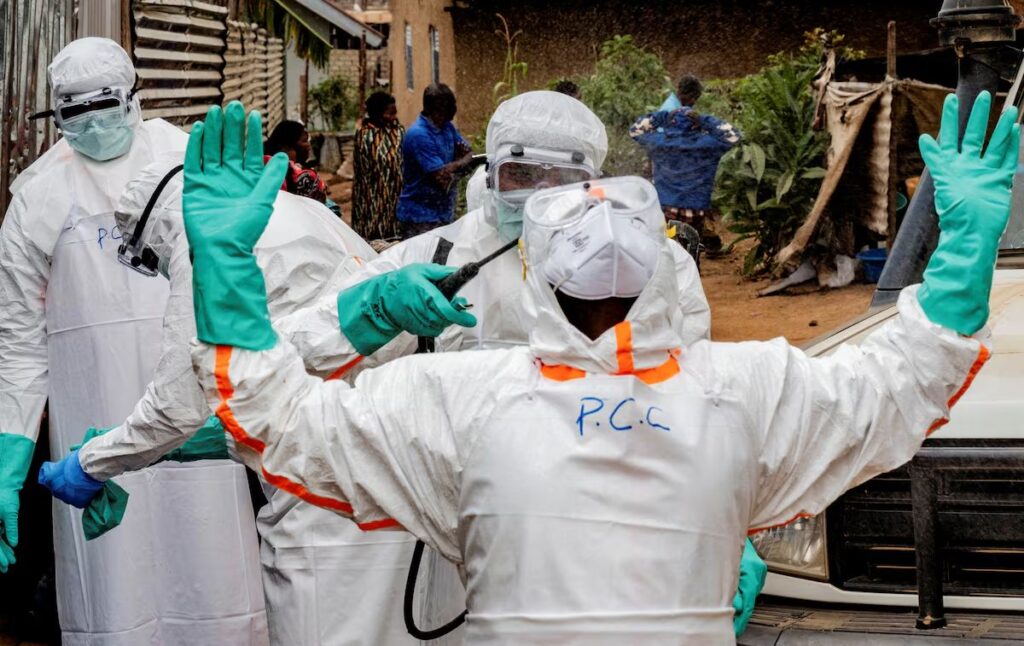
The Democratic Republic of Congo is confronting the deadliest Ebola outbreak in its history, with the death toll climbing to 2,325 and confirmed infections reaching 4,945, according to the latest government figures reported on August 16. The outbreak has now surpassed the previous national record of 2,299 deaths recorded during the 2018–2020 epidemic.
The speed and scale of the crisis have alarmed health experts. More than 2,000 people have died in less than three months, making the current epidemic the fastest-growing Ebola outbreak ever recorded and the second-deadliest Ebola outbreak globally, behind the catastrophic 2014–2016 West African epidemic, which killed more than 11,000 people.
What makes the situation particularly dangerous is the virus itself. The outbreak is being driven by the Bundibugyo strain of Ebola, a relatively rare form of the virus for which no approved vaccine or specific treatment currently exists. Experimental vaccines and therapies are being evaluated, but they remain at an early stage.
The fatality rate has also risen sharply. Nearly 46 per cent of confirmed patients are now dying, a figure that experts say does not necessarily mean the virus has become inherently more lethal. Instead, delayed diagnosis and treatment are playing a devastating role, with many patients reaching medical facilities when the disease is already advanced.
The crisis is unfolding in a region already battered by armed conflict, displacement, damaged infrastructure and fragile health services. Insecurity has made it harder for health workers to reach affected communities, while poor roads, shortages and community mistrust have complicated surveillance, contact tracing and treatment.
The World Health Organization has warned that the outbreak began months before it was officially recognised, meaning the virus had already been circulating silently before authorities declared the epidemic on May 15. Early cases were reportedly mistaken for illnesses such as malaria or typhoid, allowing transmission to continue unchecked.
The numbers now tell a grim story: Congo is not merely fighting another Ebola outbreak; it is fighting an epidemic that is spreading faster than the response can contain it.
And with no licensed vaccine or treatment specifically approved for the Bundibugyo virus, every delay in detecting, isolating and treating a patient could mean another life lost.
The immediate challenge is therefore not simply stopping Ebola. It is reaching people before Ebola reaches its final stage.