President Donald Trump has ordered a reduction in U.S. participation in major joint military exercises with South Korea, a move that has immediately raised questions about the future of America’s security commitment to Seoul and whether Trump’s personal diplomacy with North Korean leader Kim Jong Un is reshaping U.S. strategy on the Korean Peninsula.
Trump announced the decision as the annual Ulchi Freedom Shield exercises were set to begin. The joint drills, scheduled to run from August 17 to August 27, are designed to strengthen the ability of U.S. and South Korean forces to respond to a potential North Korean attack.
But Trump said the exercises are too expensive and send an unnecessarily hostile message to Pyongyang.
The president also pointed to what he described as South Korea’s refusal to support the United States in dealing with Iran, adding a new source of friction to an already complicated relationship between Washington and Seoul.
Trump said he had asked South Korean President Lee Jae Myung whether Seoul would assist the United States in efforts involving Iran, but that South Korea effectively responded, “No thanks!”
The comment has intensified speculation that the military decision is about more than the cost of exercises. Trump has repeatedly pressed U.S. allies to contribute more to American strategic priorities, and his latest remarks suggest that South Korea’s position on Iran has become part of the broader calculation.
But perhaps the most politically explosive element of Trump’s announcement was his reference to Kim Jong Un.
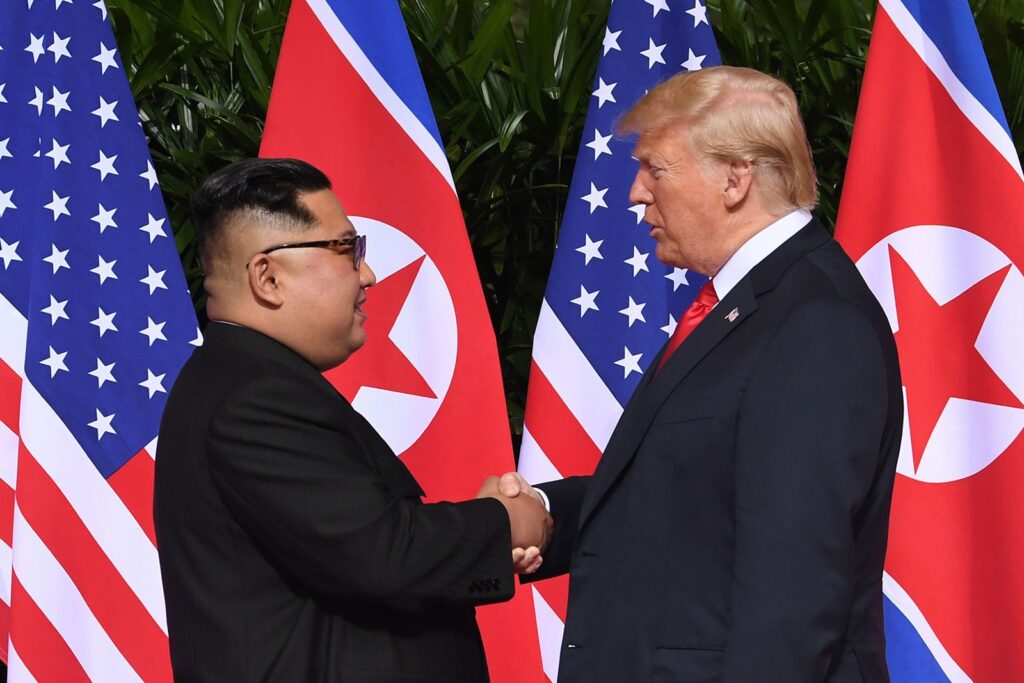
Trump said he has a “great” relationship with the North Korean leader and argued that Kim has been respectful toward him during his presidency. He has previously sought direct diplomacy with Kim, making history by becoming the first sitting U.S. president to meet a North Korean leader.
Trump has also previously criticised U.S.-South Korean military exercises as expensive and provocative, particularly during his first administration when Washington and Seoul reduced or suspended some major exercises amid diplomatic efforts with Pyongyang.
The latest reduction therefore revives a fundamental debate over Trump’s approach to North Korea: Can personal diplomacy with Kim Jong Un produce lasting security, or does reducing military exercises risk weakening deterrence?
South Korea, meanwhile, has indicated that the military exercises will proceed. The reduction concerns the level of American participation rather than an outright cancellation of the drills.
That distinction is important because the exercises are a central part of the U.S.-South Korean military alliance. They allow the two countries to practise command structures, crisis responses and coordinated operations in the event of a conflict.
The decision comes as North Korea continues to maintain its nuclear weapons programme and ballistic-missile capabilities. Pyongyang has long condemned U.S.-South Korean military exercises as preparations for an invasion, while Washington and Seoul have consistently described them as defensive exercises intended to strengthen deterrence.
North Korea has also deepened its military relationship with Russia, including providing military support for Moscow’s war in Ukraine. That cooperation has added another layer of concern for the United States and its allies.
Against that backdrop, Trump’s decision to reduce military drills with South Korea is likely to attract intense scrutiny.
Supporters of the move can argue that reducing expensive exercises could lower tensions and create more room for diplomacy with Pyongyang. Critics, however, may see the decision as a dangerous concession to North Korea — particularly when Kim’s regime has not abandoned its nuclear arsenal.
The controversy is further fuelled by Trump’s own explanation.
The U.S. president is simultaneously criticising the cost of military exercises, accusing South Korea of refusing to help Washington on Iran, and emphasising his strong personal relationship with the leader of the country those exercises are designed to deter.
That combination makes the announcement far more consequential than a simple adjustment to military training.
For Seoul, the message is equally significant: America’s military commitment remains in place, but the Trump administration appears increasingly willing to reconsider how that commitment is implemented — and to tie alliance decisions to wider American foreign-policy demands.
For Pyongyang, the development offers something it has repeatedly demanded: less visible U.S. military pressure on the Korean Peninsula.
Whether that creates an opening for renewed Trump-Kim diplomacy or produces anxiety in Seoul over the reliability of Washington’s security commitment remains to be seen.
But one thing is already clear: Trump’s latest move has placed his relationship with Kim Jong Un, South Korea’s alliance obligations and America’s wider global strategy on a collision course — with the Korean Peninsula once again at the centre of a major geopolitical gamble.