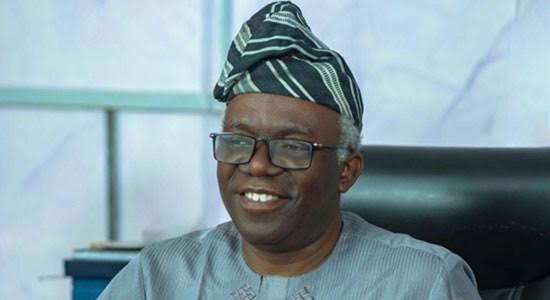
Human rights lawyer and Senior Advocate of Nigeria, Femi Falana, SAN, has declared that the 2027 general election must produce far more than a change of political actors, insisting that Nigeria needs a fundamental reset anchored on security, justice, constitutional governance and human dignity.
Speaking at a memorial lecture in honour of the late Chief Alao Aka-Bashorun, Falana said the country stands at a decisive moment in its democratic journey, warning that another election cycle without meaningful reforms would only deepen the suffering of millions of Nigerians.
“As Nigeria approaches the 2027 general elections, the country stands at a defining constitutional and democratic moment,” he said.
“The challenge before the nation extends far beyond the periodic conduct of elections or the emergence of new political leaders. It is fundamentally about whether Nigeria can build a democratic order founded on justice, accountability, the rule of law, respect for human rights, and institutions that genuinely serve the people.”
Falana maintained that the foremost test of any government is its ability to guarantee the safety of its citizens, stressing that insecurity has become both a constitutional failure and a grave human rights crisis.
“No democratic society can flourish while citizens continue to live under the constant threat of violence, kidnapping, terrorism, communal conflict and criminality,” he said.
“The protection of lives and property remains the foremost constitutional responsibility of government.”
According to him, widespread insecurity has forced communities from their ancestral homes, destroyed livelihoods, shut down schools and denied millions of Nigerians the basic freedoms promised by democracy.
“Insecurity is not merely a security challenge; it is a human rights challenge,” Falana declared.
“A nation where citizens cannot travel safely, farm safely, learn safely or conduct business safely cannot be said to have fulfilled the minimum obligations of democratic governance.”
The senior advocate also delivered a blistering assessment of the country’s economic realities, describing poverty and deprivation as the most visible manifestations of failed governance.
He lamented soaring food prices, inaccessible healthcare, unaffordable housing and rising youth unemployment, arguing that such conditions are unacceptable in a nation blessed with vast natural and human resources.
“Nigeria is abundantly blessed with natural and human resources, yet millions of citizens remain trapped in conditions of severe deprivation,” he said.
“How can a nation so richly endowed produce so much poverty?”
Falana attributed the contradiction to institutional decay, structural inequality and the diversion of public resources away from the welfare of ordinary citizens.
On education, he warned that Nigeria is endangering its future by allowing millions of children to remain outside the school system, noting that attacks on educational institutions and the abduction of students have worsened the crisis.
“A nation that neglects education mortgages its future,” he said.
Falana further argued that true national progress cannot be measured solely by economic statistics but by the extent to which governments uphold civil liberties, guarantee justice and protect human dignity.
“Civil liberties, socio-economic rights and meaningful access to justice are not peripheral democratic values but essential conditions for national development,” he stated.
“A nation’s progress cannot be measured solely through economic indicators. It must equally be assessed by the extent to which it safeguards the dignity, freedoms and rights of its citizens.”
He challenged Nigeria’s political elite to confront the country’s problems with sincerity and courage, insisting that the nation’s crises persist not because solutions are unavailable but because of a lack of political will.
“The challenges confronting Nigeria are well known,” Falana said.
“What has consistently been lacking is not knowledge of the problems but the political will to address them through sustained institutional reforms and faithful implementation of the Constitution.”
The human rights lawyer urged Nigerians to treat the 2027 election as an opportunity for national renewal rather than another routine political exercise.
“2027 should represent far more than another electoral cycle,” he said.
“Rather, it should mark the beginning of a renewed commitment to constitutional governance and democratic accountability.”
For Falana, the verdict is clear: the 2027 election must deliver security, restore constitutional order, end economic oppression and build a nation where the dignity and rights of every citizen are protected.