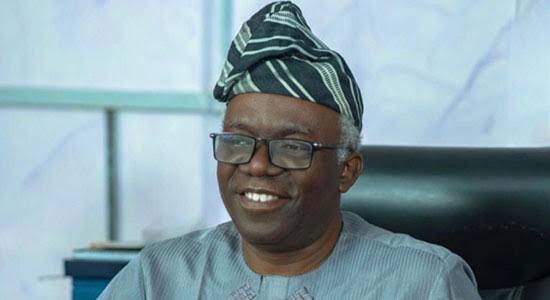
Human rights lawyer and Senior Advocate of Nigeria (SAN), Femi Falana, has raised the alarm over what he described as a systematic assault on civil liberties in Nigeria, warning that citizens who exercise their constitutional rights to protest and criticise political leaders are increasingly being prosecuted under terrorism, treason and cybercrime laws.
Falana made the remarks on Saturday while presenting a paper titled, “2027: Building A Nation Where No Man Is Oppressed,” at a memorial event held in honour of the late Chief Gani Alao Aka-Bashorun, the renowned legal icon and foremost defender of constitutionalism and human rights.
The senior advocate urged the Attorney-General of the Federation and Minister of Justice, Lateef Fagbemi, to caution the Nigeria Police Force and other security agencies against treating criticism of public officials as a criminal offence, insisting that dissent remains an indispensable pillar of democracy.
According to Falana, the country’s civic space is shrinking as state institutions increasingly deploy harsh laws to suppress opposition voices and punish citizens for expressing legitimate grievances.
“In Nigeria of 2027, citizens who take part in protests against unpopular government policies are charged with terrorism and treasonable felony,” Falana said. “Others who criticise political leaders are charged with cyberstalking, or threat to public order under the Cybercrimes Act.”
He maintained that the criminalisation of dissent poses a direct threat to constitutional governance and democratic stability.
“The strength of a democracy is measured not by how it treats its supporters but by how it treats dissenting voices,” he said. “History teaches us that societies that suppress dissent inevitably weaken democratic institutions and endanger constitutional governance.”
Falana called on the Attorney-General, as the nation’s chief law officer, to formally remind police authorities that robust criticism, no matter how harsh, does not amount to criminal conduct.
Citing a 1959 judicial precedent, he noted that even strong personal insults had been held by the courts to constitute mere vulgar abuse rather than actionable defamation, stressing that democratic leaders must be prepared to tolerate scrutiny and criticism from the people they govern.
The legal luminary warned that institutions established to serve and protect citizens were increasingly being weaponised for political purposes, eroding public trust and undermining the rule of law.
“Institutions that ought to be impartial are frequently subjected to political interference,” Falana said. “Regulatory agencies, security institutions and even democratic structures are often deployed in ways that undermine public confidence and weaken constitutional governance.”
He further argued that the exclusion of young people, women and persons living with disabilities from meaningful participation in governance had deepened the nation’s democratic deficit and weakened public confidence in state institutions.
“Democracy loses legitimacy when substantial sections of society are excluded from meaningful participation,” he stated.
Falana insisted that Nigeria’s problems were neither mysterious nor insurmountable, adding that what the country lacked was the political will to implement genuine institutional reforms and uphold constitutional principles.
“The challenges confronting Nigeria are well known,” he said. “What has consistently been lacking is not knowledge of the problems but the political will to address them through sustained institutional reforms and faithful implementation of the Constitution.”
He urged political leaders to make 2027 a defining moment in Nigeria’s democratic journey by building a nation where no citizen is oppressed, persecuted or silenced for exercising constitutionally guaranteed freedoms.
His intervention comes amid growing concerns over the use of anti-terrorism and cybercrime laws against activists, protesters and government critics, a development many civil rights advocates have described as a dangerous erosion of democratic freedoms and the rule of law.