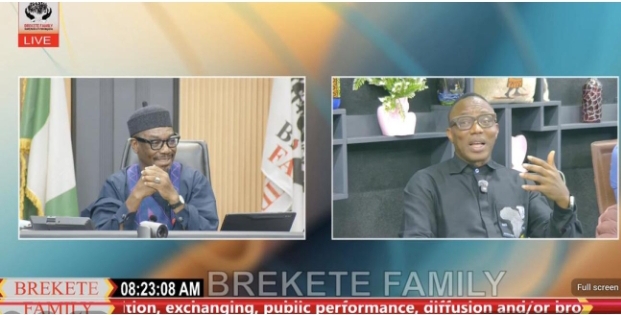
The presidential candidate of the African Action Congress (AAC) and human rights activist, Omoyele Sowore, has criticised Nigeria’s military leadership over what he described as the growing involvement of senior military officers in private businesses and real estate investments while insecurity continues to threaten lives and property across the country.
Sowore argued that senior military officers should concentrate on their constitutional responsibility of defending Nigeria and protecting its citizens rather than pursuing commercial interests, particularly as kidnapping, banditry, terrorism and other security threats continue to spread across different parts of the country.
The activist made the remarks on Wednesday during an appearance on the Berekete Family programme, where he discussed Nigeria’s deteriorating security situation, the military’s preparedness for modern warfare, the country’s enormous natural resources and the alleged diversion of mineral wealth by powerful individuals.
Speaking about the commercial interests of senior military officers, Sowore recalled an incident involving a retired or serving major general who reportedly purchased property and invested in a hotel in Dubai but allegedly became a victim of a questionable property arrangement.
According to him, the military officer bought an apartment believing that he had acquired an exclusive property, only to discover that the same apartment was reportedly being rented out to different occupants.
Sowore questioned how an officer of such seniority could fall victim to such an arrangement, describing the incident as a reflection of what he considered a disturbing shift in the priorities of Nigeria’s military establishment.
“I do not believe that somebody who is a major general in the army should fall for that kind of scam. But that tells you where we are,” he said.
He further alleged that several senior military officers had become increasingly interested in business ventures and property investments, particularly in Abuja, instead of dedicating their attention to the country’s worsening security challenges.
The AAC presidential candidate maintained that military service should not become an avenue for accumulating private wealth at the expense of national security, insisting that those occupying leadership positions in the armed forces must prioritise the protection of lives and property.
Sowore also condemned what he described as Nigeria’s outdated approach to tackling insecurity, arguing that the country was falling behind technologically advanced nations that have embraced artificial intelligence, drones and sophisticated surveillance systems to combat criminal activities.
He said conventional security operations, which largely involve deploying soldiers and police officers into dangerous locations without adequate technological support, were no longer sufficient to confront the increasingly sophisticated threats facing the country.
According to him, several countries now deploy surveillance drones and artificial intelligence systems to monitor criminal movements, identify kidnapping networks, track suspected terrorists and map areas affected by insecurity.
He explained that modern surveillance technology could allow security agencies to monitor suspected kidnappers and criminal groups even at night, making it more difficult for criminals to escape detection.
“The world is now driven by artificial intelligence. It is driven by drones and a lot of technologies. You can map where insecurity is happening and send drones there at night.
“Even when kidnappers are moving, drones can follow them. If you shoot at a drone, it can manoeuvre to avoid the bullets. We have not reached that level,” he said.
Sowore linked Nigeria’s technological shortcomings to the persistent kidnapping crisis, highlighting the difficulties families of abducted victims face when kidnappers demand millions of naira in ransom before releasing their relatives.
He criticised a situation where families are left to negotiate with criminal gangs and struggle to raise ransom payments while security agencies appear unable to provide sufficient assistance or guarantee the safe rescue of victims.
He insisted that Nigeria must urgently invest in modern security technologies and intelligence-driven operations rather than continue relying predominantly on conventional military and police deployments.
According to him, the country’s failure to embrace technological advancements has placed it at a disadvantage compared with other nations confronting similar security challenges.
“The world has left us behind. That is the truth we do not want to tell ourselves. We are behind in almost every index through which the world measures development,” he said.
The activist also questioned why Nigeria, despite its enormous natural resources and favourable geographical position, continues to struggle with widespread poverty, poor infrastructure, unemployment and economic hardship.
He argued that the country’s location around the Equator and the Greenwich Meridian, coupled with its abundant mineral deposits, should give it significant economic advantages capable of supporting national prosperity.
Sowore identified lithium deposits in Nasarawa State, gold in Zamfara State, crude oil in the Niger Delta and other mineral resources spread across the country’s 36 states as examples of the wealth that could drive economic development.
He, however, lamented that several of these resources remain unexplored, inadequately documented or exploited without the proceeds translating into meaningful improvements in the lives of ordinary Nigerians.
According to him, Nigeria’s mineral wealth should be reflected in better public services, improved infrastructure, effective security, higher wages and increased economic opportunities for citizens.
Sowore alleged that illegal mining and the diversion of mineral resources had enabled powerful individuals, including former military officers and former governors, to accumulate enormous wealth at the expense of the country.
He specifically claimed that small aircraft were being used to transport gold from parts of Zamfara and Katsina states to Abuja, sometimes under the cover of darkness, without adequate monitoring by relevant security and aviation authorities.
The activist alleged that some of the aircraft operated below radar detection, allowing gold extracted from the two states to be transported without proper government oversight or accountability.
He maintained that the mineral resources were subsequently diverted into private hands instead of being adequately accounted for as part of Nigeria’s national revenue.
Sowore also referenced an aircraft that reportedly crashed, suggesting that incidents of such nature could expose the movement of illegally mined mineral resources.
He challenged Nigerians to pay closer attention to the country’s mineral wealth and the international value of gold, arguing that the revenue generated from properly managing these resources could substantially transform the national economy.
The AAC presidential candidate further questioned why successive governments continue to suggest that significantly increasing workers’ salaries would bankrupt the country when, according to him, enormous national resources are allegedly being diverted through corruption and illegal activities.
He argued that Nigeria possesses the financial capacity to pay public workers substantially better wages, including police officers, if its natural resources and public revenues are transparently managed.
Sowore maintained that the country’s economic difficulties cannot be separated from corruption, resource theft and the failure of successive administrations to ensure that national wealth benefits the wider population.
He stressed that Nigeria’s problems are not necessarily caused by a shortage of natural resources or economic potential but by the failure of those entrusted with public responsibilities to manage the country’s wealth in the interest of its citizens.
He called attention to the contradiction between Nigeria’s enormous natural endowments and the persistent economic hardship experienced by millions of citizens, arguing that the country’s resources should be sufficient to support improved living conditions if properly managed.