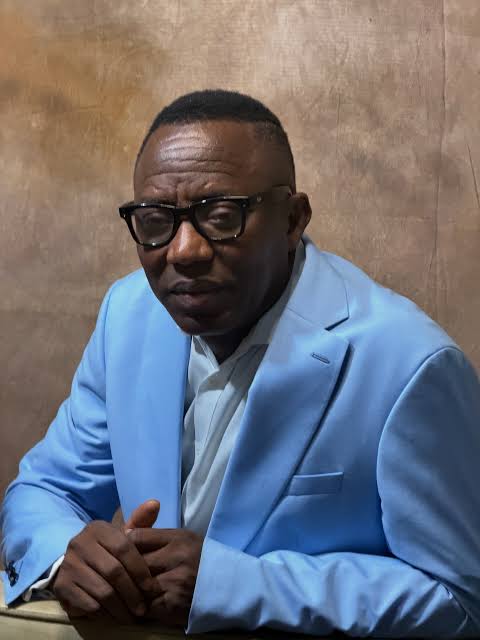
Human rights activist and presidential candidate of the African Action Congress (AAC), Omoyele Sowore, has condemned the widening economic inequality in Nigeria, revealing that thousands of houses in affluent neighbourhoods of Abuja, particularly Asokoro, remain unoccupied while millions of Nigerians struggle to secure decent and affordable accommodation.
Sowore described the situation as a reflection of Nigeria’s deep-rooted economic injustice, arguing that the concentration of wealth and residential properties in the hands of a few wealthy and politically connected individuals exposes the failure of successive governments to manage the country’s resources in the interest of ordinary citizens.
The activist made the remarks on Wednesday during an appearance on the Berekete Family programme, where he addressed Nigeria’s housing crisis, corruption, political accountability, unequal access to public institutions and the growing economic hardship confronting citizens.
Speaking about the housing situation in the Federal Capital Territory, Sowore said the existence of thousands of vacant residential properties in wealthy neighbourhoods was particularly disturbing given the number of Nigerians who could not afford decent accommodation.
Recounting an experience during his detention in 2019, the AAC presidential candidate said a security operative at the facility once questioned why he frequently looked through the window.
According to Sowore, he explained that he was simply observing his surroundings before the operative informed him that a significant number of houses in Abuja, especially in Asokoro, were unoccupied.
He said the operative disclosed that thousands of properties in the neighbourhood belonged to wealthy individuals who rarely occupied them, raising questions about the growing concentration of residential properties among a small group of affluent Nigerians.
Sowore argued that while influential individuals could acquire several houses and leave them vacant, millions of ordinary Nigerians continued to face difficulties finding affordable places to live.
He maintained that properly planned residential developments and responsible management of national resources could provide accommodation for thousands of homeless and financially disadvantaged Nigerians.
The activist also raised concerns over the astronomical cost of acquiring land in Abuja, observing that undeveloped plots in certain parts of the capital could cost billions of naira even before prospective homeowners commenced construction.
He accused the country’s land administration system of favouring wealthy and politically connected individuals, alleging that influential Nigerians enjoyed preferential treatment in land allocation and the processing of building approvals.
According to him, ordinary citizens without political connections could spend several months struggling to obtain land documents and secure necessary approvals from relevant authorities, including the Federal Capital Development Authority (FCDA), while individuals with influence often enjoyed faster administrative processes.
Sowore said the disparity demonstrated how public institutions and government procedures had increasingly become instruments that benefited the wealthy at the expense of ordinary Nigerians.
He argued that access to land and other essential public services should not depend on an individual’s financial strength, political affiliations or connections within government circles.
Extending his criticism to Nigeria’s justice system, the activist questioned the unequal administration of bail, alleging that influential individuals often had the financial resources and necessary documentation to secure their release from detention, while less privileged Nigerians remained behind bars for months because they could not meet the financial and administrative requirements.
He said the situation reflected a broader pattern of inequality in which wealth and influence could determine how quickly individuals navigated legal and administrative processes.
Sowore maintained that access to justice and fundamental rights should be guaranteed to every Nigerian, irrespective of social status, financial capacity or political connections.
The activist also blamed the country’s worsening condition on what he described as a culture of defending politicians based on personal benefits, ethnic considerations and financial interests rather than their performance in public office.
He said some Nigerians had become unwilling to question political leaders because they benefited from appointments, government contracts, financial inducements and other forms of political patronage.
According to him, such arrangements had weakened citizens’ willingness to hold elected officials accountable, creating an environment where political leaders could escape criticism regardless of their actions or alleged failures.
Sowore further alleged that some politicians and influential political actors sponsored online support networks by paying individuals to operate social media accounts, promote favourable narratives and attack those who criticised their activities.
He said the practice contributed to the manipulation of public opinion and prevented Nigerians from having honest discussions about the country’s political and economic challenges.
The AAC presidential candidate urged citizens to reject financial inducements, ethnic sentiments and political affiliations that prevented them from questioning individuals entrusted with public resources.
He maintained that Nigerians should assess political leaders based on their performance and willingness to address the country’s problems rather than the personal benefits their supporters received from them.
Returning to the issue of property ownership and housing inequality, Sowore criticised wealthy individuals who acquired numerous residential properties, deployed security personnel to protect them and subsequently left the houses unoccupied.
He argued that the enormous financial resources spent acquiring, maintaining and securing properties that were rarely used could have been channelled into productive investments capable of addressing housing shortages and other pressing social welfare needs.
He said Nigeria would continue to experience widespread poverty, insecurity and deprivation if the country failed to confront the structures that allowed a privileged few to accumulate enormous wealth while the majority struggled to meet basic needs.
Sowore insisted that meaningful national development would require citizens to reject political patronage, demand transparency and hold public officials accountable for the management of national resources.
During the programme, the activist also spoke about his longstanding relationship with the host, explaining that they had known each other since around 2018 or 2019, when he began his presidential campaign.
He described his appearance as part of that continuing relationship and an opportunity to discuss Nigeria’s challenges, the country’s political direction and possible solutions to the problems confronting its citizens.