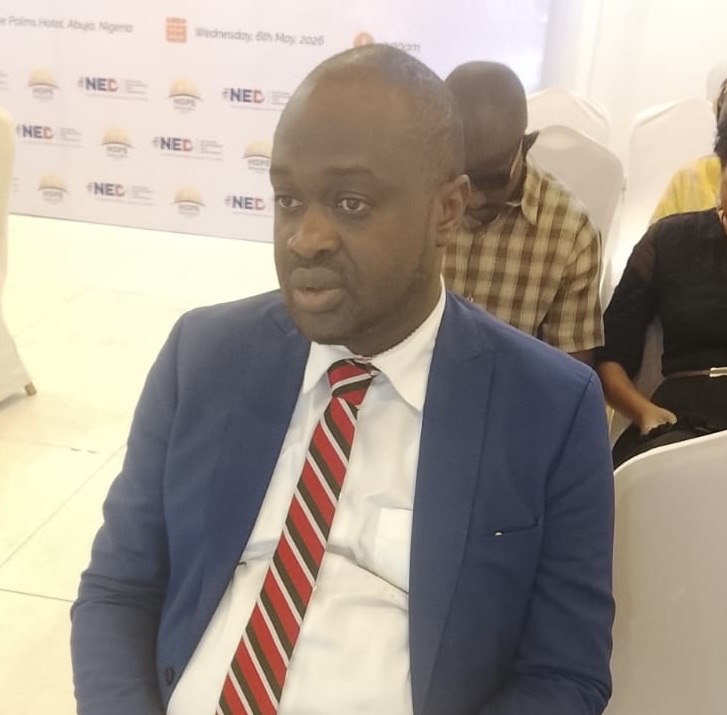
On or about 17 August 2026, the Edo State House of Assembly witnessed a rapid sequence of events that has once again exposed the recurring abuse of legislative power in Nigeria. Hon. Blessing Sheriff Agbebaku, the immediate past Speaker representing Owan West Constituency, resigned his speakership amid reported moves by a majority of members (reportedly 17 of 24) to commence impeachment proceedings over allegations of leadership failure, prolonged adjournments, and financial impropriety (including purported inflation of vehicle procurement costs). Within the same sitting, Hon. Yekini Idiaye (also referred to as Idaiye or Idiaye), representing Akoko-Edo Constituency I, was elected the new Speaker. In his maiden address, the new Speaker promptly announced the indefinite suspension of Agbebaku (and the Majority Leader) pending investigation, directed the handover of official documents, dissolved political offices attached to the former Speaker, and called on the police to enforce the directive.
This action is not merely politically motivated; it is illegal, unconstitutional, null and void. It offends the 1999 Constitution of the Federal Republic of Nigeria (as amended), established case law of the superior courts, the limited disciplinary framework under the Legislative Houses (Powers and Privileges) Act 2017, principles of fair hearing, and the fundamental democratic right of constituents to representation. As a human-rights lawyer and counsel who has consistently challenged such excesses—most notably in the ongoing National Assembly petitions concerning the prolonged suspensions of members of the Benue and Zamfara State Houses of Assembly.
I restate the settled position of Nigerian law: a State House of Assembly has no power to suspend one of its elected members in the manner done here.
Constitutional Provisions Offended
The Constitution is supreme (Section 1(1) and (3)). Section 90 establishes a House of Assembly for each State. Section 91 provides for its composition. Critically, Section 101 grants a House of Assembly power to “regulate its own procedure, including the procedure for summoning and recess of the House,” but this power is expressly “Subject to the provisions of this Constitution.” Standing Orders or internal resolutions cannot override the Constitution.
The Constitution exhaustively provides the circumstances under which a member of a State House of Assembly may vacate his or her seat in Section 109(1). These include: resignation; becoming a member of another legislative house; becoming President, Governor, etc.; being sentenced to death or imprisonment; becoming of unsound mind; bankruptcy; defection (except in cases of division or merger under the proviso); or recall under Section 110. There is no provision for “suspension” by the House or the Speaker. Section 110 governs recall by constituents through a petition to the Independent National Electoral Commission—an elaborate, people-driven process, not an internal legislative fiat.
Section 111 places the determination of salaries and allowances of members under the Revenue Mobilisation Allocation and Fiscal Commission. A House cannot lawfully withhold or interfere with these entitlements. By suspending Agbebaku and directing the handover of documents and police enforcement, the House has effectively denied the people of Owan West Constituency their elected representative in the legislative process, in violation of the democratic principles underlying Sections 14(1) and (2)(a)–(c) of the Constitution (participation and representation) and the right to fair hearing under Section 36(1).
Any Standing Orders of the Edo State House of Assembly that purport to authorise indefinite or prolonged suspension without strict constitutional grounding are void to the extent of their inconsistency with the Constitution.
Case Law: The Settled Position Against Suspension of Elected Legislators
Nigerian courts have repeatedly nullified such suspensions.
The locus classicus is Speaker, Bauchi State House of Assembly v. Hon. Rifkatu Samson Danna (2017) 49 WRN 82 (also reported in related proceedings as Bauchi State House of Assembly & Ors v. Guyaba (2017) LPELR-43295 (CA)). The Court of Appeal held that the indefinite suspension of an elected member was illegal and unconstitutional. A lawmaker is not an employee of the House and cannot be suspended or have entitlements withheld. The Court emphasised that such action breaches the right of the constituency to representation and constitutes “the tyranny of the majority against an elected minority.” No Standing Orders can derogate from rights conferred by the Constitution, particularly under Section 111 of constitution.
This principle has been applied consistently:Suspension of Hon. Dino Melaye and other House of Representatives members was declared illegal and unconstitutional by the Federal High Court, with orders for payment of withheld salaries.
The 180-day suspension of Hon. Abdulmumin Jibrin was nullified.
Suspensions of Senator Ali Ndume and Senator Ovie Omo-Agege were similarly struck down.
High Courts in Imo, Kwara, and other States have quashed suspensions of assembly members for want of fair hearing, excess of statutory limits, and constitutional breach (e.g., recent Kwara High Court nullification of a three-month suspension for procedural and statutory non-compliance).
Earlier Edo-related litigation, such as aspects of Hon. Godwin Adenomo v. The Speaker, Edo State House of Assembly & Ors, has questioned the power to suspend without just cause and fair hearing under Sections 36, 91, 98, 100, 104, and 109 of the Constitution and House Rules.
Courts have held that even where limited disciplinary power exists, it cannot be used to disenfranchise constituents or extend beyond the narrow statutory window. Indefinite suspension “pending investigation,” imposed immediately upon a leadership change and without demonstrated compliance with fair-hearing requirements, falls squarely within the prohibited category.
Statutory Limits: Legislative Houses (Powers and Privileges) Act 2017
The Act (which repealed the earlier Cap L12 LFN) provides limited powers. Section 14 addresses contempt. Where a member is guilty of contempt, the House may by resolution reprimand or suspend the member, but the period “shall not extend beyond the last day of the meeting next following that in which the resolution is passed, or of the session in which the resolution is passed, whichever shall first occur.” A suspended member is excluded from the Chamber and precincts (Section 15). This is a narrow, time-bound disciplinary tool, not a general power of indefinite suspension pending investigation of alleged “poor leadership” or “corruption” after a member has already resigned the speakership. Allegations of financial impropriety, if any, are properly matters for investigation by appropriate agencies or through due process within the House committee system with full fair hearing—not summary suspension by the new Speaker.
Older state laws (such as the Bendel State Legislative Houses (Powers and Privileges) Law applicable historically to Edo) similarly limited suspension duration. None authorises the action taken against Agbebaku.
Fair Hearing and Due Process
Section 36(1) of the Constitution guarantees fair hearing. The speed of the suspension—barely an hour after resignation and election of the new Speaker—raises serious questions about notice, opportunity to be heard, and investigation. Courts have consistently voided suspensions where these elementary requirements were absent.
What Samuel Ihensekhien Junior Has Done in Zamfara and Benue suspended member case:
I have not remained a spectator to these recurring abuses. As counsel to the petitioners under the aegis of Guardians of Democracy, I led a team of lawyers before the House of Representatives Committee on Public Petitions concerning the suspension of approximately 13 members of the Benue State House of Assembly and about 10–11 members of the Zamfara State House of Assembly (some suspended for periods running into 16 months, allegedly at the instance of the executive). I urged accelerated hearing, cited authorities establishing that the National Assembly retains residual and investigative powers under the Constitution even where related matters may be in court (absent a subsisting injunctive order), and pressed for the immediate reinstatement of the affected members without impediment. The Committee has engaged the parties, and the process continues as a critical check against legislative and executive overreach that denies constituents representation.
Earlier, I publicly condemned the suspension of Rt. Hon. Matthew Omonade by the Delta State House of Assembly as illegal, unconstitutional, arbitrary, null and void, citing Bauchi State House of Assembly & Ors v. Guyaba and related authorities, and affirming that Speakers lack the power to suspend democratically elected members in a manner that infringes the right of representation.
These interventions rest on the same constitutional bedrock now violated in Edo State.
Recommendations:
Recommendations to Stop the Illegality
The Edo State House of Assembly must immediately lift the suspension of Hon. Blessing Agbebaku, reinstate him fully as a member representing Owan West, restore all entitlements, and reverse any ancillary directives (document handover under coercion, police enforcement, dissolution of offices beyond legitimate leadership transition).
Any genuine allegations of misconduct should be processed through the proper constitutional and statutory channels: House committee investigation with full fair hearing under Section 36, or referral to appropriate anti-corruption agencies. Leadership change via resignation or impeachment does not license subsequent punitive suspension of the member.
The National Assembly (particularly the House of Representatives Committee on Public Petitions or relevant committees) should take cognisance of this matter, as it has done in the Benue and Zamfara cases, and use its constitutional residual powers to insist on the rule of law and reinstatement where suspensions violate the Constitution.
Affected members and constituents should pursue judicial review without delay. The superior courts have consistently granted declaratory relief, orders of reinstatement, and payment of withheld entitlements.
State Houses of Assembly across Nigeria must align their Standing Orders strictly with the Constitution and the limited framework of the Legislative Houses (Powers and Privileges) Act 2017. Indefinite or prolonged suspensions must cease; they are tools of majoritarian tyranny, not legitimate discipline.
Civil society, the Nigerian Bar Association, and the media must continue to spotlight these violations. Democracy is hollow when elected representatives can be silenced by internal fiat.
Conclusion:
The suspension of Hon. Blessing Agbebaku is illegal. It offends Sections 1, 14, 36, 90, 91, 101, 109, 110 and 111 of the 1999 Constitution; the binding authorities of the Court of Appeal and Federal High Court; and the limited disciplinary scheme of the Legislative Houses (Powers and Privileges) Act 2017. The people of Owan West Constituency are entitled to continuous representation by the person they elected. The Edo State House of Assembly, under Speaker Yekini Idiaye, must reverse course immediately. The rule of law demands nothing less.
About the Writer:
Samuel Ihensekhien Junior is a human-rights lawyer, activist, and Principal Partner of PathLegal & Co. (He has led advocacy and litigation against unconstitutional suspensions of elected legislators, including petitions before the National Assembly on the Benue and Zamfara House of Assembly crises)