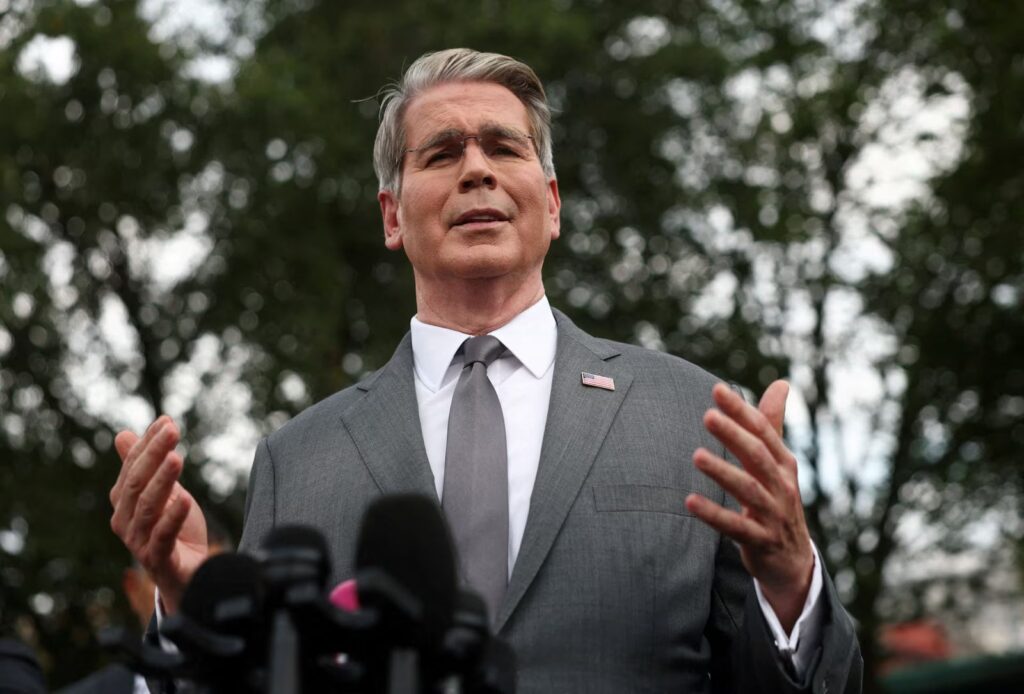
The Trump administration is preparing to escalate its economic war against Iran, with Treasury Secretary Scott Bessent set to announce a major new package of sanctions that Washington says is designed to impose unprecedented pressure on Tehran.
Bessent has described the coming measures as an “economic D-Day” for Iran, signalling a dramatic intensification of the administration’s campaign to squeeze the Iranian economy and force Tehran toward a deal with Washington.
The strategy, however, extends beyond Iran’s borders.
Bessent has warned foreign governments and businesses that maintaining economic ties with Tehran could come at a significant cost, delivering a stark message to countries seeking to continue trading with Iran while maintaining access to the American financial system.
“You are either with us or against us,” Bessent warned, according to reports on the administration’s position.
The blunt ultimatum reflects Washington’s attempt to transform sanctions from a tool aimed solely at Tehran into a wider international pressure campaign. Countries that continue providing Iran with economic lifelines could face difficult choices as the United States weighs additional restrictions against those helping Tehran circumvent its sanctions regime.
At the centre of the confrontation is Iran’s ability to continue exporting oil and maintaining commercial relationships with major international partners.
China is particularly important to Tehran’s economic survival. Chinese buyers have accounted for the overwhelming majority of Iran’s shipped oil exports, giving Beijing a critical role in determining whether Washington’s latest pressure campaign can actually isolate the Iranian economy.
The Trump administration is betting that cutting Iran off from international markets and financial channels will eventually force its leadership back to the negotiating table.
Tehran, however, has rejected that calculation.
Iranian officials have insisted that the country has developed mechanisms to bypass American sanctions and can continue trading with countries willing to maintain relations with the Islamic Republic.
Iranian Foreign Minister Abbas Araqchi has described Washington’s threatened measures as evidence of desperation and maintained that the sanctions campaign will fail.
The confrontation also comes against the backdrop of escalating tensions surrounding the Strait of Hormuz, one of the world’s most strategically important energy routes.
Iran has previously threatened measures affecting oil shipments and shipping through the region, raising fears that an intensifying economic confrontation could have consequences well beyond the borders of the United States and Iran.
A disruption to energy flows through the Gulf could send shockwaves through global oil markets, raising concerns over fuel prices, transportation costs and inflation in countries already struggling with economic pressures.
For Washington, however, the calculation appears straightforward: impose enough economic pain on Tehran and its international partners to make continued resistance more expensive than reaching an agreement.
For Iran, the calculation is equally clear: withstand the sanctions, deepen economic relationships with countries outside Washington’s orbit and prove that American pressure cannot force Tehran into submission.
That makes Bessent’s announcement a potentially decisive moment in the confrontation.
The question is no longer simply whether the United States can punish Iran economically.
It is whether Washington can persuade the rest of the world to join the pressure campaign — or whether Tehran can once again find enough international partners to keep its economy moving.
As Bessent prepares to unveil the next phase of the sanctions offensive, the stakes are rising sharply.
Washington is demanding compliance.
Tehran is promising resistance.
And the economic battle between the two powers is rapidly becoming a test of how far the United States can use its financial power to dictate the choices of countries around the world.