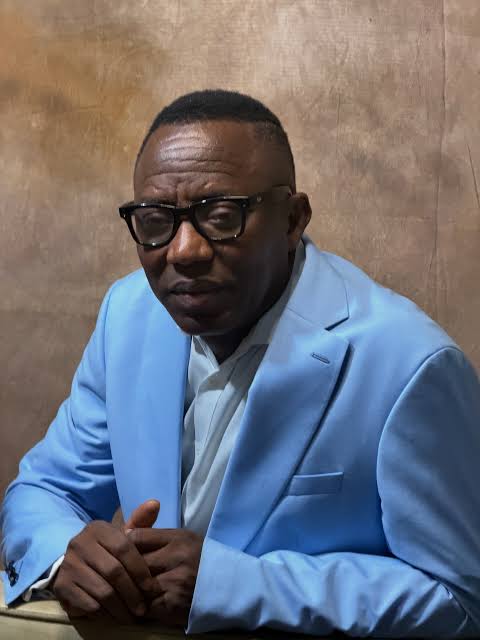
Presidential candidate of the African Action Congress (AAC), Omoyele Sowore, has declared that he would not seek medical treatment abroad if elected president, saying any ailment that cannot be treated in Nigeria should be allowed to kill him.
Sowore made the statement on Thursday while featuring on Channels Television, during a discussion on leadership, governance and the practice of Nigerian political office holders travelling abroad for medical treatment.
Asked whether he had a problem with Nigerian leaders seeking medical care outside the country, Sowore answered in the affirmative.
When asked if he would do the same if elected president, he responded emphatically: “That’s what I’m saying. Any ailments that I have in Nigeria, when I become president, that can’t be treated in Nigeria. That illness better kill me. I can tell you that for free.”
The statement represents a particularly strong position on the contentious issue of medical tourism involving Nigeria’s political elite, with Sowore linking the personal choices of political leaders to the condition of the country’s healthcare system.
For years, successive Nigerian governments have faced criticism over the state of public hospitals, shortages of medical equipment and personnel, industrial disputes in the health sector and the migration of trained professionals abroad.
The issue became particularly prominent during the administration of former President Muhammadu Buhari, who spent more than 100 days in London receiving medical treatment in 2017. His prolonged absence generated widespread public debate about the condition of Nigeria’s healthcare system and the reliance of political leaders on foreign medical facilities.
The late President Umaru Musa Yar’Adua also received medical treatment abroad. His treatment in Saudi Arabia and subsequent prolonged absence from Nigeria contributed to a major constitutional and political controversy over the transfer of presidential powers.
The practice has continued to attract public attention under successive administrations. President Bola Tinubu has also undertaken several overseas trips, including visits to Paris and London. The Presidency has, however, disputed reports on some occasions that such trips were primarily for medical treatment, saying they were undertaken for official engagements or other purposes.
Sowore’s declaration therefore goes beyond a criticism of foreign medical treatment. He is promising that, as president, he would personally remain within Nigeria’s healthcare system even if doctors were unable to treat whatever ailment he developed.
His position has also revived questions about whether Nigeria’s leaders should be willing to use the same public institutions available to ordinary citizens and whether the personal reliance of political leaders on foreign hospitals has reduced pressure to improve healthcare facilities at home.
Nigeria’s healthcare system continues to face significant financing and workforce challenges. Government health officials have acknowledged that out-of-pocket spending remains very high, meaning that Nigerians continue to bear a substantial proportion of their medical expenses directly.
The country has also struggled with the migration of doctors and other health professionals seeking better working conditions and opportunities abroad. The resulting shortage has intensified concerns about access to quality healthcare, particularly for citizens who cannot afford private hospitals or treatment outside the country.
Sowore also addressed questions about his family and whether his children would attend schools abroad if he became president.
He said his children were born in Nigeria and would probably have completed their education by the time he assumed office.
“My children were born here. By the time I become president, my children will probably be almost done from school. So they were born here. Like I told you, I’m not bringing family liabilities back to Nigeria. I already done a lot of liability on them, left them to be on their own, their mom taking care of them,” he said.
According to the AAC candidate, his children would not be brought into Nigeria to benefit from resources or privileges associated with the presidency.
“I’m coming to Nigeria as a person who’s coming to work for the Nigerian people. I’m not bringing my children to come and be taking your money or taking what’s available to you. My children will be there as my children, as family and it is their choice,” Sowore stated.
The comments come as Nigeria continues to debate the privileges enjoyed by political office holders and the widening gap between the services available to those in positions of power and the majority of citizens.
Medical tourism has remained a particularly sensitive issue because senior politicians who have access to foreign healthcare can seek treatment in countries with advanced medical facilities, while Nigerians who cannot afford such treatment are left dependent on local hospitals.
Sowore’s declaration places his personal conduct at the centre of that debate. Rather than simply promising to invest in hospitals, he has publicly committed himself to receiving treatment in Nigeria as president, even in circumstances where a particular illness cannot be treated domestically.
Whether the pledge would translate into a formal government policy or remain a personal commitment is a matter that would ultimately depend on the policies and decisions of any administration he leads.
For now, however, his blunt declaration has injected a striking personal dimension into Nigeria’s longstanding debate over medical tourism, healthcare funding and the responsibility of political leaders to strengthen the country’s health institutions.