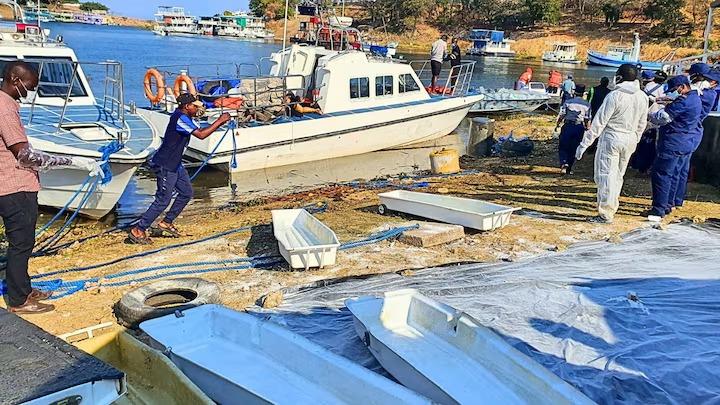
At least 94 people have died in Zimbabwe’s worst transport disaster after a government-operated ferry capsized on Lake Kariba while carrying roughly twice the number of passengers it was designed to accommodate.
The government confirmed on Tuesday that the ferry was carrying about 180 passengers, along with goods, exceeding its stated carrying capacity. The vessel was reportedly designed to carry 90 people.
The admission has intensified scrutiny of how the vessel was allowed to leave the dock in the first place.
The ferry, identified as the Mbuya Nehanda, capsized on August 11 while travelling from the lakeside town of Kariba towards remote communities and fishing camps. Strong waves were reported around the time of the disaster.
Earlier accounts from survivors painted an even more disturbing picture. Passengers reportedly warned the crew about worsening conditions after water began entering the vessel and goods started falling overboard. Some survivors said passengers pleaded for the ferry to turn back, but the journey continued.
The death toll rose steadily as rescue teams recovered bodies from the lake. Police initially reported 15 deaths before the figure climbed to 44, 72 and then 92. The latest government-confirmed figure stands at 94, while search and recovery operations continue. Seventy-seven people have been rescued.
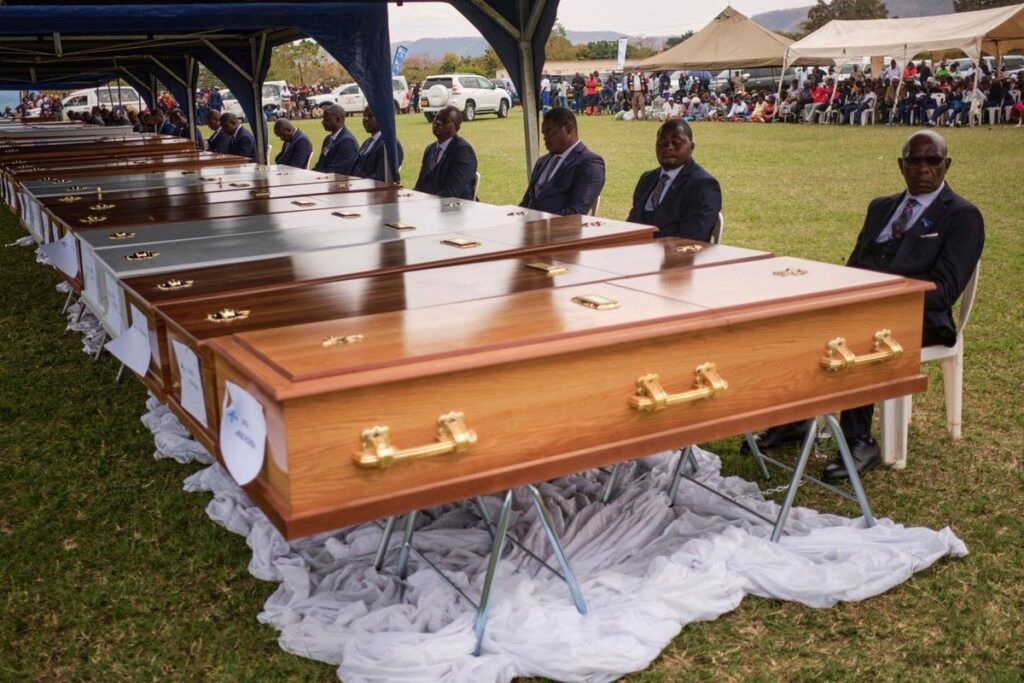
The scale of the tragedy has transformed what might initially have been described as a maritime accident into a searing question of responsibility.
A ferry does not become overloaded by accident. People have to be allowed to board. Cargo has to be accepted. A vessel has to be cleared to sail.
And when the number of people aboard is reportedly about double the vessel’s stated capacity, the question is no longer simply why the ferry capsized. It is who allowed an obviously dangerous journey to proceed.
Lake Kariba is a vital transport route for isolated communities where poor roads and limited public transportation leave residents heavily dependent on water transport. But the lake has also recorded previous deadly boat accidents, raising renewed questions about maritime safety and enforcement.
Among those killed were children, with earlier reports identifying 18 child victims. Families have been left mourning parents, spouses and children in a disaster that has exposed potentially devastating failures in safety oversight.
Zimbabwean authorities have declared the disaster a national tragedy and pledged support for affected families. But condolences and financial assistance cannot answer the central question now confronting the country: who permitted an overloaded government-operated ferry to leave the shore?
Ninety-four people are dead.
The investigation must therefore go beyond the waves, the weather and the moment the vessel overturned. It must establish who knew the ferry was over capacity, who authorised its departure, whether safety regulations were ignored and whether warnings from passengers or crew were properly acted upon.
If accountability ends with mourning ceremonies and promises of future reforms, the deaths on Lake Kariba will remain not only a tragedy, but a warning ignored.
The public deserves to know whether this was an unavoidable accident—or a preventable disaster waiting to happen.
And before another ferry leaves another dock overloaded, Zimbabwe must answer that question.