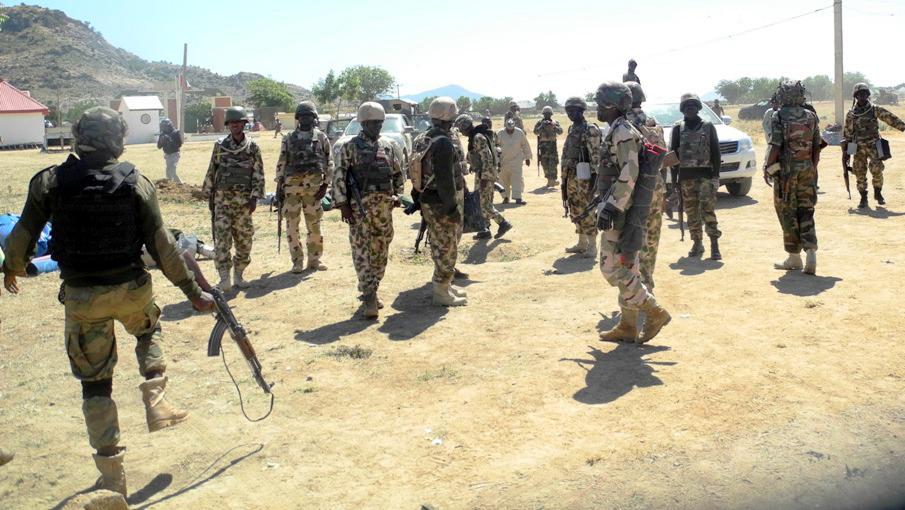
Security agencies have recorded a major intelligence breakthrough following the arrest of a suspected Boko Haram fighter who allegedly participated in the May 8, 2026, attack on the Nigerian Army Special Forces School (NETTS) in Buni Yadi, Yobe State.
The suspect, identified as 26-year-old Musa Abdulhamid, was arrested by troops at about 11:30 a.m. on August 4 while allegedly attempting to infiltrate the military facility in Buni Yadi, Gujba Local Government Area of Yobe State.
Security sources disclosed that preliminary interrogation linked Abdulhamid directly to the coordinated assault on the elite military training institution, an attack that underscored the persistent threat posed by insurgents in Nigeria’s North-East.
During interrogation, the suspect, who reportedly hails from Potiskum in Yobe State, allegedly admitted taking part in the attack and identified three suspected Boko Haram commanders—Mohammed, Mustapha and Ismail—as the leaders who coordinated the operation.
According to intelligence sources, Abdulhamid’s confession has offered investigators a rare glimpse into Boko Haram’s operational structure, planning methods and internal command system.
The suspect allegedly revealed that the operation was meticulously planned over an extended period, with fighters hiding in bushes around rocky terrain near Buni Gari before launching the assault on the military facility.
He further disclosed that rank-and-file fighters are deliberately kept in the dark about planned operations until shortly before execution. According to his account, commanders routinely confiscate operatives’ mobile phones before briefing them on their targets, a tactic believed to prevent intelligence leaks and operational compromise.
The interrogation also exposed what security officials describe as a strict culture of secrecy within the terrorist group. Abdulhamid reportedly stated that commanders rarely disclose casualty figures after operations, leaving many fighters unaware of the true cost of their missions.
Despite this, the suspect claimed the May 8 attack inflicted heavy losses on Boko Haram, estimating that more than ten insurgents were killed as several fighters who participated in the operation never returned to their camps.
Abdulhamid also admitted carrying a firearm during the assault but reportedly said he could not identify the exact type of weapon he used.
He further disclosed that Boko Haram fighters frequently move between multiple hideouts across the North-East to evade detection and frustrate ongoing military offensives.
Military authorities confirmed that the suspect remains in custody and will be subjected to further investigation, profiling and intelligence exploitation as security agencies work to uncover additional members of the terrorist network.
Security experts believe the arrest could significantly strengthen ongoing counter-insurgency operations, with intelligence obtained from the suspect expected to assist the military in understanding Boko Haram’s leadership hierarchy, operational planning cycle, movement patterns and battlefield tactics.
The latest development comes as Nigerian troops sustain intensified offensives against Boko Haram and other terrorist groups across the North-East, targeting insurgent camps, logistics networks and supply routes while expanding intelligence-led operations aimed at preventing future attacks on military formations and civilian communities.