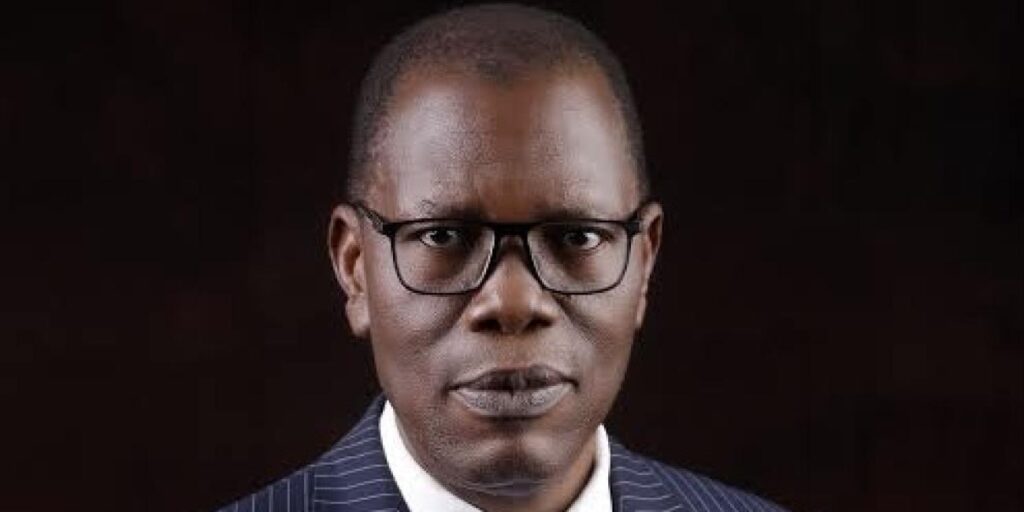
The courtroom was thrown into a moment of surprise on Monday as the private prosecutor handling the Department of State Services (DSS) cyberstalking case against African Action Congress (AAC) presidential candidate, Omoyele Sowore, declared that he could vote for the activist over President Bola Tinubu in the 2027 presidential election.
The unexpected remark came during proceedings before Justice Mohammed Umar of the Federal High Court, Abuja, after a heated exchange between the prosecution and the defence over allegations that the prosecutor had become personally invested in the politically sensitive trial.
Senior Advocate of Nigeria (SAN), A.T. Kehinde, who is prosecuting the case on behalf of the DSS, made the declaration after Sowore’s lead counsel, Adeyinka Olumide-Fusika (SAN), accused him of pursuing the matter with personal animosity.
The accusation followed Kehinde’s application urging the court to revoke Sowore’s bail and remand him in custody on the grounds that the activist had allegedly failed to perfect the conditions attached to his release.
Rejecting the allegation, Kehinde insisted that he had no personal grudge against the former presidential candidate.
“I have nothing personal against Sowore. I could even vote for him in the 2027 presidential election if he convinces me that his ideas and programmes are superior to those of the other candidates,” Kehinde told the court.
The statement immediately became one of the defining moments of the day’s proceedings, given the prosecutor’s central role in the DSS case against the outspoken activist.
Earlier, prominent human rights lawyer Deji Adeyanju testified as the first defence witness, describing Sowore as a respected Nigerian and the presidential candidate of the African Action Congress.
Adeyanju tendered before the court a video recording of President Bola Tinubu, which was admitted into evidence as an exhibit.
According to the witness, the President, in the video recorded before August 25, 2025, urged Nigerians to continue criticising and even insulting him on social media, stressing that such expressions were legitimate features of democratic governance.
Adeyanju further testified that Tinubu maintained that security agencies and the judiciary should protect citizens’ constitutional rights and should never be deployed to intimidate or persecute Nigerians for expressing criticism against public office holders.
He also told the court that social media platforms such as X and Facebook are interactive spaces where users voluntarily exchange opinions and control access to their personal accounts.
The prosecution, however, challenged Adeyanju’s competence to testify, arguing that he had previously acted as counsel in the matter and was therefore disqualified from appearing as a witness.
But Olumide-Fusika dismissed the objection, maintaining that Adeyanju had never appeared as counsel since he took over Sowore’s defence and that no legal barrier existed to prevent him from testifying.
The defence also informed the court that it had intended to play video evidence but was unable to do so because the court registry could not provide the requested television monitor.
Meanwhile, Kehinde renewed his application seeking the revocation of Sowore’s bail, insisting that the defendant had not fulfilled all the conditions imposed by the court.
Responding, Olumide-Fusika explained that the delay resulted from circumstances beyond Sowore’s control. He said the activist had travelled to Lagos to retrieve his passport from the United States Embassy, but embassy officials were unable to process the request due to activities marking the U.S. Independence Day celebrations.
According to the defence, Sowore subsequently authorised another individual to collect the passport and deliver it to Abuja in order to complete the bail requirements.
In his ruling, Justice Umar declined the prosecution’s request for immediate remand, granting the defence until 4:00 p.m. to perfect the bail conditions.
The judge emphasised that the court was determined to maintain its impartiality and would not create any impression of favouring either side in the proceedings.
The matter was adjourned until July 13, 2026, for the continuation of the defence.