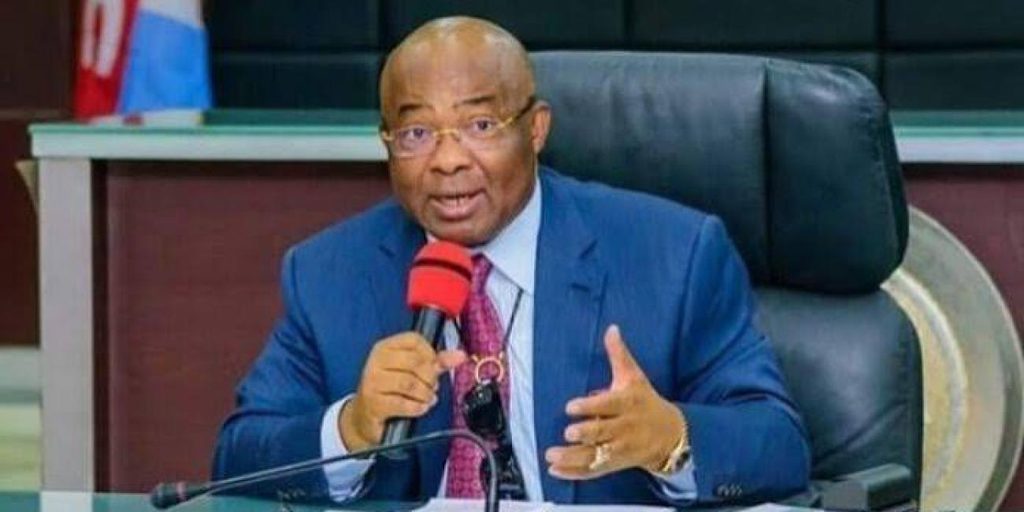
The Indigenous People of Biafra (IPOB) has accused Imo State Governor Hope Uzodimma of allegedly manipulating the state’s security situation to implicate Biafran agitators in the abduction of National Youth Service Corps (NYSC) members along the Onitsha-Owerri axis.
The group also called for an independent international investigation into the abduction of the corps members, who have reportedly been rescued, demanding that investigators examine the circumstances surrounding the incident and trace alleged ransom payments to establish who received the money.
IPOB made the allegations in a statement issued on Saturday, October 10, by its Media and Publicity Secretary, Emma Powerful, in which it condemned the abduction and denied any involvement in the incident.
Powerful described attempts to link the group to the kidnapping as a “calculated falsehood meant to demonise our movement.”
The separatist group alleged that the security situation in Imo State was being exploited for political purposes, claiming that Uzodimma was attempting to strengthen his political standing with President Bola Tinubu amid reported political tensions involving the Minister of the Federal Capital Territory, Nyesom Wike.
IPOB further alleged that the Imo governor was seeking to portray himself as an indispensable security figure in the South-East, potentially strengthening his position in wider political calculations.
The group also claimed that Uzodimma was positioning himself for the Senate presidency, alleging that some Igbo politicians were concerned that the release of IPOB leader Nnamdi Kanu could weaken their political influence.
However, the allegations against the governor and the claims about the political motivations behind the security situation were made by IPOB in its statement and were not independently established in the information provided.
Raising further concerns about insecurity in Imo State, IPOB alleged that there were suspicious security gaps in some areas, claiming that military personnel had inexplicably abandoned key checkpoints, thereby creating opportunities for armed groups to operate.
The group alleged that the resulting security gaps were being exploited by criminal networks and individuals it described as politically sponsored militias.
“These voids are systematically filled by politically sponsored militias and armed groups tasked with staging attacks, abductions, and extortion scheme ransom collections — all designed to be pinned on IPOB,” the group alleged.
IPOB called for investigators to examine the circumstances surrounding the abduction of the NYSC members and their subsequent rescue, insisting that the incident should not be used to discredit the Biafra self-determination campaign.
The group also accused unnamed criminal elements and alleged state-sponsored agents of exploiting its announced intention to boycott elections to carry out criminal activities while falsely attributing them to IPOB.
According to the group, it has declared its intention to boycott elections but will announce the specific methods for implementing the decision closer to the time.
IPOB further alleged that individuals who previously hijacked Monday sit-at-home exercises in the South-East were now using its election boycott position as a cover for criminal activities.
“Criminal elements and state-sponsored agents who previously hijacked Monday sit-at-homes are now using the cover of ‘IPOB said they will boycott’ to unleash criminality and frame our peaceful movement,” the group said.
The organisation maintained that its political objective was the self-determination of the Igbo people and other communities it considers part of Biafra, insisting that it should not be held responsible for criminal acts merely because of its political demands.
“IPOB does not target civilians, students, or NYSC members,” the group said, describing its campaign as “a peaceful, legally anchored quest for self-determination through a referendum.”
The abduction of NYSC members has raised concerns about the safety of corps members serving in areas affected by insecurity, with IPOB using the incident to demand greater scrutiny of security operations and the handling of ransom payments.
The group called for an immediate, open and independent international investigation into the reported abductions along the Onitsha-Owerri axis.
It specifically demanded that investigators establish how the abduction occurred, examine the circumstances surrounding the rescue of the victims and trace the alleged ransom payments to determine who received the money and whether individuals or groups benefited financially.
IPOB also urged Nigerians and the international community not to accept what it described as a politically motivated campaign to associate the Biafra movement with insecurity in the South-East.
“We urge the public and the international community to look past the political theatre orchestrated from Owerri,” the group added.
The group reiterated its denial of involvement in the abduction and maintained that criminal incidents should be investigated on the basis of evidence rather than attributed to the organisation because of its separatist campaign.
The allegations against Uzodimma and the claims of politically sponsored criminal activities remain allegations made by IPOB in the statement.