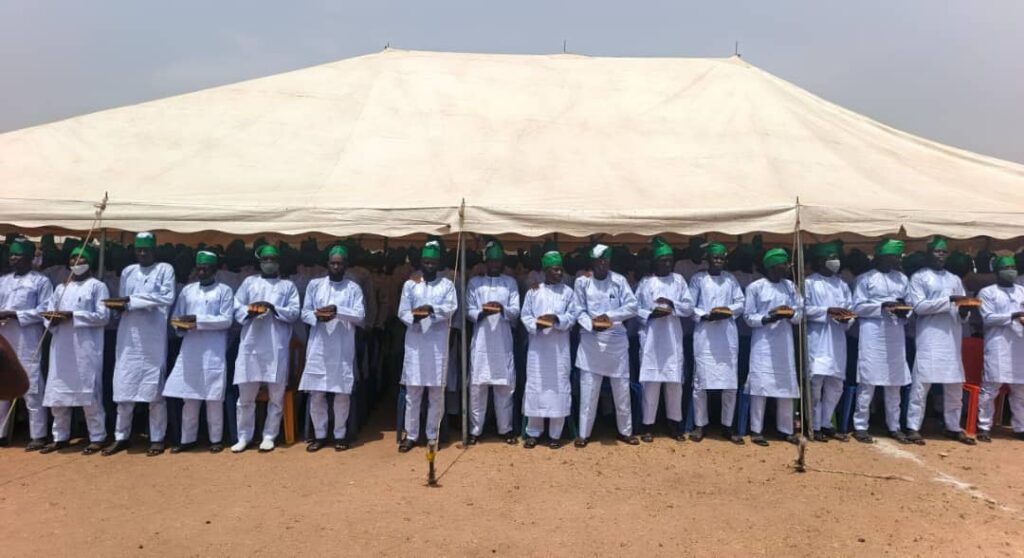
Nigerian soldiers battling Boko Haram insurgents in the North-East have reportedly kicked against what they describe as a fresh move compelling them to work alongside “repentant” terrorists reintegrated into society under the Borno State Government’s controversial deradicalisation programme.
The development has sparked outrage and anxiety within frontline formations, with serving military personnel warning that the arrangement could expose ongoing operations to sabotage, intelligence leaks and deadly betrayals from within.
According to SaharaReporters, some of the former Boko Haram fighters who publicly renounced violence during recent rehabilitation exercises have now been mobilised and attached to local security groups assisting military operations across parts of Borno State.
Multiple sources within the military told SaharaReporters that the directive has unsettled troops who have spent years fighting the insurgents and losing colleagues on the battlefield, raising serious questions about trust, operational security and the long-term implications of the government’s reintegration strategy.
The soldiers alleged that the move forms part of efforts by the Borno State Government to validate its rehabilitation and reintegration initiative, a programme that has faced persistent criticism from victims of insurgency, civil society groups and even security personnel.
Under the state’s deradicalisation framework, former insurgents are subjected to religious reorientation, vocational training and skills acquisition before being returned to their communities. However, critics have repeatedly questioned whether adequate mechanisms exist to guarantee that ex-fighters have genuinely abandoned extremist ideologies.
The latest concerns from frontline troops suggest that such reservations remain deeply entrenched even within the military establishment itself.
“There is genuine fear among soldiers that sensitive operational information could be compromised. Many of these men once fought against us. Some of us lost friends and brothers in battles against them. Asking troops to trust them overnight is a dangerous gamble,” one military source reportedly told SaharaReporters.
The development has reignited a contentious national debate over whether former terrorists can be fully rehabilitated and entrusted with roles connected to security operations without endangering the lives of military personnel and civilians.
Security experts have consistently warned that while deradicalisation remains an important element of counter-insurgency strategy, the process must be accompanied by rigorous monitoring, strict vetting procedures and effective safeguards to prevent infiltration or a relapse into extremist activities.
For many soldiers on the frontlines, however, the prospect of sharing operational spaces with former enemies remains a deeply troubling reality, one they fear could undermine morale and compromise years of hard-fought gains against insurgency in the North-East.
Efforts by SaharaReporters to obtain an official response from the Nigerian Army were unsuccessful as of the time of filing this report. Several calls placed to the Director of Army Public Relations, Colonel Appolonia Anele, were not answered, while a text message seeking the Army’s reaction was delivered but had yet to receive a response.
As the controversy deepens, questions continue to mount over the wisdom of integrating former insurgents into structures linked to ongoing security operations and whether such policies could ultimately strengthen peace efforts or sow fresh seeds of mistrust within the nation’s armed forces.