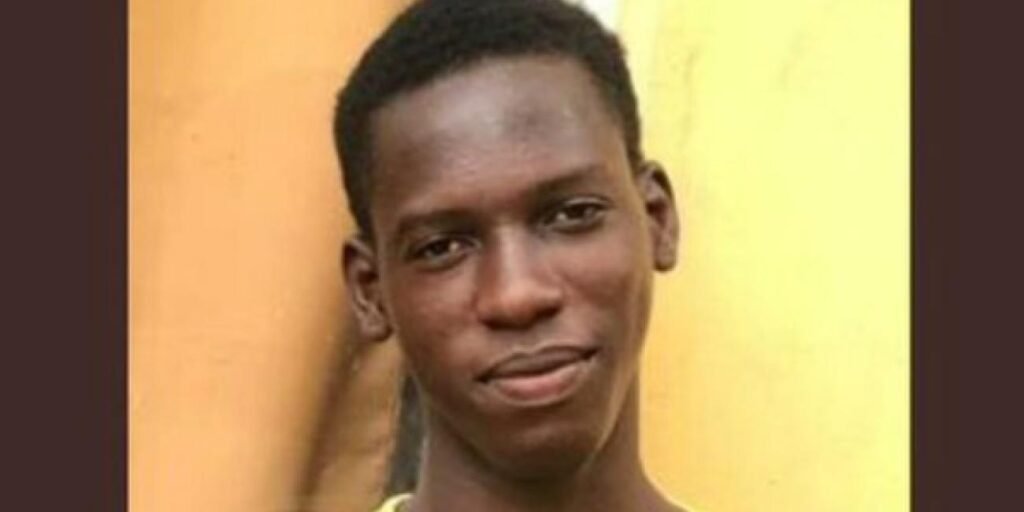
Global human rights organisation, Amnesty International Nigeria, has condemned the killing of journalist Pelumi Onifade, saying the recent confirmation of his identity through DNA analysis further exposes the “horrifying level of violence” unleashed on protesters and journalists during the October 2020 #EndSARS demonstrations.
The rights organisation alleged that operatives of the Lagos State Task Force deliberately shot and killed the 20-year-old student journalist on October 24, 2020, before taking away his body and dumping it at the mortuary of the General Hospital in Ikorodu, Lagos.
The fresh reaction followed the announcement by the Lagos State DNA and Forensic Centre that a previously unidentified body kept in the custody of the Lagos State University Teaching Hospital (LASUTH) had been scientifically confirmed to be that of Onifade, bringing an end to years of uncertainty and anguish for his family.
In a statement posted on its official X handle on Thursday, Amnesty International described the revelation as further proof of the brutality that characterised the nationwide protests against police misconduct.
“The revelation yesterday that a DNA test result confirmed that a previously unidentified body was that of journalist Pelumi Onifade further shows the horrifying level of violence unleashed on protesters and journalists during #EndSARS protests in October 2020,” the organisation stated.
Amnesty insisted that security personnel attached to the Lagos State Task Force were responsible for the young journalist’s death.
“Nigerian police attached to the Lagos State Task Force deliberately killed the 20-year-old journalist, Pelumi Onifade, on Saturday, October 24, 2020. His body was later dumped at the mortuary of General Hospital Ikorodu, Lagos,” the statement added.
Onifade, a 200-level student in the Department of History and Diplomatic Studies at Tai Solarin University of Education, was undergoing an internship with Gboah TV, an online television platform, when he disappeared while covering the #EndSARS protests in Lagos.
Eyewitnesses cited by Amnesty International claimed that the young reporter was documenting one of the protest scenes in Ikeja alongside other journalists when he sustained gunshot injuries allegedly inflicted by security operatives.
According to the rights organisation, the victim was visibly identified as a member of the press at the time of the incident.
“Eye witnesses said on that day, while covering one of the scenes of #EndSARS protest alongside other journalists in Ikeja, they saw Pelumi sustain gunshot wounds. While in a pool of his own blood and while clearly wearing a press jacket, police dragged his body into their van,” Amnesty stated.
The DNA confirmation was presented during proceedings at a Lagos Coroner Court, where forensic experts matched body number 1385 to samples provided by Onifade’s mother, finally resolving a mystery that had persisted for nearly six years.
The emotional moment reportedly left members of the family in tears as years of searching, petitions and demands for answers culminated in the official identification of the slain journalist.
Human rights advocates have long maintained that Pelumi’s death symbolises the dangers faced by journalists covering civil unrest and the culture of impunity that has trailed allegations of extrajudicial killings by security agencies in Nigeria.
Amnesty International said the case represented only one among numerous alleged atrocities committed during the #EndSARS protests, which erupted nationwide as young Nigerians demanded an end to police brutality, unlawful killings and abuses by security operatives.
“The case of Pelumi Onifade is just one of many shocking atrocities committed by Nigeria’s security agencies during #EndSARS protests,” the organisation declared.
The confirmation of Onifade’s identity is expected to intensify renewed calls for accountability, justice and an independent investigation into the killings and human rights violations recorded during the historic protests that shook the nation in October 2020.
For many Nigerians, the case remains a painful reminder that the demands for justice that fuelled the #EndSARS movement have yet to be fully addressed, while families of victims continue to seek truth and closure years after the demonstrations ended.