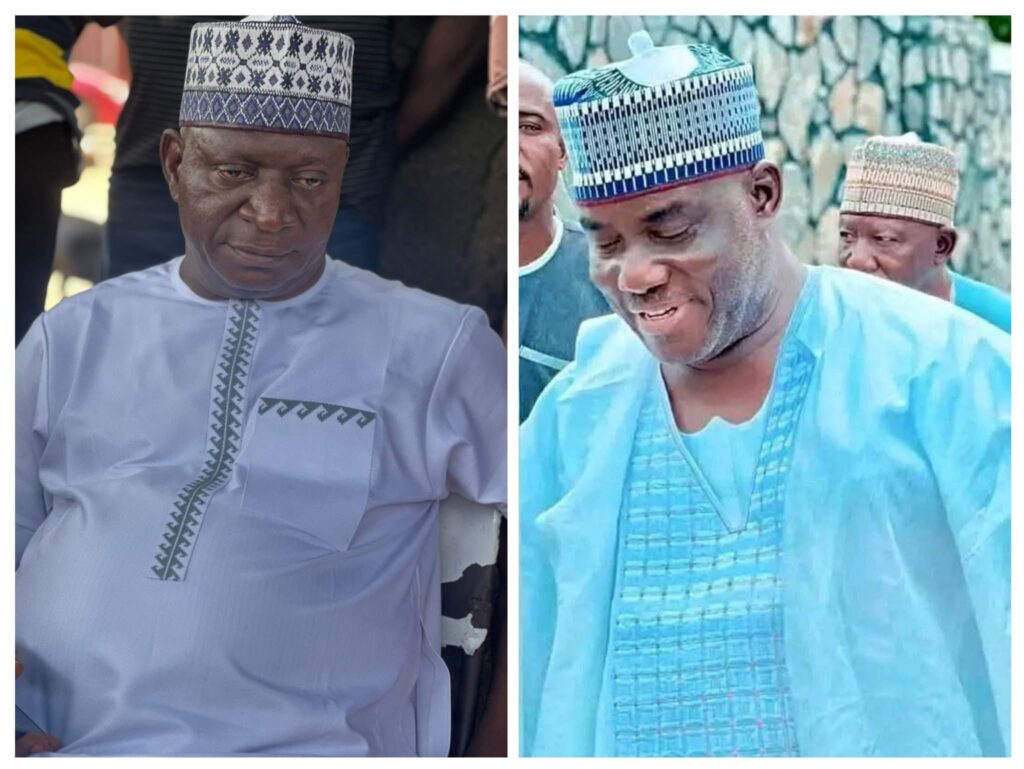
A renewed political debate has emerged in Gwagwalada Area Council following a strongly worded statement by community organizer and political activist Muhammed Isah Hassan, who challenged prevailing narratives surrounding the 2016 political alignments involving Zakari Angulu Dobi (ZAD) and Adamu Mustapha Danze, popularly known as Obama.
In a Facebook post that has since stirred conversations across political circles in Gwagwalada, Hassan argued that the events of 2016 have been “twisted over time,” insisting that ZAD’s political decisions were rooted in loyalty rather than opportunism.
According to Hassan, ZAD’s support for Obama at the time was not arbitrary but a calculated act of political reciprocity, claiming Obama had earlier stood by him during a critical moment. “That’s politics,” he wrote, “loyalty answered with loyalty, not betrayal.”
Hassan revisited the controversial primaries under the People’s Democratic Party, where Obama contested against the late Ahmadu Ciroma. Hassan alleged that after Ciroma secured the party’s ticket, efforts to reconcile aggrieved stakeholders were insufficient.
He claimed that ZAD made several moves to foster unity, deploying key allies such as Usman Noma Dobi and Yunusa “Protocol” to initiate dialogue. Hassan further stated that appeals were extended even through Obama’s family, but Ciroma allegedly failed to engage.
“In the absence of reconciliation, Obama had no choice but to return the loyalty he once received,” Hassan noted, adding that Obama subsequently worked toward ZAD’s re-election victory.
However, Hassan’s statement took a critical turn as he highlighted what he described as a pattern of political neglect following the election. He alleged that individuals who stood firmly behind Obama during the struggle were sidelined after victory was secured.
Citing specific examples, Hassan pointed to figures like Hajiya Alimi, who he claimed was transferred from Gwagwalada to Abaji despite her loyalty, raising broader concerns about how political allies are treated after elections.
Beyond individual grievances, Hassan’s message expanded into a wider critique of leadership in Gwagwalada, particularly questioning the long-term impact of political figures on grassroots communities, especially among the indigenous Gbari population.
“From Dobi to Ibwa, Paiko to Central, Kutunku to Gwako,” he wrote, “how many loyal supporters can truly point to real financial growth?”
The post questioned whether years of political promises have translated into tangible empowerment, asking residents to reflect on whether they have genuinely experienced progress or upliftment under successive leaderships.
Hassan emphasized that leadership should go beyond electoral mobilization, stressing the need for sustained human development. “Leadership is not about using people during elections and abandoning them afterward,” he stated. “It is about building people.”
The remarks have since triggered mixed reactions, with some residents echoing his concerns about political neglect, while others argue that the complexities of local governance and limited resources must also be considered.
As political activities gradually intensify ahead of future electoral cycles in the Federal Capital Territory, Hassan’s intervention underscores a growing demand among constituents for accountability, inclusion, and measurable development.
For many in Gwagwalada, the questions raised may shape not just public discourse—but also the political choices that lie ahead.