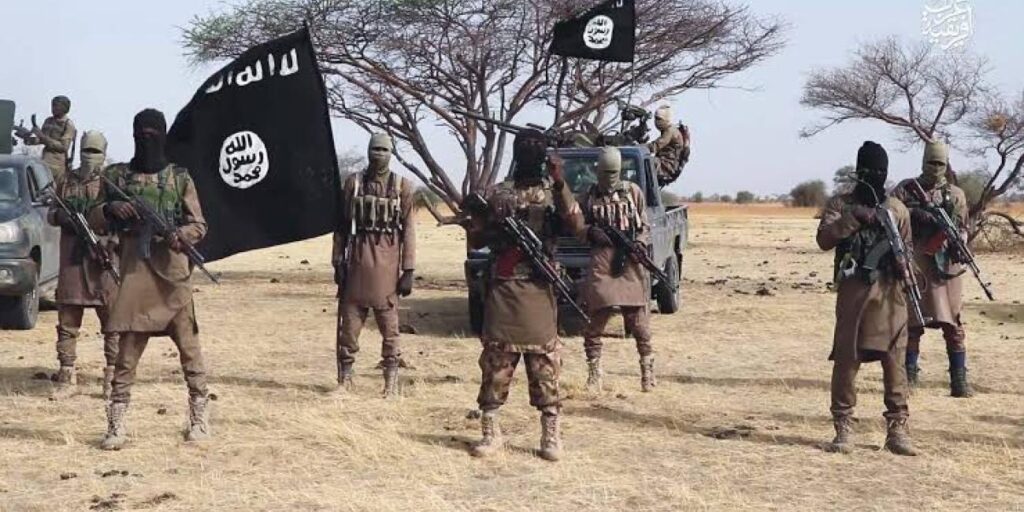
Terror returned with ruthless precision under the cover of darkness in Adamawa State as suspected fighters of Boko Haram stormed rural communities in Hong Local Government Area, leaving at least nine people dead and dozens displaced in yet another grim reminder that Nigeria’s insurgency nightmare is far from over.
Residents of Mayo Ladde and Kuva Gaya were jolted awake on Wednesday night by the sound of gunfire and chaos as heavily armed attackers descended on their homes, unleashing violence that sent entire families running into the bush for safety. Survivors described a coordinated assault marked by arson, looting, and indiscriminate killings, a pattern that has haunted the region for over a decade.
Chairman of Hong LGA, Inuwa Usman Wa’aganda, confirmed the scale of the devastation, revealing that security operatives only regained control of the affected areas after the attackers had already executed their deadly mission and vanished without a trace. The delay once again raises troubling questions about response times and intelligence gaps in one of Nigeria’s most volatile regions.
In a swift but symbolic move, Ahmadu Umaru Fintiri arrived in the area, first stopping at the palace of the Hoba Chiefdom where he met with the Paramount Ruler, Alheri Bulus Nyako. Standing before grieving leaders and shaken residents, the governor condemned the massacre in strong terms, calling it “unacceptable” and promising decisive government action.
“We will not allow terror to take root here,” Fintiri declared, ordering a full-scale investigation and intensified security operations across vulnerable communities.
But beyond the rhetoric lies a deeper crisis. The attack has not only claimed lives, it has shattered livelihoods. With the planting season fast approaching, many rural farmers now face an agonizing dilemma: return to their lands under the shadow of fear or abandon their only means of survival.
At a displacement camp in Uba Gaya, the human cost of the violence was laid bare. Families sat in grief, recounting stories of loved ones lost and homes destroyed. Children clung to mothers who could offer no answers, while elderly survivors stared blankly into an uncertain future.
Despite the trauma, Fintiri urged residents to remain on their ancestral lands, assuring them of government protection. “Remain resilient. Government will secure this land,” he said — a statement that echoes past assurances but now faces the test of urgent reality.
The Paramount Ruler, Alheri Bulus Nyako, did not mince words in his appeal, calling for the immediate recruitment of forest guards and stronger collaboration between local communities and security agencies. His message underscored a growing sentiment: that conventional military responses alone may no longer be enough to contain the evolving tactics of insurgents.
Even as the governor commended the military, local hunters, and vigilante groups for their response, the underlying tension remains, how many more communities must fall before proactive security replaces reactive visits?
Accompanied by key officials including Speaker Bathiya Wesley, the governor’s visit projected authority, but on the ground, fear still lingers. In the quiet aftermath of the હુમ, the question hanging over Hong is as stark as it is urgent: who will be next?
For the people of Adamawa, this is no longer just another attack. It is a test of trust, of governance, and of whether the promise of security can finally match the reality on the ground.