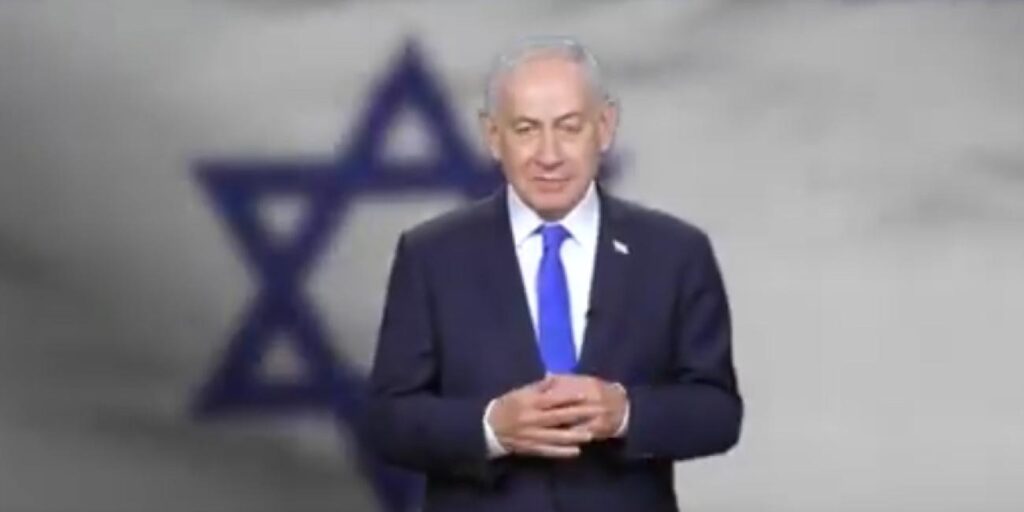
In a revelation that blends personal vulnerability with geopolitical calculation, Israeli Prime Minister Benjamin Netanyahu has confirmed he was quietly battling prostate cancer while steering one of the most volatile periods in Israel’s recent history—choosing silence, he says, to deny perceived enemies an opportunity to weaponize his health.
The disclosure, made through his official X account, pulls back the curtain on a medical episode that had been deliberately withheld from the public at a time when Israel remained deeply entangled in regional tensions, particularly involving Iran. According to Netanyahu, the timing of the announcement was not accidental but strategic.
“Today, my annual medical report was published. I requested to delay its publication by two months so that it would not be released at the height of the war, in order not to allow the Iranian terror regime to even spread more false propaganda against Israel,” he stated, framing his health as not just a private matter but a potential national security concern.
Behind the calculated silence, however, was a medical reality that could have shaken confidence in leadership if revealed earlier. Netanyahu disclosed that doctors discovered a malignant tumor—small, under a centimeter, and at a very early stage—during routine follow-up checks tied to a previous prostate procedure.
The Prime Minister had, about a year and a half ago, undergone surgery for an enlarged but benign prostate. Since then, he remained under continuous monitoring—a decision that would ultimately prove critical. It was during one of those routine examinations that doctors detected what he described as a “tiny spot,” later confirmed to be cancerous, though non-metastatic.
Medical experts reportedly presented him with a choice that many men his age face: active surveillance or immediate intervention. Prostate cancer, particularly in early stages, is often slow-growing, and some patients opt to live with it under careful monitoring.
But Netanyahu, known for his hawkish stance on national threats, applied the same philosophy to his health.
“You already know me,” he said. “When I am given information about a potential danger, I want to address it immediately. That’s true on a personal and national level.”
He chose treatment.
According to his account, the intervention was targeted and successful, removing the tumor completely without leaving any trace. He now declares himself “healthy” and in “excellent physical condition,” attempting to shut down any speculation about his capacity to govern.
The revelation has sparked broader conversations beyond Israel’s borders, particularly around transparency in leadership and the intersection between personal health and public responsibility. In regions where political power is tightly linked to perceptions of strength, disclosures like this often walk a thin line between reassurance and vulnerability.
For Netanyahu, the decision to delay the announcement underscores a deeper reality: in modern geopolitics, even a medical diagnosis can be seen as ammunition.
His health history in recent years has not been without scrutiny. In March 2024, his office confirmed he underwent hernia surgery at the renowned Hadassah Medical Center in Jerusalem—a procedure that was also preceded by official briefings to manage public perception and maintain continuity of governance.
This latest disclosure, however, carries more weight. Cancer—even at an early stage—introduces a different dimension of concern, particularly for a leader operating in a region where political instability can escalate rapidly.
Yet, Netanyahu appears determined to control the narrative: this was not a crisis, but a contained threat; not a weakness, but a demonstration of decisiveness.
The message is clear—both to his supporters and critics: the man who claims to confront national enemies without hesitation applied the same doctrine to his own body.
But beneath the defiance lies a quieter, more universal takeaway—one that transcends politics.
Early detection saved him.
Routine monitoring made the difference.
And in a world where leaders often hide behind carefully constructed images of invincibility, Netanyahu’s admission delayed or not exposes a rare truth: power does not exempt anyone from vulnerability, only from how and when it is revealed.