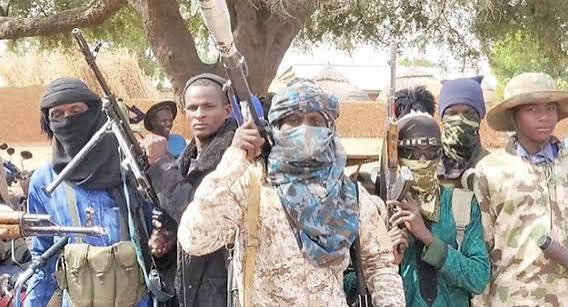
Nigeria witnessed a surge in deadly violence in February 2026, with at least 624 people killed and 419 others kidnapped within 28 days, according to a new security tracker report compiled by the Research and Data Department of HumAngle.
The report, obtained by Chronicles Reporters, paints a disturbing picture of the country’s deepening security crisis, revealing that terror-related attacks and organised armed violence accounted for more than half of all recorded security incidents nationwide during the month.
The tracker, compiled by researchers Abdussamad Ahmad Yusuf and Abdullahi Abubakar, documented 136 incidents of insecurity across Nigeria in February, representing a slight 3.5 percent decline from the figures recorded in January.
However, despite the marginal drop in the number of incidents, fatalities rose significantly, increasing from 481 deaths in January to 624 in February, marking nearly a 30 percent rise in killings within a single month.
According to the report, Nigeria’s North-West region recorded the highest number of violent incidents, reflecting the persistent expansion of armed banditry and terrorist attacks across the region.
The data shows that the North-West recorded 44 incidents, followed by the North-Central with 40 incidents, while the North-East—long plagued by insurgency—recorded 24 incidents.
Across southern Nigeria, a total of 28 incidents were documented, broken down into 11 incidents each in the South-South and South-West, and six in the South-East.
At the state level, Zamfara State recorded the highest number of security incidents with 19, followed by Benue with 15 incidents, Borno with 12, Plateau with nine, and Kebbi with eight.
Despite recording fewer incidents, Kwara State emerged as the deadliest state in February, accounting for 174 fatalities, largely linked to a mass-casualty terror attack earlier in the month.
Zamfara followed with 149 deaths, while Borno and Kebbi recorded 48 fatalities each, and Benue documented 38 deaths during the period.
Regionally, the North-Central recorded the highest number of fatalities with 278 deaths, followed by the North-West with 217 deaths.
The North-East recorded 112 fatalities, while violence in southern Nigeria remained comparatively lower, with South-West recording nine deaths, South-East five, and South-South three.
Interestingly, the report noted that Kano and Jigawa states did not record any fatalities linked to insecurity during the period.
Kidnapping incidents also rose sharply during the month, with 419 Nigerians abducted across 33 incidents in 13 states.
States affected by the kidnappings include Niger, Kwara, Edo, Akwa Ibom, Katsina, Sokoto, Kaduna, Zamfara, Benue, Ebonyi, Plateau, Kano and Ondo.
The report shows that Zamfara recorded the highest number of kidnapping incidents with 11 cases, followed by Sokoto with four, Kaduna and Benue with three each, while Niger, Kwara and Edo recorded two incidents each.
Meanwhile, Akwa Ibom, Katsina, Ebonyi, Plateau, Kano and Ondo recorded one kidnapping incident each during the month.
The security tracker revealed that violence against civilians was the most common form of attack, accounting for 86 incidents and resulting in 512 deaths.
These incidents included armed attacks on communities, kidnappings, forced disappearances, and other forms of violence directed at non-combatants.
Other incidents recorded include:
• Five battle-related clashes between armed groups, resulting in five deaths
• Three explosion or remote violence incidents, including landmine and explosive attacks, which killed 11 people
• Four riot-related incidents, which led to three deaths
• Two strategic incidents, such as weapons disruptions, looting, or property destruction, recorded without fatalities
One of the most devastating moments of the month occurred on February 3, when coordinated attacks across several locations resulted in 191 deaths in a single day, with the Kwara attack accounting for the largest share of casualties.
The report further revealed that terror-related incidents alone accounted for 63 cases, representing 46.3 percent of all insecurity incidents recorded in February.
When combined with battle clashes, improvised explosive device (IED) attacks, and military operations, the figure rises to 79 incidents, accounting for approximately 58 percent of all security incidents recorded nationwide.
Most of the attacks were concentrated in North-Central, North-East and North-West Nigeria, regions that have for years struggled with insurgency, banditry, and communal conflicts.
The report warned that the scale of violence recorded in February carries serious humanitarian consequences, including mass displacement, destruction of livelihoods, and deep psychological trauma for affected communities.
“The scale of the incidents and persistence of organised armed conflict highlight the urgent need to strengthen civilian protection measures and address vulnerabilities in conflict-affected areas,” the report stated.
The latest data underscores the growing urgency for comprehensive security reforms and stronger protection mechanisms for civilians, as communities across Nigeria continue to grapple with escalating violence.