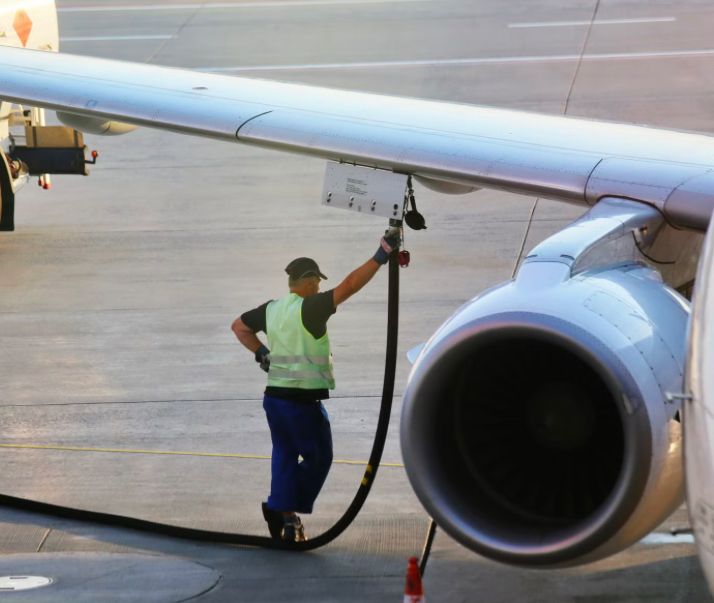
Air travellers across Nigeria may soon face higher ticket prices as the cost of aviation fuel continues to surge across the country. Industry operators say fare increases are becoming inevitable as airlines respond to rising operational costs driven largely by the escalating price of Jet A1.
In less than two weeks, aviation fuel prices have jumped from between N940 and N980 per litre to between N1,500 and N1,600 per litre, representing an increase of about 63 percent. With this sharp rise, airline operators say they are closely monitoring the situation as a fare adjustment appears imminent.
Industry sources indicate that domestic airfares could increase by about 25 percent or more from the current average ticket prices in the local market if the trend continues.
Aviation fuel remains the single largest cost component in airline operations, traditionally accounting for about 30 to 35 percent of total operating expenses. However, with the latest spike in prices, experts say fuel costs could now represent between 40 and 45 percent of airlines’ operational expenditure.
The actual price airlines pay for Jet A1 may vary depending on the airport location and the quantity purchased at a time.
Sources within the airline industry, who spoke on condition of anonymity because they are not authorised to speak publicly on the matter, disclosed that aviation fuel prices have remained highly unstable since Saturday, February 28, 2026, fluctuating about five times within the period.
According to the sources, Jet A1 currently sells for about N1,500 per litre at Murtala Muhammed Airport in Lagos and around N1,600 per litre at the Nnamdi Azikiwe International Airport in Abuja. Prices are even higher in other parts of the country, reaching about N1,700 per litre or more at airports such as the Margaret Ekpo International Airport in Calabar, Port Harcourt International Airport in Omagwa, and Mallam Aminu Kano International Airport.
The development comes amid a fresh round of increases in fuel prices nationwide following adjustments by the Dangote Petroleum Refinery. The refinery recently raised the gantry price of Premium Motor Spirit to N1,175 per litre, marking the third upward adjustment within one week.
The new price represents an increase from the N995 per litre announced just days earlier, amounting to a rise of N180 or approximately 18.1 percent within three days. The refinery also revised the gantry price of Automotive Gas Oil, commonly known as diesel, to N1,620 per litre.
Speaking on the development, the Managing Director of Aerocontractors, Ado Sanusi, confirmed that airlines may have no option but to adjust ticket prices due to the rising cost of key operational inputs, particularly aviation fuel.
“Everything has increased, and we are buying in the same percentage that the crude went up,” Sanusi said. “So yes, we should expect flight ticket increases just in adherence to the market dictate.”
Similarly, the spokesperson for United Nigeria Airlines, Chibuike Uloka, noted that airlines are reacting to prevailing market realities, stressing that the situation is driven by demand and supply forces affecting the entire industry.
“Where we are now is a situation, and businesses are reacting, and we are not an exception to those businesses that will react,” he said. “You know it is a demand and supply situation. What we have now, we are watching, and the reaction won’t just be about us, but everybody buying from the same market.”
Uloka added that airlines are closely observing developments and may soon take decisions regarding fare adjustments in line with industry trends.
An aviation industry expert, Samuel Caulcrick, also agreed that the sharp rise in Jet A1 prices will inevitably lead to higher airfares. He explained that the latest rates imply that fuel could now account for about 45 percent of airline operational costs.
According to him, the situation marks a significant shift in the cost structure of airline operations.
“Before now, the highest component of airline operation was maintenance, but that has changed with the continuous rise in the prices of Jet A1,” Caulcrick said. “In those days when aviation fuel was selling for between $30 and $50 per litre, maintenance cost was more significant, but now fueling has taken over.”
He warned that any further increase in fuel prices would directly affect ticket costs.
“If that component goes up, it will definitely affect the prices of every seat,” he said. “But we should expect the airfares to go up by 20 to 25 percent in the coming days.”
With airlines already grappling with rising operational costs, industry stakeholders say passengers may soon have to brace for another round of fare increases across Nigeria’s domestic aviation market.