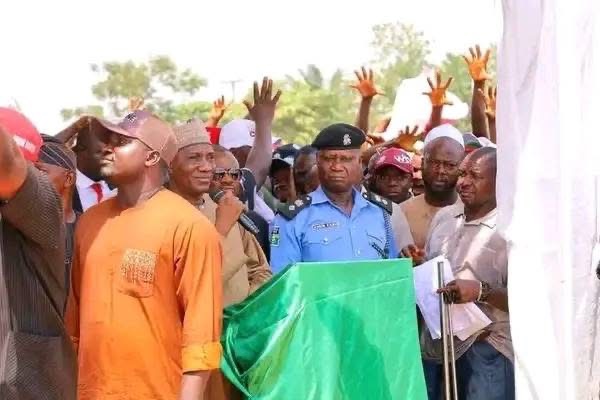
Residents of Gwagwalada Area Council on Wednesday received a strong political message from the Executive Chairman of the council, Abubakar Jibrin Giri, who declared that “the election is over” while addressing members of the public during the visit of the Minister of the Federal Capital Territory, Nyesom Wike, to the area.
Speaking to a crowd gathered for the minister’s tour of projects and engagements across the council, Giri urged residents and political actors to move beyond the intense divisions that characterized the last elections. According to him, the time for campaigns and political rivalry has passed, stressing that the focus should now shift to governance and development.
“The election is over,” the chairman told residents, emphasizing that the political atmosphere in Gwagwalada should no longer be defined by partisanship but by collective efforts toward progress.
However, despite the chairman’s call for unity, many residents and civic observers say the statement comes at a time when dissatisfaction with the council’s performance under the Giri administration remains widespread.
Over the years, several community stakeholders have criticized what they describe as the administration’s inability to address key developmental challenges facing Gwagwalada. Issues such as deteriorating road infrastructure, unemployment among youths, inadequate sanitation, poor educational support, and weak grassroots engagement have repeatedly surfaced in public discourse.
Local activists and community organizers argue that the council leadership has failed to harness the vast economic and cultural potential of the area. Gwagwalada, often described as one of the fastest-growing urban communities within the Federal Capital Territory, continues to struggle with basic municipal problems despite its strategic importance as a gateway between Abuja and neighboring states.
Several residents who spoke with Chronicles Reporters expressed frustration, noting that expectations were high when the administration assumed office but that visible transformation has been limited.
“The reality is that many people feel abandoned,” said one youth leader in the council. “The roads are still bad, opportunities for young people are scarce, and there is little transparency in how the council operates.”
Observers also point to the absence of a strong economic development strategy for the area. Critics argue that the council has not effectively leveraged Gwagwalada’s educational institutions, agricultural potential, and growing population to create sustainable economic opportunities.
While the chairman’s message about putting elections behind may resonate politically, many residents insist that governance must now be measured by tangible improvements in the lives of the people.
Political analysts say the coming months will be crucial for the administration if it hopes to rebuild public confidence. For many in Gwagwalada, the expectation is simple: beyond speeches and political tours, the council must demonstrate clear leadership, accountability, and practical development initiatives.
As the dust of the electoral season settles, residents say the real test of leadership in Gwagwalada will not be political rhetoric but the delivery of meaningful progress.