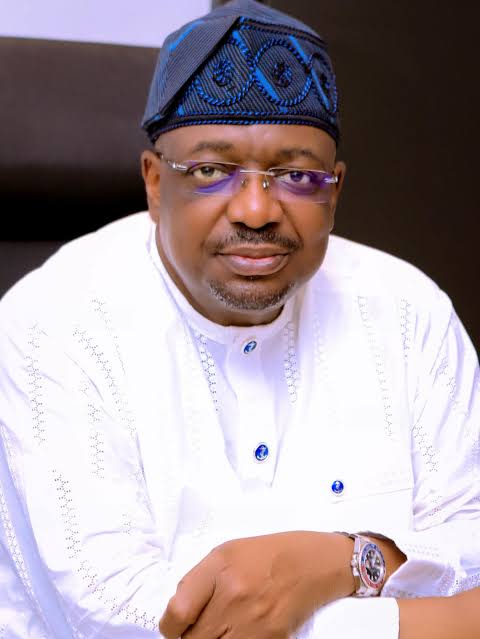
The Federal Capital Territory must have a serious conversation before Philip Tanimu Aduda asks the people of the FCT for another Senate mandate.
This is not about hatred.
It is not about ethnicity.
It is not about political party.
And it is certainly not about preventing anyone from participating in democracy.
It is about something much bigger:
What standard of leadership should the people of the FCT demand from anyone seeking to occupy their seat in the National Assembly?
Because if politics is nothing more than recycling familiar faces, rewarding political loyalty and forgetting yesterday’s questions whenever another election approaches, then democracy becomes nothing more than a ceremony performed every four years.
FCT deserves better.
ADAUDU’S RETURN SHOULD NOT BE NORMALISED
Philip Aduda spent 12 years in the Senate representing the Federal Capital Territory, from 2011 until 2023.
He lost the seat in 2023.
Now, with another election cycle approaching, his political return has once again become a subject of public attention.
That alone should not be controversial.
What should be controversial is the idea that a politician can return to the political battlefield and simply ask citizens to remember the projects he attracted, the relationships he built and the political influence he accumulated while leaving behind difficult questions attached to his record.
No.
The people of the FCT must remember everything.
Not only the achievements displayed on campaign posters.
Not only the photographs.
Not only the political endorsements.
Everything.
THE ₦625 MILLION QUESTION
Two constituency projects associated with Aduda’s years in the Senate have generated significant public scrutiny: the Karu Town Hall project and the Pai Road and drainage project.
Their reported budget figures amount to approximately ₦625 million.
The Karu project was reportedly allocated ₦100 million in 2016, ₦75 million in 2017 and another ₦50 million in 2019—bringing reported allocations to ₦225 million.
Then there is the Pai Road project, which carried a reported budget of ₦400 million.
These are not small figures.
They are public resources.
They are money that should translate into infrastructure, development and measurable improvement in people’s lives.
And whenever hundreds of millions of naira are appropriated for public projects, citizens have every right to ask a simple question:
Where is the value?
₦225 MILLION FOR KARU: WHERE IS THE FULL ACCOUNT?
The Karu project became controversial over both its funding and the identity attached to the facility.
The building became associated with the name Jumma/Aduda Youth Centre, while civic accountability advocates questioned the appearance of Aduda’s late mother’s name on a publicly funded project.
The Karu Gbagyi Development Association subsequently said the community itself decided to honour Aduda’s late mother, Jummai Aduda, and rejected the suggestion that the naming represented personal ownership of the facility.
That explanation is part of the record.
But it should not end the accountability debate.
The bigger issue is public accountability.
Where are the complete financial records?
What was the original contract value?
Who supervised the work?
What amounts were released at each stage?
What was eventually delivered?
What were the project specifications?
Who certified completion?
And what independent mechanism was used to determine that FCT taxpayers received value for the money allocated?
These are not unreasonable questions.
They are the questions democracy is supposed to make possible.
THEN THERE IS PAI
If the Karu project raises questions about public expenditure, the Pai Road project raises even more uncomfortable ones.
The road project was reportedly designed to improve access for communities in the Pai area of Kwali Area Council.
Yet investigative reporting found that by December 2022, only about ₦72.09 million had reportedly been disbursed from the ₦400 million project budget.
Physical inspection reportedly showed less than one kilometre of grading.
Residents complained about the consequences.
Poor roads do not merely inconvenience people.
They affect farmers trying to transport produce.
They affect traders.
They affect children travelling to school.
They affect patients trying to reach healthcare facilities.
They affect the entire economic life of a community.
So when a ₦400 million road project remains incomplete, the question is not merely political.
It is human.
What happened?
Why did the project stall?
Who was monitoring it?
Who was responsible for ensuring that the contractor delivered?
And why should citizens have to fight through investigations and public pressure before a project funded in their name receives attention?
MILLIONS RELEASED, COMMUNITIES WAITING
By May 2024, another payment of approximately ₦73.2 million was reportedly made to the contractor.
That reportedly brought total payments to about ₦145.3 million.
Work subsequently resumed.
But the bigger question remains:
Why should a community have to wait years for a project that was already approved and funded?
This is where Nigeria’s constituency-project culture deserves a radical rethink.
Politicians frequently announce projects as political achievements.
But government money is not the politician’s money.
It belongs to Nigerians.
A senator does not personally build a road simply because the project appeared in the budget during his tenure.
The politician’s responsibility should therefore be measured not by how loudly the project is advertised, but by whether the project was properly executed and whether citizens received value.
Results.
Not speeches.
Not photographs.
Not campaign posters.
THE CONTRACTOR QUESTION CANNOT BE BURIED
Investigative reporting also raised questions about the company handling the Pai Road project.
Kis-Mate Integrated Resources Limited was identified as the contractor, while questions were raised about its profile and experience in relation to major road construction.
That raises a fundamental question:
Who approved the contractor, and what due diligence was carried out before public money was committed?
If the company possessed the necessary technical capacity, then the relevant documentation should speak for itself.
If the company failed to perform, citizens deserve to know who monitored the contract and what sanctions or corrective measures followed.
This is precisely why public procurement cannot remain a political mystery.
Public money requires public answers.
STOP TURNING PUBLIC PROJECTS INTO POLITICAL FAVOURS
Nigeria must destroy the mentality that a politician deserves gratitude because a government-funded project came to his constituency.
No.
The money belongs to the people.
The road belongs to the people.
The school belongs to the people.
The health centre belongs to the people.
The town hall belongs to the people.
The politician’s responsibility is to represent the people and ensure that government works for them.
That is the job.
It is not charity.
It is not benevolence.
It is public service.
And FCT voters must stop allowing politicians to present ordinary responsibilities of public office as extraordinary personal sacrifices.
FCT IS NOT A POLITICAL ATM
For too long, Nigerian politics has operated on a dangerous formula:
Appropriate money.
Announce project.
Take photographs.
Claim achievement.
Return during election season.
Ask voters to remember the good and forget the questions.
That cycle must end.
The FCT is not a political ATM.
It is not a private estate.
Its communities are not political foot soldiers.
Its citizens are not voting machines.
And its public resources are not campaign props.
The people of the FCT deserve representatives who understand that every naira attached to their name carries an obligation to the people who provided it.
THE REAL PROBLEM IS POLITICAL RECYCLING
The question surrounding Aduda is therefore part of a much bigger Nigerian problem.
Why do politicians who have already occupied powerful offices repeatedly return to ask for the same positions without facing a serious public examination of their previous records?
Why does political memory disappear so quickly?
Why are citizens expected to celebrate yesterday’s promises while forgetting yesterday’s failures?
Why do politicians become allergic to accountability the moment their political comeback begins?
A democracy without memory is dangerous.
Because when citizens forget, politicians learn that there is no price for failure.
When citizens forget, accountability becomes optional.
When citizens forget, political office becomes a revolving door.
And when political office becomes a revolving door, democracy becomes the theatre of repetition.
ADAUDU DOES NOT OWN THE FCT SENATE SEAT
This needs to be said plainly.
Philip Aduda does not own the FCT Senate seat.
No politician does.
The seat belongs to the people.
A former senator has no automatic right to return.
Political experience does not create political entitlement.
Old alliances do not create ownership.
Party machinery does not create ownership.
Money does not create ownership.
Fame does not create ownership.
Only the people can decide who receives their mandate.
And before they decide, they have every right to interrogate the record of anyone seeking their trust.
THIS IS WHERE FCT VOTERS MUST DRAW THE LINE
The people of the FCT must ask candidates uncomfortable questions.
Not because politics should become vindictive.
But because public office is too important to be treated casually.
They must ask:
What happened to the projects associated with your tenure?
Where did the money go?
Who implemented the projects?
Who supervised them?
What was delivered?
Why were projects delayed?
What did you do when contractors failed?
What mechanisms did you use to protect taxpayers?
And most importantly:
Why should we trust you with another mandate?
Those questions should be asked of Aduda.
They should be asked of every other candidate.
No sacred cows.
No political worship.
No automatic second chances.
IF ADAUDU RETURNS WITHOUT ACCOUNTABILITY, DEMOCRACY LOSES
If Philip Aduda returns to the Senate, that outcome will ultimately be determined by voters.
But if his return happens without FCT voters first demanding serious answers about the record of his previous tenure, it would expose something deeply troubling about Nigerian democracy.
It would suggest that political memory has been defeated.
It would suggest that accountability can be postponed indefinitely.
It would suggest that public office can be recycled without meaningful examination.
And it would tell politicians across Nigeria that once they have survived one political cycle, they can simply wait for the next opportunity to return.
That is the democratic danger.
The problem is not that a former senator wants to return.
The problem is the possibility that citizens may be asked to hand over power again without first interrogating the record left behind.
FCT MUST BREAK THE CYCLE
The FCT needs a new political culture.
One where politicians are questioned.
One where constituency projects are physically inspected.
One where budgets are followed.
One where contractors are scrutinised.
One where public money is tracked.
One where citizens demand receipts instead of speeches.
One where politicians know that their greatest political asset is not their network, but their record.
That is the kind of democracy worth fighting for.
And that is why the possible return of Philip Aduda to the Senate must not be treated as business as usual.
FCT must ask questions.
FCT must demand evidence.
FCT must remember.
And FCT must make it clear that political office is not a lifetime entitlement.
The FCT Senate seat belongs to the people.
Their money belongs to the people.
Their mandate belongs to the people.
And when politicians come knocking for another mandate, they must understand one thing:
The people are no longer obligated to applaud.
They are entitled to interrogate.
Because democracy is not merely the freedom to vote.
It is the power to hold those who seek your vote accountable.