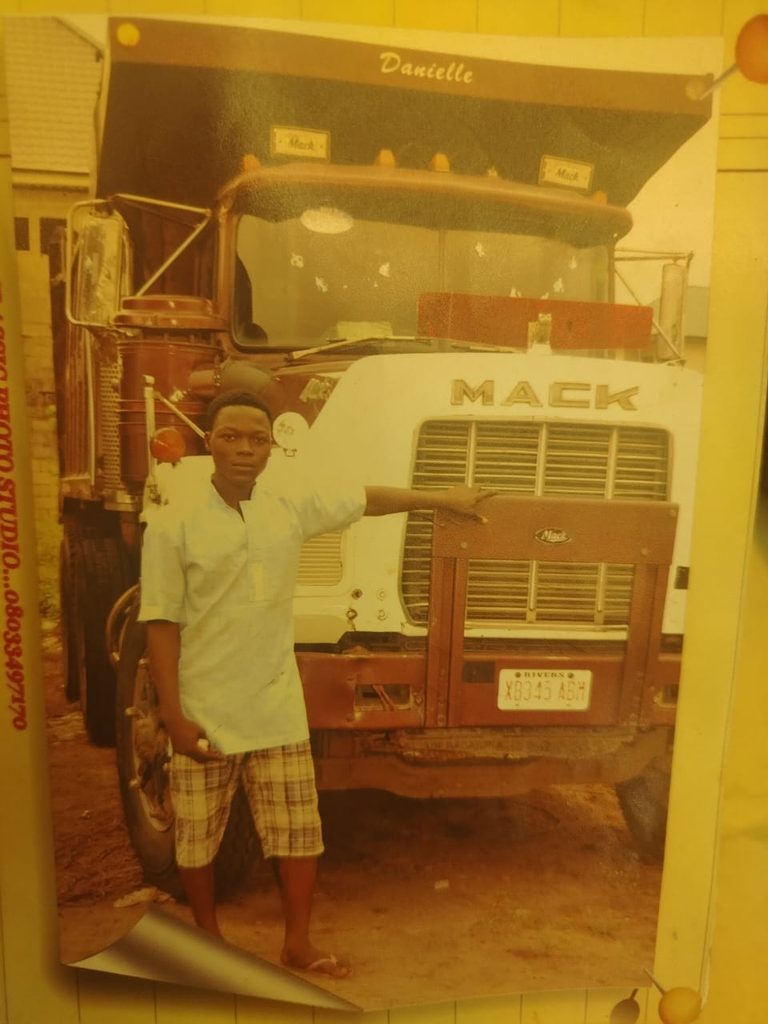
The family of a Nigerian man identified as Godspower Emem has raised concerns over his whereabouts after he was allegedly arrested during the 2020 #EndSARS protests in Port Harcourt, Rivers State, and remained in detention for six years without his relatives having clear information about his custody.
According to the family, Emem was arrested by soldiers during the protests in October 2020 and subsequently handed over to the Department of State Services (DSS) before being transferred to a military detention facility at Wawa Barracks in Niger State, where he reportedly remained for several years.
The family disclosed that he was later transferred to the Kuje Correctional Centre in Abuja in October 2026. However, his relatives said he was moved out of the correctional facility on November 19, 2026, and they have since been unable to establish his current location or confirm whether he was returned to Wawa Barracks.
In an appeal seeking urgent legal intervention, the family expressed fears over his safety, saying they were desperate to know where he was being held and secure his release.
In the appeal, the family explained that Emem had reportedly spent the past six years in detention following his arrest during the #EndSARS protests.
“We humbly write to seek your urgent legal intervention in a matter involving my brother God’s Power Emem, who was arrested by soldiers and was handed over to the DSS during the 2020 #EndSARS protest in Port Harcourt, Rivers State, and subsequently transferred to Wawa Barracks, where he has reportedly remained in detention for the past six years,” the appeal stated.
The family also provided an audio recording of a telephone conversation between Emem and his sister, reportedly made while he was being held at the Kuje Correctional Centre.
During the conversation, Emem expressed uncertainty over his continued stay at the facility, revealing that prison authorities had called out the names of some inmates scheduled for transfer without informing them where they would be taken.
He told his sister that the inmates had initially been called out for movement but were later returned to the facility.
“Yesterday, they called our names among people that they would take us from Kuje. So, but we don’t know what happened, so they returned us back,” he said.
Emem further warned his sister that he could suddenly be moved from Kuje without the family knowing his whereabouts.
“So we don’t know either today or tomorrow. So, if you don’t hear my voice anymore, you know I’m not in Kuje,” he said.
He also cautioned her against accepting calls from anyone claiming to have spoken with him or delivering messages supposedly on his behalf, insisting that she should only rely on direct communication with him.
“Don’t allow anybody to call you to tell me I say, except you hear like this from me,” he told her.
His sister, who appeared worried about the possibility of losing contact with him, repeatedly pleaded with him to find a way to communicate with the family whenever he had the opportunity.
“Please, please, make sure anywhere you’re going, you try to call me as soon as possible. You know we’ll be worried,” she said.
Emem responded that he would make efforts to contact her whenever he could.
“If I have chance, I will try to reach you,” he said.
During the conversation, his sister also disclosed that she was recording their discussion to preserve evidence that she had spoken directly with her brother, particularly amid fears that he could be transferred to an unknown location.
“Now, I’m recording it so that it will have, I will have a proof that I spoke to you. Whatever I’m doing, there will be a proof that I spoke to my brother,” she said.
She subsequently asked him to provide his full name and identification details to help the family establish his identity and trace him if he was moved to another detention facility.
In response, the detained man gave the name “Lagos Nnen” and identified his chest number as 2934.
He explained that the identification number could help authorities locate him even if the family did not know the name under which he had been registered in custody.
“You know, in any place in the world, they will give you chest number. In case, maybe, if you don’t know the name of the person, but that number, they will locate that person with that number,” he said.
His sister also asked whether he had been informed about the destination to which he and other inmates might be transferred.
However, Emem said they had not received any information about their possible destination or the arrangements for their movement.
“For now, we don’t even know our sequence. We don’t know if they will take us from this place. And we don’t even know where they are taking us,” he said.
He added that he would try to inform his family once he arrived at wherever he might eventually be taken.
“So, we will get to the place where we are. So, we will let you know where I am,” he said.
The recording further captured the family’s anxiety over the possibility of losing contact with him, as his sister disclosed that their father also wanted to speak with him to confirm that the person on the telephone was indeed his son.
Emem acknowledged the request but indicated that the circumstances surrounding his detention made communication difficult.
The family said the audio recording was among the evidence they had preserved to establish that they had maintained direct contact with him while he was held at the Kuje Correctional Centre.
They have now appealed to lawyers, human rights organisations and relevant government authorities to urgently intervene, investigate his arrest and detention history, establish his current whereabouts and ensure that his fundamental rights are protected.
“We sincerely appeal to your legal conscience and commitment to justice to kindly look into this matter, offer pro bono legal assistance, and help secure his freedom and fundamental human rights,” the family said.
The family’s appeal raises serious questions about the circumstances surrounding Emem’s prolonged detention, his reported movement between security and correctional facilities, and the apparent difficulty his relatives have faced in obtaining reliable information about his custody.
It also highlights concerns over the transparency of inmate transfers, particularly following Emem’s reported removal from Kuje Correctional Centre on November 19, 2026, without his family being able to establish where he was taken.
The family is yet to confirm whether he has been returned to Wawa Barracks or transferred to another detention facility.
The #EndSARS protests erupted across Nigeria in October 2020, with thousands of young Nigerians taking to the streets to demand an end to police brutality, extrajudicial killings and the activities of the notorious Special Anti-Robbery Squad (SARS).
The protests were met with a heavy security response in several parts of the country, including Port Harcourt, Rivers State, while allegations of arrests and human rights violations involving protesters continued to generate public concern.