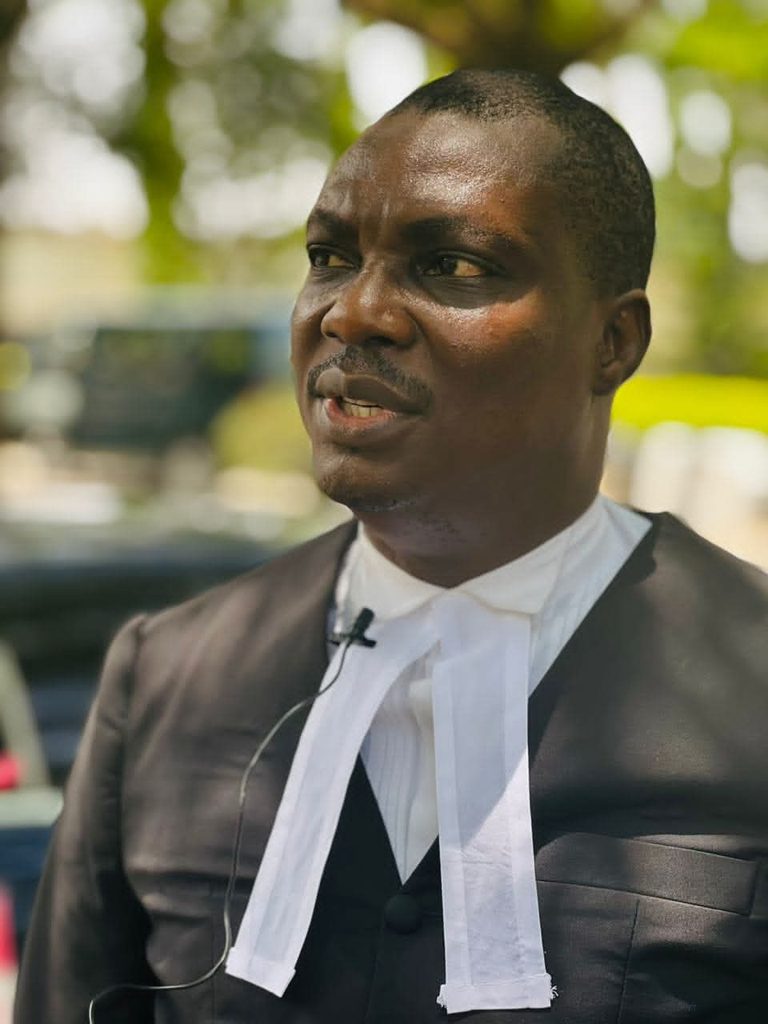
I have spent years in our courts defending people against criminal charges and one question now troubles me deeply: when the State takes years of a citizen’s life through an unjustified prosecution, who pays for the years? When the case eventually collapses, is withdrawn or ends in an acquittal, what indemnity does the citizen get for the years already taken from him?
My mind is on Omoyele Sowore, human rights activist, journalist and current presidential candidate of the African Action Congress for the 2027 presidential election. Whatever anyone, particularly those in power and those who benefit from power, may think of his politics or methods, his public life has involved enormous personal sacrifices for this country. Arrests, detention, restrictions and years spent moving in and out of court have run alongside his activism and political aspiration. I have represented him through some of these battles and I know that the cost of a criminal prosecution cannot be measured merely by counting court dates.
In 2019, the Federal Government put Sowore on trial on charges including treasonable felony. Nearly five years later, the Attorney-General of the Federation discontinued the prosecution in February 2024. The Federal High Court struck out the charge and discharged him. The court also ordered the DSS to return his passport, phones and money seized from him.
Then came another criminal prosecution arising from a complaint by Ned Nwoko in 2022. That case remained in court for about four years and ten months until 6 October 2026 when it was struck out and Sowore was discharged. And while that case was still running, another prosecution came.
In August 2025, a social-media post made by Sowore concerning President Bola Tinubu became the subject of action by the DSS. In September 2025, the DSS commenced another Federal Government prosecution against him at the Federal High Court in Abuja and that criminal trial is still continuing.
A Federal Government prosecution from 2019 to 2024, another criminal case from 2022 to October 2026 and yet another Federal Government prosecution commenced in 2025 and still continuing. Who accounts for these years? A man has a political life and aspirations and a life outside the courtroom. Yet year after year, he must organise portions of that life around criminal proceedings. If at the end the State discontinues the prosecution or the case is struck out, everybody simply goes home. But the years do not return home with the defendant.
This is why I think one of the next phases of the struggle for criminal justice reform in Nigeria must be accountability for prosecution itself. Criminal justice punishes citizens partly to deter, but who deters the State? What deters the State from embarking upon an unreasonable prosecution? What deters a prosecuting authority from commencing or continuing a case when it becomes unnecessary or unreasonable? What happens when prosecution becomes personalised, malicious or revengeful and what happens when the process itself becomes the punishment?
I am not saying that every acquittal or every case that is withdrawn or struck out means that the prosecution was unjustified. A prosecution reasonably commenced may still fail. But where a prosecution was instituted or continued without sufficient reasonable basis, there should be consequences and one of those consequences should be able to restitute or compensate the citizen-victim.
This is not an entirely strange idea. Germany has a statutory compensation regime for specified criminal prosecution measures where, in defined circumstances, a person is acquitted or proceedings are discontinued. South Korea also provides for criminal compensation in defined circumstances.
The years should matter in the criminal justice system. Detention should matter. Restrictions on liberty should matter. Legal expenses should matter. Loss of livelihood should matter. Damage to reputation should matter. Six months cannot be treated in the same way as five years or eight years. The years must count.
And then there is the case of my client, James Dottie. The complaint that set the criminal process in motion did not originate from government, like in Sowore’s cases. It came from a big aviation company where James had worked in the Escravos base of the company in Delta State for about twenty years. The company reported that James conspired with others to steal aircraft parts and sell them abroad.
The timing is important because this happened around the time the company was to declare employees in James’s category redundant. James was dismissed instead and had he not been dismissed, he would have been entitled to redundancy benefits of about ₦50 million in 2018 after approximately twenty years of service.
Then came the criminal trial. For about eight years, James stood trial in Lagos and his case passed through about five judges before he was eventually discharged and acquitted. That was eight years of his life spent answering a criminal allegation.
Most importantly, we had approached Court to challenge his dismissal before his arraignment and while the criminal trial was going on the National Industrial Court had declared James’s dismissal wrongful and awarded him compensatory entitlements of over ₦20 million. Yet the company has still not complied with that judgment even after James has been discharged and acquitted.
So James lost his employment and the redundancy benefits he would otherwise have received. He spent about eight years standing trial and even the compensation awarded to him by the Industrial Court for his wrongful dismissal remains unpaid. Who gives James back those eight years?
For James, therefore, the matter cannot end with his acquittal. The next few weeks will be dedicated to the company and we will enforce compliance with the judgment of the National Industrial Court.
These experiences strengthen my conviction that Nigeria needs a statutory framework for compensation for unjustified prosecution. I therefore propose that public-spirited citizens, lawyers, civil society organisations and victims of unjustified prosecution come together and push for a Citizens’ Bill for Compensation for Unjustified Prosecution.
Let us create a statutory remedy that allows the courts in appropriate cases to compensate citizens who have been subjected to unjustified prosecution, without having to reroute to court again for more years pursuing redress for malicious prosecution. This is not about punishing the State whenever it loses a criminal case. It is about ensuring that before the enormous machinery of criminal prosecution is deployed against a citizen, there are sufficient valid and reasonable grounds for doing so. This will reduce incidents of persecution of citizens using state criminal justice machinery.
Those responsible for taking a citizen through the criminal process should be required to make an indemnity declaration on oath so that where it eventually becomes clear that there was no reasonable basis for the prosecution in the first place, consequences must follow.
The criminal justice system cannot be concerned only with deterring the citizen. The State too must be deterred.
— Tope Temokun
Lawyer and Public Advocate.