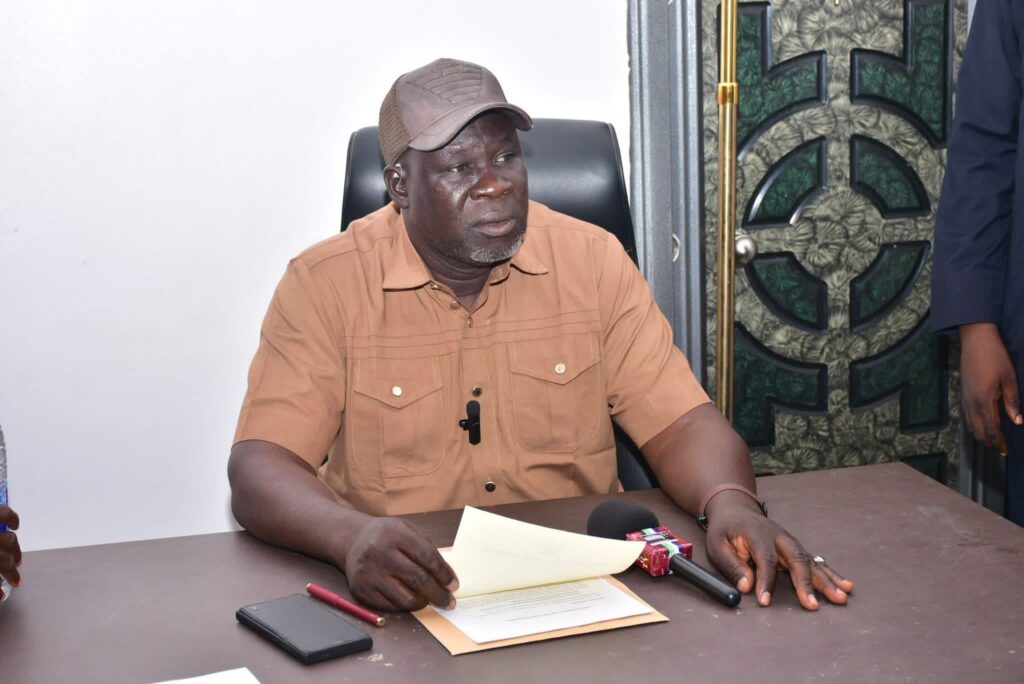
The administration of the Executive Chairman of Gwagwalada Area Council, Hon. Kasim Mohammed, has come under renewed public attention following the arrest of a newly appointed technical partner over alleged signature forgery linked to the acquisition of contracts, in a development that has drawn attention to the council’s commitment to accountability, transparency and the protection of public interest.
Investigations by Chronicles Reporters have confirmed that the technical partner was arrested following the emergence of allegations involving the alleged forgery of a signature to obtain contracts. The suspect is reportedly under investigation, although the full circumstances surrounding the incident and the specific details of the alleged transaction are being withheld pending an official response from the council.
Sources within the council indicated that the matter came to the chairman’s attention and that Kasim Mohammed ordered the suspect’s immediate arrest and investigation. According to these sources, the response demonstrates the chairman’s determination to ensure that allegations of misconduct are not ignored, regardless of an individual’s appointment, position or relationship with the administration.
While the full details remain undisclosed, the development presents an opportunity to examine the principles guiding the administration’s approach to public service. For a local government entrusted with public resources and the welfare of its residents, the credibility of its leadership depends not only on its policies and projects but also on how it responds when allegations of wrongdoing emerge within its own administrative structure.
The reported action has also raised an important question for public opinion: should an administration be judged solely by allegations involving individuals working with it, or by the manner in which its leadership responds when such allegations come to light?
In Kasim Mohammed’s case, the reported decision to order an arrest and investigation, rather than allow the matter to pass without scrutiny, could be interpreted as a demonstration of the importance of accountability within government. However, the ultimate assessment of the administration’s commitment to transparency will depend on the evidence, the conduct of the investigation and the council’s willingness to provide an appropriate official account of the incident.
An administration that seeks to build public confidence must ensure that its appointees, employees, contractors and technical partners understand that public service carries responsibilities that cannot be separated from the rule of law. Allegations involving official signatures and contract processes are particularly serious because public confidence in governance depends on the integrity of administrative records and the fairness of procedures used to award public contracts.
At the same time, the principle of fairness must remain central to the handling of the matter. The suspect is entitled to the presumption of innocence, and the allegations must be examined through the appropriate investigative and legal processes before any conclusion about criminal responsibility is reached.
Chronicles Reporters understands that the chairman and the Senior Special Assistant on Media are yet to issue a response to inquiries concerning the matter. As of the time of filing this report, the council has not released an official statement setting out its account of the incident, the status of the investigation or any administrative measures that may have been taken.
Chronicles Reporters has deliberately withheld further identifying and procedural details while awaiting an official position from the council. This is to ensure that the report does not compromise the ongoing process or present incomplete information as a final finding.
The council’s eventual response will be important in clarifying the circumstances surrounding the arrest, the nature of the allegations and the steps being taken to protect the institution’s contractual and administrative processes. It will also provide an opportunity for the chairman to explain the standards of conduct expected of those entrusted with responsibilities within his administration.
For residents of Gwagwalada, the issue extends beyond the individual suspect. It touches on a broader expectation that public institutions should protect public resources, maintain transparent procedures and respond decisively to credible allegations of wrongdoing while respecting the law.
Kasim Mohammed’s reported response may strengthen confidence among residents who expect accountability from public officeholders. Nevertheless, lasting public trust will depend on verifiable outcomes, institutional safeguards and transparent communication rather than claims or perceptions alone.
The unfolding development therefore presents both a test and an opportunity for the Gwagwalada Area Council administration: a test of its ability to address alleged misconduct within its operational structures, and an opportunity to demonstrate that integrity and accountability are standards to be upheld in practice.
Chronicles Reporters will continue to follow the matter and publish further verified information when the council, the chairman or the relevant authorities provide an official response. Until then, the investigation remains ongoing, and all conclusions regarding the alleged offence must await the outcome of due process.