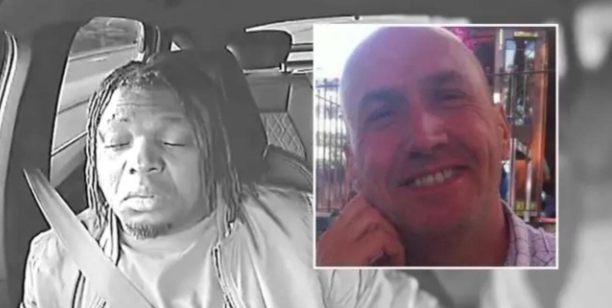
A UK-based Nigerian taxi driver, Kolawole Erunkulu, 45, has been sentenced to six years in prison after falling asleep at the wheel and fatally hitting a 59-year-old motorist following an extended period of work and inadequate rest.
Erunkulu, of Bexleyheath, London, was driving an Audi on August 17, 2025, when he suffered what investigators described as a microsleep, causing his vehicle to leave the road and crash into Philip Dray, who had stopped in a lay-by.
Dray was getting into his Volkswagen after pulling over to take a break from driving when he was struck.
According to evidence presented in the case and reported by LBC News, Erunkulu had been working as a taxi driver for about 12 hours, with only short breaks, when the fatal collision occurred.
Investigators established that he had driven for approximately 53 hours over the three days preceding the crash. His longest break during that period was seven hours, taken three days before the collision.
Footage recorded inside Erunkulu’s vehicle captured the moments before the crash and showed him falling into a microsleep. His Audi subsequently swerved off the road and struck Dray.
The vehicle continued travelling for about 10 seconds after the collision.
A microsleep is a brief episode of involuntary sleep that can last only a few seconds, during which the brain temporarily fails to properly process information or respond to its surroundings.
Erunkulu pleaded guilty in June 2026 to causing death by dangerous driving.
He was sentenced to six years’ imprisonment and disqualified from driving for eight years. The driving ban will run concurrently with his prison sentence, and he will be required to take an extended driving test if he seeks to regain his driving licence in the future.
Passing sentence, Her Honour Judge Lees said the footage made clear that Erunkulu was extremely tired and should have known that he was not fit to continue driving.
“The footage shows the defendant was extremely tired and, in my view, has continued to drive when he must have known that. He was driving commercially,” the judge said.
She added that although Erunkulu did not have a passenger in the vehicle at the time, he could have been carrying one while in that condition.
“Even though he didn’t have a passenger, he could have done and has driven in that state. All of this could have been stopped had he have slept,” she said.
Acting Detective Inspector Rob Baldwin, of the Serious Collision Investigation Unit, said the case demonstrated the potentially devastating consequences of driving while fatigued.
“This case sadly highlights the very real dangers of driving while fatigued. Mr Erunkulu had worked long hours with insufficient rest over the preceding days, accumulating a sleep debt,” Baldwin said.
He explained that fatigue could significantly affect a driver’s ability to remain alert and respond appropriately to danger, particularly during the early hours of the morning when the body’s natural drive to sleep is strongest.
“Anyone who feels tired should not continue driving, as the consequences can be devastating,” he warned.
For Dray’s family, the crash brought the sudden loss of a man they described as dependable, quiet and deeply caring.
His sister described Philip as “an amazing partner and man” who never sought attention but consistently showed care and respect towards others.
“He never sought attention and lived his life quietly, but he cared deeply about others and treated people with respect and decency. He was simply a good man,” she said.
She also described Dray as a careful and conscientious driver who spent his working life making sure that his passengers and other road users were safe.
“The fact that he, someone who worked every day to keep others safe, had his life taken in such a way makes this loss even more incomprehensible and tragic,” she said.
Dray’s partner described him as a “sweet, gentle, and caring man” and the person who was always there for her.
“Phil was my partner and my soulmate,” she said.
She spoke of the enormous emotional and physical void his death had left behind, recalling how he would regularly call her several times a day while waiting for clients or during lunch simply to ask how her day was going.
“He would ring me several times a day whenever he was waiting for a client or at lunch, just to see how my day was going. I miss those calls very much,” she said.
The case has underscored the dangers faced by commercial drivers who continue working despite severe fatigue, with investigators stressing that no journey is worth the potentially irreversible consequences of driving while dangerously tired.