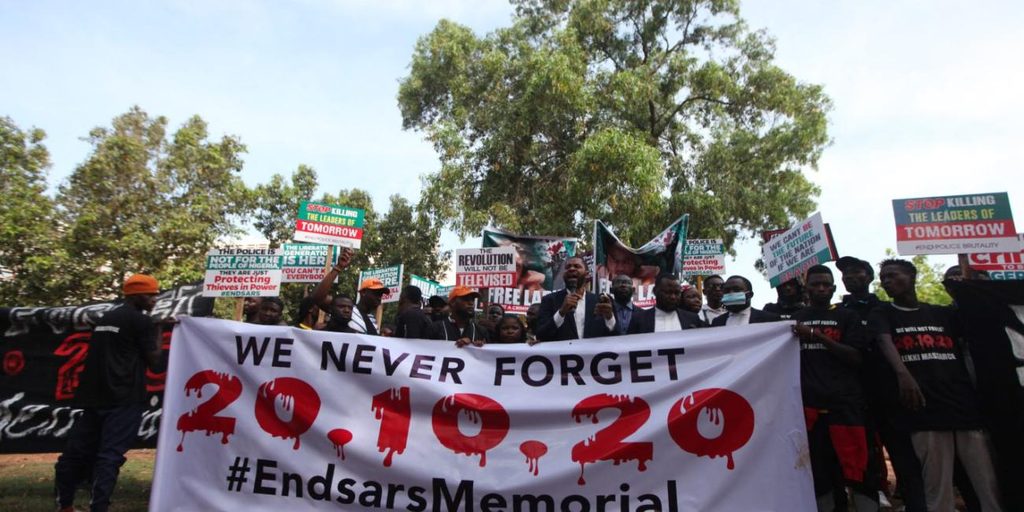
The Youth Rights Campaign (YRC) and allied organisations have announced plans to commemorate the sixth anniversary of the #EndSARS protests with a TikTok Live discussion focusing on police brutality, democratic rights, economic hardship and the growing demands for accountability and better governance in Nigeria.
The online event, scheduled for Tuesday, October 20, 2026, at 7 p.m., will take place on the TikTok account @cruisenaija001 under the theme, “Six Years After #EndSARS: Remembering the Victims, Defending Democratic Rights and Fighting for a New Nigeria.” Cruise Naija001 will moderate the discussion.
The planned commemoration comes six years after thousands of young Nigerians took to the streets in October 2020 to protest police brutality, demand the disbandment of the Special Anti-Robbery Squad (SARS) and call for fundamental changes in policing and governance.
Speakers expected at the event include Francis Nwapa, National Secretary of YRC; Hon. Seyi Akinde, a member of the Organising Committee of the #EndBadGovernance Movement in Lagos; Zikora Ibeh, Assistant Executive Director of Corporate Accountability and Public Participation Africa; Rasheedat Adeshina of the Joint Action Front; Ayoyinka Oni, a human rights activist and coordinator of the #EndSARS United Group; and Kamsi Ibeh, whom the organisers identified as a survivor of the Lekki toll gate incident.
In a press statement dated October 18, 2026, and signed by YRC National Coordinator Michael Adaramoye Lenin and Nwapa, the organisation said the event would provide a platform to remember those who died during the 2020 protests, assess the state of democratic rights in Nigeria and examine the economic realities confronting young people six years after the demonstrations.
The organisation expressed concern that justice had yet to be secured for victims of the Lekki toll gate incident and other Nigerians who died during the protests, arguing that the passage of six years had not erased the need for accountability.
The #EndSARS protests began as a nationwide movement against police brutality, particularly abuses attributed to SARS, a police unit accused of harassment, extortion, unlawful arrests and other human rights violations. The demonstrations subsequently expanded into broader demands for good governance, accountability, respect for human dignity and improved living conditions.
The Lekki toll gate in Lagos became one of the most prominent locations associated with the protests following the deadly incident of October 20, 2020, when security personnel opened fire during a demonstration. The incident attracted national and international condemnation and intensified demands for an independent investigation and accountability for the reported use of force against protesters.
According to YRC, the issues that drove young Nigerians onto the streets in 2020 remain unresolved, while the economic conditions confronting ordinary citizens have deteriorated.
The campaign cited rising fuel prices, increasing rents, high education costs, inadequate public healthcare and widespread unemployment as some of the challenges placing additional pressure on Nigerian households, particularly young people struggling to secure jobs, affordable housing and access to essential services.
YRC attributed the worsening economic conditions to what it described as neoliberal capitalist policies, including privatisation, deregulation, subsidy removal and reduced government spending on public welfare.
The organisation argued that these policies had increased the financial burden on ordinary Nigerians while disproportionately benefiting a small economic elite.
It maintained that the struggle for justice and accountability must extend beyond police reform to address the economic and social conditions affecting the majority of Nigerians.
The campaign also called for renewed youth mobilisation, urging young people to organise around issues of economic hardship, social welfare, democratic rights and government accountability rather than treating the anniversary merely as a remembrance of past demonstrations.
YRC called on Nigerians at home and in the diaspora to participate in the TikTok Live discussion, remember those who lost their lives during the protests and consider collective action to address the country’s challenges.
The organisation also referenced youth-led protests in France as an example of resistance to economic exploitation, arguing that Nigerian youths should similarly organise against policies and conditions they believe are undermining their livelihoods.
“The time has come to #EndCapitalism,” the statement declared, presenting the slogan as a central message of the planned anniversary event.
The campaign urged students, workers, traders, artisans, civil society organisations and other members of the public to join the online discussion, share promotional materials and contribute to conversations about Nigeria’s political and economic future.
The organisation said its campaign was not limited to demands for police reform but also sought broader economic changes, improved social welfare and greater accountability from those in government.
The planned commemoration comes amid continuing debates over the legacy of the #EndSARS protests, the response of authorities to demands for police accountability and the economic difficulties confronting millions of Nigerians.
For YRC and its allies, the sixth anniversary represents an opportunity to revisit the demands that brought thousands of young people onto the streets in 2020 and examine whether meaningful progress has been made.
The organisations are expected to use the online discussion to reflect on the experiences of protesters, highlight unresolved concerns surrounding the deaths recorded during the demonstrations and encourage a new generation of young Nigerians to engage with questions of democratic rights, economic justice and governance.
Six years after #EndSARS became a defining moment in Nigeria’s youth-led protest movement, the campaign insists that remembering the victims must go hand in hand with pursuing accountability and confronting the conditions it believes continue to fuel public discontent.