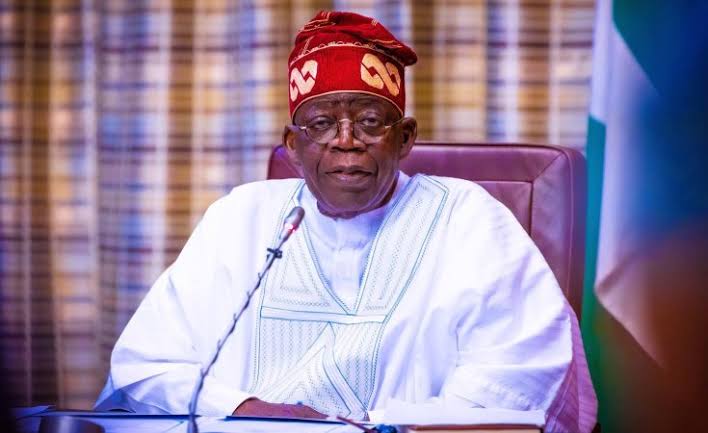
President Bola Tinubu has described the Hausa people as “great pillars” of Nigeria, praising their contribution to the country’s unity and progress while declaring the Hausa language a major force for unity and commerce across the world.
Tinubu made the remarks on Wednesday, August 26, in a message posted on his official X handle to commemorate Hausa Day, an annual celebration of Hausa language, culture and heritage being marked at the historic Daura Palace.
The President said the Hausa people occupy an important position in Nigeria’s national development and acknowledged the influence of the Hausa language beyond Nigeria’s borders.
“The Hausa people are great pillars that play a vital role in the unity and progress of Nigeria,” Tinubu said.
He added, “The Hausa language, without doubt, has flourished and has become a major language of unity and commerce across the world.”
Tinubu subsequently congratulated Hausa communities on the occasion, saying, “I congratulate the vast Hausa community on the occasion of Hausa Day, which is being celebrated at the historic Daura Palace today.”
The President’s remarks have placed renewed attention on the cultural and linguistic influence of the Hausa people at a time when questions surrounding ethnic identity, national unity and the place of Nigeria’s diverse cultural groups continue to generate debate.
Hausa Day, also known as World Hausa Day or Ranar Hausa, is observed every August 26 to celebrate the Hausa language and promote its continued use and preservation.
The annual observance began as a social media initiative by Nigerian journalist Abdulbaki Aliyu Jari, who sought to encourage greater use of Hausa on digital platforms while drawing international attention to its cultural significance.
What started as an online campaign has since expanded into celebrations across different parts of Africa, Europe, the Middle East, Asia and the Americas, reflecting the growing global reach of the Hausa language and communities.
Although Hausa Day has gained international visibility, the observance has not received formal recognition from the United Nations.
Hausa is one of Nigeria’s major languages and is widely spoken across northern Nigeria and other parts of West Africa. It is also one of the most widely spoken indigenous African languages and ranks among the world’s major languages by number of speakers.
Beyond everyday communication, Hausa has historically played a significant role in trade and cross-border commerce across West Africa, with the language serving as a common means of communication among people from different ethnic and linguistic backgrounds.
Tinubu’s declaration therefore places the Hausa language and its speakers at the centre of the national conversation on Nigeria’s cultural diversity, with the President emphasising their role in strengthening national unity and contributing to economic and social development.
The celebration at Daura Palace also gives added significance to the occasion, as Daura is widely regarded as one of the historic centres of Hausa culture and heritage.
As Nigeria continues to grapple with ethnic, regional and political divisions, the President’s message has reignited discussions about the importance of recognising the contributions of the country’s various ethnic and linguistic communities while promoting a stronger sense of national identity.
For many celebrating Hausa Day, the occasion represents not only a celebration of a language but also an opportunity to preserve cultural heritage, expand the use of Hausa in the digital age and promote its growing relevance on the international stage.