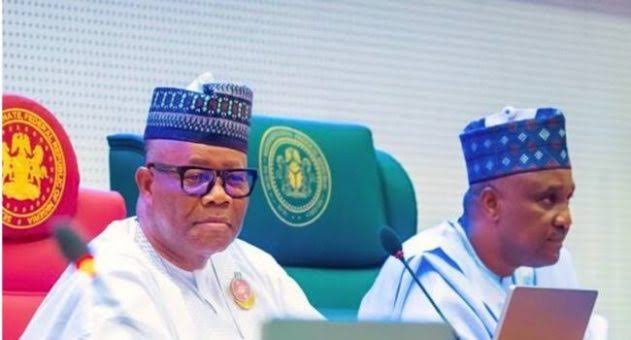
Before the 2027 general elections, a coalition of 71 Nigerian, African and international civil society and human rights organisations has issued a stark warning that Nigeria’s democracy is under grave threat, accusing the National Assembly of advancing what it described as a coordinated legislative assault on constitutional freedoms, civic space and democratic governance.
The coalition, comprising prominent organisations including Amnesty International Nigeria, SERAP, ActionAid Nigeria, BudgIT Foundation, Yiaga Africa, the Centre for Democracy and Development (CDD), the Centre for Journalism Innovation and Development (CJID), Media Rights Agenda, CLEEN Foundation and the Transition Monitoring Group (TMG), is expected to formally present its position at a joint press conference in Abuja on Monday.
In a joint statement titled “Nigeria’s Democracy at a Crossroads: A Joint Civil Society Press Conference on Protecting Civic Space, Constitutional Freedoms and Democratic Governance,” the organisations expressed deep concern over what they described as an escalating crackdown on civic freedoms through a wave of restrictive bills currently before the National Assembly.
According to the coalition, if the proposed legislation is passed into law, it would significantly expand executive powers while weakening fundamental constitutional rights, including freedom of expression, peaceful assembly, association, media freedom, access to information and democratic participation.
The organisations argued that the bills are emerging at a time when Nigeria’s civic space has suffered one of its sharpest declines since the country’s return to democratic rule in 1999.
They alleged that since President Bola Ahmed Tinubu assumed office in May 2023, authorities have increasingly relied on restrictive laws, politically motivated prosecutions, arbitrary arrests, judicial intimidation and the controversial application of the Cybercrimes Act to target journalists, activists, bloggers, media organisations and civil society groups.
The coalition cited the continued prosecution of activist and publisher Omoyele Sowore, alleged intimidation of SERAP and repeated actions against independent media as evidence of what it described as a growing pattern of repression.
It also referenced findings by the Committee to Protect Journalists (CPJ), which reportedly documented 91 cases of journalists being arrested, attacked or harassed across 13 states and the Federal Capital Territory during the first three years of the current administration.
The organisations maintained that the pending bills are not isolated legislative proposals but part of what they described as a deliberate strategy to consolidate executive control over civil society, independent media and digital platforms while limiting public scrutiny and democratic accountability.
Expressing concern over the timing of the bills, the coalition warned that their passage ahead of the 2027 elections could create an atmosphere of fear, self-censorship and intolerance of dissent, thereby undermining free political participation.
According to the coalition, democracy cannot thrive where journalists, civil society organisations and citizens are prevented from speaking freely or holding public officials accountable.
Among the bills attracting the strongest opposition is the Foreign Aids (Regulation, Transparency and Disclosure) Bill, 2026 (SB.1034), which the organisations said would establish a powerful Foreign Aid Regulatory Commission with authority to register, inspect, audit, sanction, suspend and potentially shut down non-governmental organisations, civil society organisations and private institutions receiving foreign assistance.
While acknowledging the need for transparency in foreign funding, the coalition argued that the bill grants excessive powers capable of placing independent organisations under executive control.
It further noted that existing agencies such as the Corporate Affairs Commission (CAC), the Economic and Financial Crimes Commission (EFCC) and the Special Control Unit Against Money Laundering (SCUML) already regulate financial accountability, making the proposed commission unnecessary.
The organisations also criticised provisions compelling recipients of foreign assistance to align projects with government-defined development priorities, warning that such requirements could undermine human rights advocacy, anti-corruption campaigns, governance programmes and public interest litigation.
The coalition equally rejected another proposed bill seeking to compel social media companies to establish physical offices in Nigeria or risk being barred from operating in the country.
According to the organisations, such legislation would hand government greater leverage over digital platforms that have become vital spaces for public debate, civic engagement and access to information.
They argued that making physical presence a condition for operating in Nigeria is unnecessary, disproportionate and capable of encouraging censorship while discouraging investment and innovation.
The coalition insisted that both proposed laws violate the Nigerian Constitution as well as the country’s obligations under the African Charter on Human and Peoples’ Rights, the International Covenant on Civil and Political Rights and other international human rights treaties.
Consequently, the organisations called on Senate President, the Speaker of the House of Representatives and members of the National Assembly to immediately withdraw the Foreign Aids (Regulation, Transparency and Disclosure) Bill, the proposed social media regulation bill and every other pending legislation they believe unjustifiably restricts freedom of expression, association, peaceful assembly, media freedom, access to information and democratic participation.
They also urged lawmakers to ensure that future legislation affecting civil society, media freedom and digital rights complies fully with constitutional guarantees and Nigeria’s international obligations, while insisting that journalists, civil society organisations, digital rights advocates and other critical stakeholders must be meaningfully consulted before such laws are introduced.
Describing the moment as a defining test of Nigeria’s democratic future, the coalition warned that the National Assembly now faces a historic choice between protecting constitutional democracy or accelerating what it called the country’s democratic decline.
The organisations urged lawmakers to reject what they described as “repressive bills” and instead enact laws that strengthen civic space, transparency, accountability and democratic governance, insisting that Nigeria’s future depends on protecting the constitutional freedoms of its citizens.