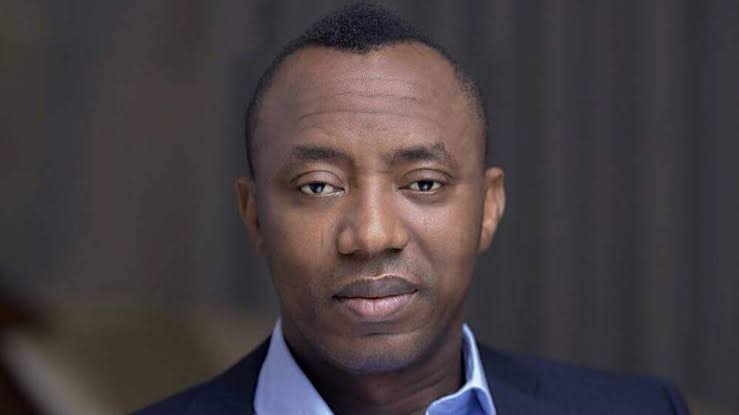
Human rights activist and presidential candidate of the African Action Congress (AAC), Omoyele Sowore, has thrown his weight behind the decentralisation of policing in Nigeria, proposing the establishment of federal, state, local government, campus and township police to strengthen security across the country.
Sowore made the proposal on Monday while speaking at the ongoing Nigerian Bar Association (NBA) Annual General Conference in Port Harcourt, Rivers State, where he argued that Nigeria could not continue to operate an increasingly centralised policing system while describing itself as a federation.
“I support federal police, I support state police, I support local government police, I support campus police, and I support even township police,” Sowore said.
However, he warned that creating state police without adequate financial and institutional safeguards could give state governors excessive control over security forces and create opportunities for political abuse.
The activist therefore called for governors’ controversial security votes to be removed and transferred into an escrow account that could be used to finance policing structures and guarantee the payment of personnel.
“We must remove security votes from governors and put them in an escrow account,” he said.
According to Sowore, the proposed arrangement would ensure that police officers deployed under state structures would continue to receive their salaries even where state governments failed to meet their financial obligations.
“If we hire state police and they don’t pay them, we pay them from that escrow account,” he explained.
Sowore also cautioned against placing state police commissioners completely under the authority of governors, warning that such a structure could become dangerous if political leaders were able to use security agencies without effective checks and balances.
“It will be dangerous to have irresponsible police commissioners in the hands of governors,” he said.
The AAC presidential candidate said his position on police reform was partly shaped by his own experiences with the Nigerian security system, stressing that responsible policing was necessary to protect citizens from abuse.
“I am a person who suffers from police abuse on a regular basis. It is in my own interest and personal safety to support responsible policing,” Sowore said.
He further argued that the debate over state police should be examined within the broader question of Nigeria’s federal structure, insisting that the different components of the federation should have greater control over security matters within their jurisdictions.
“Let’s ensure that if we are a federation, we are truly a federation,” he said.
Sowore questioned why Nigerians were still debating the principle of state policing, arguing that the country’s constitutional framework should allow its constituent units to exercise greater control over their security.
“I don’t know why we are debating state police. The Constitution has made it clear that all the federation units must be able to control their own security,” he said.
But he warned that decentralising policing without strengthening the independence of local governments could simply transfer the problem from one level of government to another.
Sowore accused state governors of exercising excessive control over local government finances and argued that genuine local government autonomy would be necessary if local government police were to function effectively.
“But your governors are stealing local government money. We must make sure that they have autonomy,” he said.
He also stressed that the proposed policing system must be properly regulated and standardised to prevent different jurisdictions from operating with conflicting standards or using police powers without adequate accountability.
“We must also regulate and standardise,” Sowore said.
The question of state police has remained one of Nigeria’s most contentious security and constitutional reform debates, particularly as the country continues to grapple with terrorism, banditry, kidnapping, communal violence and other forms of insecurity.
Supporters of decentralised policing argue that state and local security structures could improve intelligence gathering because officers operating closer to communities may better understand local threats and respond more rapidly to emergencies.
Critics, however, have consistently warned that state police could be vulnerable to political interference, particularly if governors are given direct control over police commissioners, recruitment, funding and operational decisions.
Sowore’s proposal attempts to address that concern by combining decentralised policing with financial safeguards, local government autonomy, regulation and standardisation.
His position effectively calls for a multi-level policing system in which federal, state, local government, campus and township authorities could have security structures appropriate to their jurisdictions, while financial and institutional safeguards would be established to prevent any single political authority from exercising unchecked control.
The proposal comes amid renewed national discussions on whether Nigeria’s current centralised policing structure is capable of adequately responding to the country’s growing and increasingly localised security challenges.