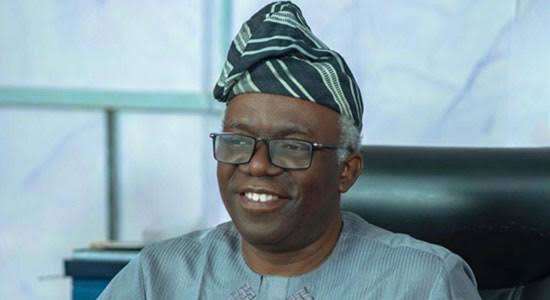
Human rights lawyer and Senior Advocate of Nigeria, Femi Falana, has sounded a chilling warning over the escalating political violence in Osun State, alleging that no fewer than 30 people have been killed in politically motivated attacks in recent weeks ahead of the August 15, 2026 governorship election.
Falana said the alleged killings constitute a far more urgent crisis than the controversy surrounding the Economic and Financial Crimes Commission’s freezing of an account linked to the Osun State Government, warning that the failure to arrest and prosecute those responsible could trigger further bloodshed before the election.
Speaking on Politics Today, a programme on Channels Television, on Friday night, the prominent lawyer expressed concern that public attention had been overwhelmingly focused on the legal and political battle over the EFCC’s action, while the alleged loss of human lives was receiving comparatively less attention.
“For me, the more serious issue that is not being addressed by Nigerians is that, in the last few weeks, not less than 30 human beings have been killed in Osun State, politically motivated killings,” Falana said.
He lamented that, to his knowledge, none of those allegedly responsible had been charged before a court.
Falana warned that unless the perpetrators are urgently identified, arrested and prosecuted, they could become emboldened to target more political opponents as the election draws closer.
“If we don’t arrest them within the next few days and put them behind bars, they are going to be on the prowl to kill more people,” he warned.
His comments come at a particularly tense moment in Osun State, where political rivalry between the ruling Accord Party and the opposition All Progressives Congress has intensified ahead of the governorship poll.
The rival political camps have continued to exchange allegations over violence, intimidation and the alleged abuse of government institutions, raising fresh concerns about the security environment surrounding the election.
Falana also waded into the controversy surrounding the EFCC’s decision to obtain a court order freezing an account linked to the Osun State Government over alleged suspicious financial transactions.
While acknowledging the EFCC’s legal responsibility to investigate suspected corruption and prevent the diversion of public resources, he questioned whether an anti-corruption investigation should be conducted in a manner capable of disrupting the financial operations of an elected state government.
“The bigger question here is whether a federal agency of government can cripple the financial activities of a state government,” he said.
The legal practitioner argued that investigators could have traced the allegedly suspicious transfers, identified the recipients and sought targeted orders against the accounts that allegedly received the funds.
“Why freeze the source account rather than trace the alleged suspicious transfer, identify the corporate recipient, and seek targeted orders against those destination accounts?” he asked.
Falana stressed that nobody should support the diversion of public funds, but maintained that anti-corruption enforcement must not become a tool for paralysing legitimate government functions.
“Nobody can support any agency, whether of the federal government or the state, to cripple the functions of any state government,” he stated.
However, the senior lawyer also rejected arguments that the approach of anti-corruption agencies should be restrained simply because an election is approaching.
He questioned when agencies such as the EFCC, the Independent Corrupt Practices and Other Related Offences Commission and the police should suspend investigations or arrests over allegations of financial crimes.
“At what stage can the EFCC and ICPC, or even the police, stop making arrests, stop investigating allegations of criminal diversion of public funds? That is what has not been stated,” he said.
Falana further addressed the constitutional powers of the Attorney-General of the Federation, maintaining that the nation’s chief law officer has extensive discretion in criminal prosecution.
According to him, the Attorney-General can intervene in criminal cases, including corruption-related matters, where circumstances warrant such action.
“The Attorney-General can intervene in any case, whether it’s a corruption case or not,” he said.
He, however, distinguished between presidential advice and presidential control, explaining that while the President may advise the Attorney-General on matters of national importance, the President cannot simply compel him to discontinue or pursue a prosecution.
“The President can advise the Attorney-General. That’s why I use the word ‘advise’,” Falana explained.
The lawyer’s warning has added a new dimension to the increasingly bitter political contest in Osun State, where the election is already being overshadowed by allegations of violence and a fierce dispute over the activities of federal institutions.
The EFCC’s freezing of the state-linked account has generated strong reactions from the state government and opposition figures, with critics questioning the timing of the action and the implications for governance so close to the election.
The development has also fuelled allegations and counter-allegations over whether federal institutions are being used to influence the political contest. The EFCC, however, has maintained that its actions are based on its statutory responsibility to investigate suspected financial crimes.
But for Falana, the political and financial controversies must not push the alleged killings to the background.
His central warning is that an election cannot be considered credible or peaceful if political violence is allowed to continue unchecked.
With August 15 fast approaching, Falana is urging security agencies to treat the alleged killings as an immediate national security concern, identify those responsible, bring them before the courts and prevent further attacks.
The warning comes with a stark message: if alleged political killers are allowed to operate with impunity, the violence in Osun could escalate before voters have the opportunity to cast their ballots.