Iraq has issued an unusually blunt warning amid the escalating regional conflict, declaring that its territory must not be used as a platform for attacks against other countries.
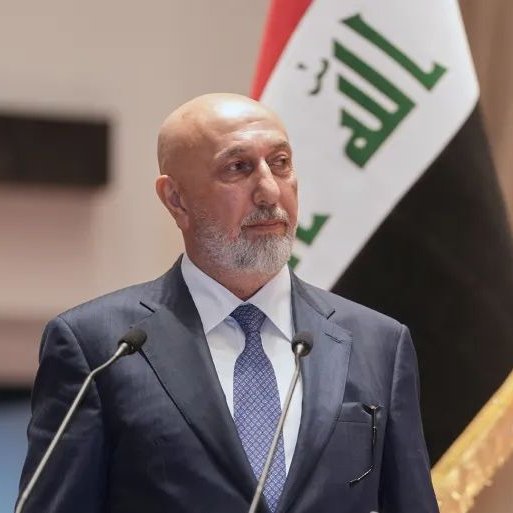
President Nizar Amidi, speaking at the eighth Baghdad Dialogue on Saturday, reaffirmed Baghdad’s determination to keep Iraq from being dragged deeper into the widening confrontation between Iran and the United States.
Amidi’s position was unequivocal: Iraq will not accept its territory being used to launch attacks against another country. The declaration places Iraqi sovereignty at the centre of Baghdad’s increasingly difficult attempt to navigate a conflict involving powerful regional and international actors.
The Iraqi president also stressed that weapons must ultimately be brought under the control of the Iraqi state, pointing to the country’s constitution and saying that Iraq’s religious establishment in Najaf supports the principle. He called for dialogue with armed groups as Baghdad seeks an Iraqi solution to the long-running problem of weapons outside direct state control.
The warning carries particular weight because Iraq has repeatedly found itself caught between competing powers. Its territory has strategic importance to Iran, the United States and other regional players, while armed groups operating inside the country have previously complicated Baghdad’s efforts to maintain a single, sovereign security policy.
Amidi made clear that Baghdad does not want Iraq to become another battlefield.
He said Iraq has been among the countries most affected by the ongoing war and reiterated the need to prevent the conflict from spreading further into Iraqi territory.
For Baghdad, the message is as much about survival as diplomacy: Iraq wants control over its own territory, its weapons and its foreign-policy choices.
The stakes are also economic. The conflict has disrupted movement through the strategically vital Strait of Hormuz, creating serious complications for Iraqi oil exports. Amidi confirmed that some vessels carrying Iraqi oil had recently been allowed to pass through the waterway, while stressing that developments in Hormuz have consequences far beyond Iraq.
Iraq’s latest position therefore amounts to a direct challenge to any armed faction or foreign power seeking to use Iraqi soil as a launchpad for confrontation.
Baghdad is effectively saying: Iraq will not fight another country’s war on Iraqi soil.
Whether that red line can be enforced remains the more difficult question. The declaration is politically powerful, but translating sovereignty from a presidential statement into effective control over every armed actor operating inside Iraq will test the strength of the Iraqi state.
For now, however, Baghdad has made its position unmistakable: Iraq wants to remain a sovereign state, not a battlefield for somebody else’s war.