Canada has suspended trade negotiations with the United States after the administration of U.S. President Donald Trump proposed imposing a 50 per cent tariff on approximately $28 billion worth of Canadian goods, triggering a fresh escalation in economic tensions between the two North American neighbours.
The Canadian government announced the suspension after accusing Washington of making last-minute changes to its proposed negotiating terms, describing the new conditions as “unfair” and “uneconomic” while warning that the changes had raised serious questions about the reliability of any potential trade agreement with the United States.
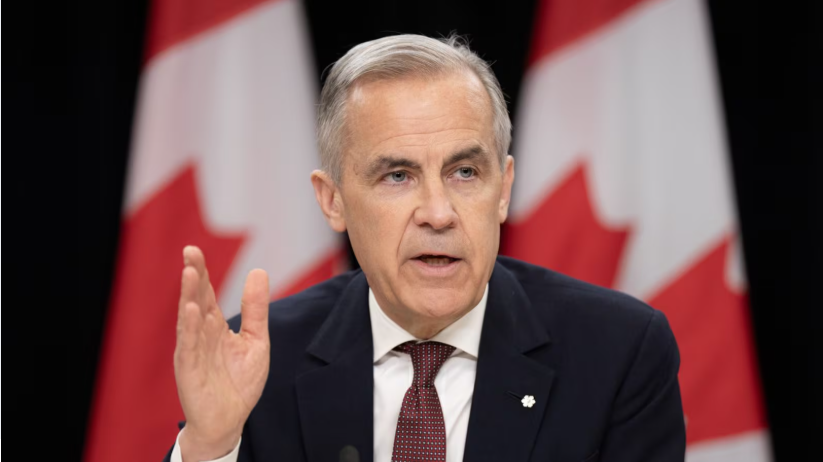
Prime Minister Mark Carney directed Canada’s trade negotiators to immediately return to Ottawa following months of negotiations aimed at reaching a new arrangement governing trade between both countries.
In a statement issued by the Office of the Prime Minister, the Canadian government said its negotiators had continued to engage Washington in good faith but ultimately concluded that the latest U.S. proposals made it impossible to continue the negotiations under the existing circumstances.
“However, that progress has not been enough to meet our objectives for Canadians,” the government said.
“As a result, this evening, I have decided to suspend trade negotiations with the U.S. and have directed Canada’s negotiators to return to Ottawa.”
Ottawa said its negotiating team had worked until the final moments of the talks to defend the interests of Canadian workers, businesses and the wider economy.
“They have worked hard, in good faith, to defend the interests of Canadians throughout these negotiations up until the very last minute,” the statement said.
“However, last-minute changes in the U.S. proposed terms were unfair, uneconomic, and called into question the reliability of any deal.”
The dispute is expected to deepen economic uncertainty between the two countries, whose economies have historically been among the most closely integrated in the world.
According to the Canadian government, the United States intends to impose the 50 per cent tariffs at midnight on approximately $28 billion worth of Canadian products.
Ottawa has responded with a direct threat of retaliation, announcing that Canada will impose equivalent tariffs on affected American goods.
“At midnight tonight, the U.S. intends to impose a 50% tariff on roughly $28 billion of Canadian goods. Canada will match those tariffs dollar for dollar to protect our workers and businesses,” the Canadian government said.
The government also announced that additional measures would be introduced in the coming days to cushion Canadian businesses and workers from the consequences of the escalating tariff dispute.
Ottawa said the new measures would build on almost $25 billion in support that has already been provided over the past 18 months to help businesses and workers deal with economic pressures arising from the changing trade environment.
The Canadian government said its negotiations with Washington had been guided by several key objectives.
Among them were preserving tariff-free access for the majority of Canadian businesses, securing greater stability for bilateral trade and obtaining lower U.S. tariffs for strategic Canadian industries.
Ottawa also said it had been seeking measures to shield small and medium-sized businesses from the impact of tariffs while maintaining Canada’s economic independence and sovereignty.
The government said it entered the negotiations with a clear understanding that Canada’s relationship with the United States was undergoing a fundamental transformation.
“We have recognised from the beginning that America has changed, and that we will not return to our old relationship,” the statement said.
“Our government understood, before many, that America is altering all its trade relationships. Putting tariffs on its closest allies and charging for access to its vast market.”
That assessment, according to Ottawa, shaped Canada’s negotiating strategy and forced the government to prepare for a future in which the United States could no longer be relied upon as Canada’s overwhelmingly dominant trading partner under the same conditions that existed previously.
Canada said its priority throughout the negotiations had been to secure the strongest possible arrangement for Canadian workers and businesses rather than accept an agreement simply because of political pressure, deadlines or the desire to end the dispute quickly.
“Throughout, our goal has been to secure the best deal for Canadians, never a deal at any price or on any deadline,” the government said.
Ottawa acknowledged that significant progress had been made in recent weeks and said Canada had moved closer to securing what it described as the strongest possible trade position with the United States.
However, Prime Minister Carney’s government concluded that the progress remained insufficient to meet Canada’s objectives.
The suspension therefore represents a major breakdown in the latest effort to reach a broader trade understanding between Ottawa and Washington, while raising the prospect of further retaliatory measures and economic disruption.
The development also comes as Canada intensifies efforts to reduce its dependence on the United States by expanding its economic relationships with other countries and strengthening its domestic economy.
Ottawa said its broader strategy was designed to make Canada less vulnerable to sudden changes in U.S. trade policy by expanding export markets and deepening commercial relationships around the world.
“That strategy is working,” the government said, pointing to nearly $500 billion in major infrastructure projects and efforts to open new international markets for Canadian exporters.
Canada also highlighted its existing free trade agreements, which it said provide preferential access to approximately 1.5 billion consumers around the world.
The government said it expects that figure to double by the end of 2026 as Canada continues to pursue new international trade opportunities.
The escalating dispute is particularly significant because of the enormous economic relationship between Canada and the United States, with businesses and industries on both sides of the border deeply connected through supply chains, manufacturing, agriculture, energy and other sectors.
A prolonged tariff confrontation could therefore increase costs for businesses, disrupt established supply chains and potentially feed into higher prices for consumers in both countries.
For Ottawa, however, the latest confrontation appears to have strengthened the argument for reducing Canada’s economic vulnerability to decisions made in Washington.
The Carney government is now signalling that Canada is prepared to absorb the consequences of retaliation while accelerating its efforts to diversify its trade relationships.
The suspension of negotiations also represents one of the clearest indications yet that Ottawa no longer views its traditional relationship with Washington as guaranteed.
With the United States threatening a 50 per cent tariff on billions of dollars in Canadian goods and Canada preparing to respond with matching tariffs, the latest dispute threatens to push the two allies into an increasingly confrontational economic relationship.
For Prime Minister Carney, the immediate challenge will be protecting Canadian businesses and workers from the impact of the tariffs while maintaining economic stability and expanding Canada’s alternatives beyond the U.S. market.
For the Trump administration, the dispute underscores its increasingly aggressive use of tariffs as a tool for reshaping America’s trade relationships, including with one of its closest allies and largest trading partners.
The latest confrontation now leaves the future of Canada-U.S. trade negotiations uncertain, with Ottawa making clear that it would rather walk away from the negotiating table than accept what it considers an unfair agreement.