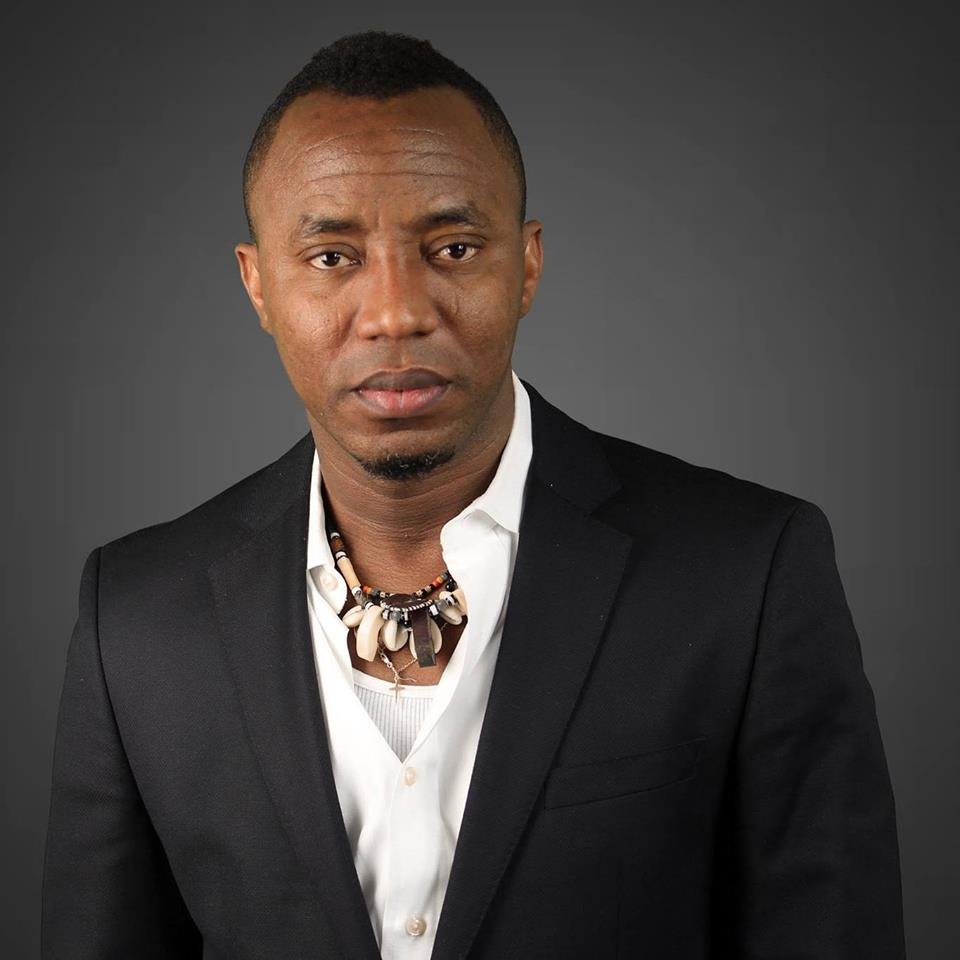
Human rights activist and African Action Congress (AAC) presidential candidate, Omoyele Sowore, has accused the Department of State Services (DSS) of deliberately exposing him to inmates suffering from tuberculosis during his recent detention at the Kuje Custodial Centre, describing the move as part of a broader campaign of political persecution by Nigeria’s ruling class.
Speaking on Channels Television’s Morning Brief on Friday, barely three days after regaining his freedom, Sowore alleged that security operatives instructed prison authorities to place him in a section housing inmates undergoing treatment for tuberculosis, an action he claimed was intended to intimidate and endanger him.
According to him, his ordeal was not a legitimate prosecution but another chapter in a decades-long pattern of victimisation for his activism and opposition to what he described as Nigeria’s entrenched political establishment.
“The ruling class in Nigeria has been destroying the country, and they have been after me since I was 18 years old,” Sowore said, tracing what he described as years of persecution from his student activism at the University of Lagos to multiple arrests and prosecutions by successive administrations.
He alleged that after his bail was revoked, DSS operatives personally supervised his transfer to prison and directed officials on where he should be kept.
“The DSS came to court after I had been granted bail and I was waiting for prison authorities. They grabbed me physically, pushed me into the elevator at gunpoint and took me to the basement of the Federal High Court. They wanted to drive me to their office until protesters surrounded the court.
“They later handed me over to prison authorities, drove in a convoy to Kuje and instructed the officer in charge to put me where inmates suffering from tuberculosis were being kept,” he alleged.
Sowore insisted that his claims could be independently verified by prison officials and medical personnel attached to the facility.
“Go and find out from the prison authorities. There is a minister in charge. There is a doctor at Kuje. Let them deny that there are tuberculosis patients undergoing treatment there,” he said.
He further alleged that one inmate battling tuberculosis had died recently, while another remained critically ill.
“One of them died last week from tuberculosis of the spine. Another person is still there, dying as we speak. There are 37 inmates with tuberculosis. In my bunk, directly across from me, someone was coughing throughout the night. I am not making this up,” he stated.
Beyond his personal experience, the activist painted a grim picture of conditions within Nigeria’s correctional facilities, describing them as overcrowded, unsanitary and fundamentally unjust.
According to him, Kuje Custodial Centre currently houses about 1,158 inmates, of whom 871 are awaiting trial.
He lamented that many detainees had spent years behind bars without the conclusion of their cases, with some effectively serving sentences longer than the offences for which they were being prosecuted.
“I met a man who had completed his sentence, only for another phase of his trial to begin. According to him, he has spent another seven years in detention. Some people have been awaiting trial for as long as 10 years,” he said.
Sowore argued that Nigeria’s prison system disproportionately targets poor citizens who lack the means to satisfy stringent bail conditions, describing incarceration in the country as a manifestation of social and economic inequality.
“Prison in Nigeria is a place for class war. It is poor people who are overwhelmingly in prison because they cannot afford the conditions imposed on them,” he said.
The former presidential candidate also maintained that Nigeria’s correctional centres have failed to fulfil any genuine rehabilitative purpose.
“There is nothing corrective about our correctional system. It is not different from what you experience outside the prison walls. If the government does not care about citizens on the outside, why should anyone expect it to care about people deliberately dumped in prison?” he asked.
Reaffirming his commitment to democratic freedoms, Sowore said he would never deploy state institutions to silence critics if elected president.
“If I become President of Nigeria, I will not have time to police speech. People have a right to criticise their leaders. Anyone who believes he has been defamed should seek civil remedies, not use security agencies to intimidate opponents,” he said.
“I’m totally for free speech. I’m totally for democracy.”
Neither the Department of State Services nor the Nigerian Correctional Service had issued any official response to Sowore’s allegations as of the time of filing this report.
The claims, however, have renewed concerns over prison conditions, prolonged pre-trial detentions and the treatment of political dissenters within Nigeria’s justice and security systems.