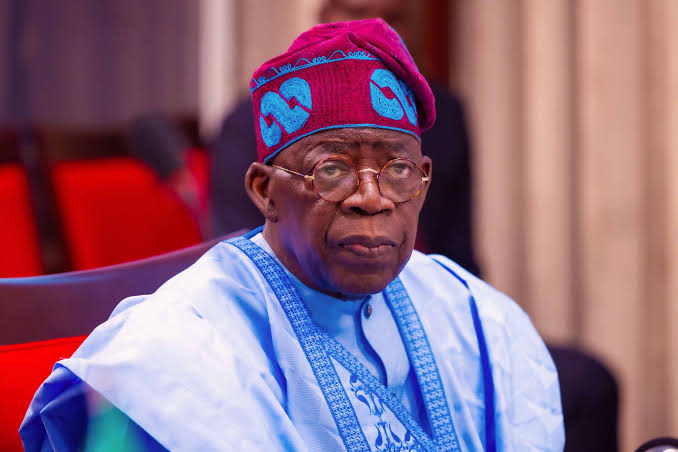
The Federal Government has officially renamed the Lagos-Calabar Coastal Highway as the President Bola Ahmed Tinubu Coastal Highway, a move that is expected to fuel fresh debate over the growing trend of naming major national projects after serving political leaders.
Minister of Works, David Umahi, announced the decision, saying the project was renamed in recognition of President Bola Tinubu’s vision and commitment to delivering what he described as one of Nigeria’s most ambitious infrastructure projects.
According to Umahi, the Ministry of Works, in consultation with its leadership and senior officials, unanimously agreed to immortalise the President by attaching his name to the 750-kilometre coastal highway.
“That highway is named President Bola Ahmed Tinubu Coastal Highway. By the powers conferred on me as Minister of Works, in consultation with my Permanent Secretary, the Honourable Minister of State, directors and staff of the ministry, we decided to name it after him because of his dream for it,” Umahi said.
The minister disclosed that Tinubu first conceived the idea of the coastal highway about 27 years ago while serving as Governor of Lagos State, describing the President as a visionary leader who has successfully transformed long-held ideas into reality.
“He had that dream about 27 years back as Governor of Lagos State. It is one thing to dream and another thing to have the grace of God to actualise that dream. This is one man that dreams and has the grace and divine mandate to actualise that dream,” Umahi stated.
Providing an update on the project, Umahi said construction is progressing simultaneously across several sections of the highway.
He explained that Section One, stretching 47.47 kilometres from Victoria Island to Eleko Village in Lagos State, incorporates a 25-metre-wide median reserved for a future railway corridor.
Section Two, extending from Eleko Village to the Lagos-Ogun boundary, is approximately 60 per cent complete and is expected to be substantially finished by the end of November, with only bridge works remaining.
The minister added that work is also advancing in Cross River, Akwa Ibom, Ogun and Ondo states. He disclosed that Section Three, covering 75 kilometres from Calabar, has reached about 30 per cent completion, while Section Four, an 82-kilometre stretch through Ogun and Ondo states, is about 20 per cent complete. Construction on the 180-kilometre Akwa Ibom section is also progressing steadily.
Umahi further revealed that work is ongoing on the Sokoto-Badagry Super Highway from multiple locations, including Ilela, Sokoto, Kebbi and Badagry. He said the completed highway is expected to reduce travel time between Sokoto and Lagos to about 10 hours at an average speed of 100 kilometres per hour.
He also highlighted progress on the Trans-Sahara Highway, noting that the project will strengthen road connectivity between the South-East and the Federal Capital Territory through Ebonyi, Benue, Enugu and Kogi states.
The Lagos-Calabar Coastal Highway, Sokoto-Badagry Super Highway, Trans-Sahara Highway and Akwanga-Maiduguri Highway form part of the Federal Government’s flagship Legacy Projects, which the Tinubu administration says are designed to modernise Nigeria’s road network, stimulate economic growth and deepen national integration.