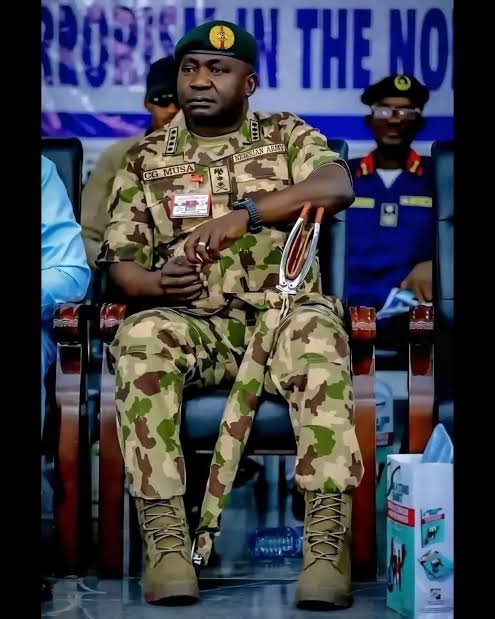
Nigeria’s battle against terrorism, banditry and insurgency is being complicated by a growing global scramble for weapons and military hardware, with Defence Minister Gen. Christopher Gwabin Musa (rtd.) warning that international conflicts have severely disrupted the country’s access to critical ammunition and defence equipment.
Speaking amid renewed concerns over persistent insecurity across several parts of the federation, the Defence Minister disclosed that the ongoing Russia–Ukraine war and escalating tensions involving Iran and the United States have placed extraordinary pressure on the global arms market, making it increasingly difficult for countries such as Nigeria to procure weapons needed for counterterrorism operations.
According to him, major arms-producing nations are prioritising their own military requirements and those of strategic allies, leaving many developing countries struggling to secure ammunition, combat platforms and replacement parts for existing military assets.
The development comes as Nigerian troops continue operations against Boko Haram terrorists, ISWAP insurgents, bandit networks and armed criminal groups operating across the North-East, North-West and parts of the North-Central region.
Military analysts note that the Russia-Ukraine conflict has consumed enormous quantities of artillery shells, missiles, armoured vehicles and other military supplies, creating unprecedented strain on global production chains. Similar tensions in the Middle East have further heightened demand for weapons and defence systems, contributing to supply bottlenecks worldwide.
Despite the procurement challenges, Musa maintained that the Armed Forces remain committed to confronting security threats and protecting the nation’s territorial integrity. He stressed that Nigeria is increasingly pursuing indigenous defence production and local military-industrial capacity as a long-term solution to external supply disruptions. The Defence Ministry recently acknowledged a global slowdown in international arms procurement and emphasized the need for local production capabilities.
The minister has repeatedly advocated technology-driven security solutions, expanded local manufacturing and stronger strategic partnerships aimed at reducing Nigeria’s dependence on foreign defence suppliers. He also revealed that reforms are underway to strengthen domestic defence industries and improve the country’s self-reliance in military production.
Security experts warn that while shortages in ammunition and equipment present operational challenges, defeating insurgency will require more than military hardware. They point to intelligence gathering, community cooperation, economic development and effective governance as critical components in the fight against insecurity.
Nigeria continues to face complex security threats on multiple fronts, with terrorists and bandits exploiting difficult terrain, porous borders and local support networks. The Defence Minister recently noted that criminal groups often survive because of assistance received from individuals within affected communities, underscoring the need for collective national action against insecurity.
As global conflicts continue to reshape military supply chains and intensify competition for weapons, Nigeria now finds itself confronting a dual battle — one against violent criminal groups at home and another against an increasingly constrained international arms market.