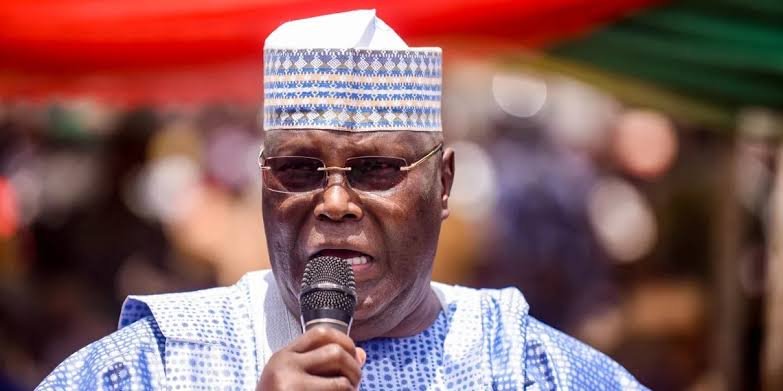
Former Vice President Atiku Abubakar has blamed the administration of President Bola Ahmed Tinubu for the death of retired Major-General Rabe Abubakar, who died while in the custody of bandits in Katsina State, describing the tragedy as a painful reflection of Nigeria’s deteriorating security situation.
General Abubakar, a former spokesman of the Nigerian Army, reportedly died after being abducted alongside his wife by armed bandits while travelling to his hometown in Katsina State. The incident has reignited nationwide concerns over the increasing reach and audacity of criminal gangs operating across northern Nigeria. Reports indicate that his wife remains in captivity.
Reacting to the retired officer’s death, Atiku lamented what he described as the failure of the federal government to protect citizens, arguing that insecurity under the current administration has continued to claim the lives of ordinary Nigerians and prominent citizens alike. He reportedly characterized the incident as yet another grim reminder of the worsening security crisis facing the country and questioned the effectiveness of existing counter-insurgency strategies.
The former vice president has previously maintained that no nation can achieve meaningful development when its citizens live under constant fear of abduction and violence. According to reports, Atiku argued that government statements and assurances must be matched by concrete actions capable of ending banditry and restoring public confidence in national security institutions.
Meanwhile, President Tinubu condemned the killing of the retired general, describing it as painful and unacceptable. In a statement issued by presidential spokesman Bayo Onanuga, the President vowed that the federal government would not yield to terrorist demands and reiterated his administration’s resolve to defeat banditry and insurgency across the country. He further warned bandits and their sponsors to surrender or face the full force of the Nigerian state.
The death of General Abubakar has intensified calls for urgent reforms in Nigeria’s security architecture, with many observers warning that if a retired senior military officer could fall victim to kidnappers, ordinary citizens may be even more vulnerable to the country’s spiralling insecurity. The tragedy has once again placed renewed scrutiny on the government’s capacity to secure highways, communities, and rural areas increasingly threatened by armed criminal groups.