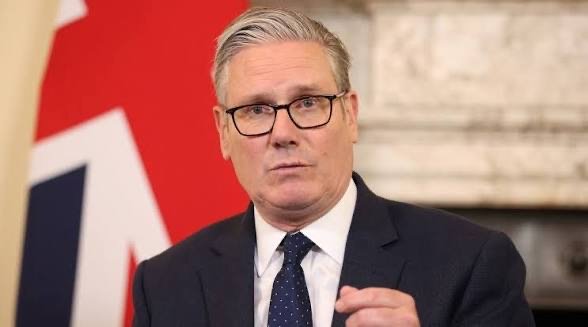
Prime Minister Sir Keir Starmer has cautioned the British public that even if the Strait of Hormuz is successfully reopened, it would not immediately return oil and gas prices to normal, warning that the economic fallout from the Iran war “will go on longer than that”.
In an interview with Sky News, the Prime Minister stressed that the government was doing “everything we can” to get the vital shipping channel open again, but rejected the notion that a swift diplomatic or military breakthrough alone would reverse the damage done to household finances.
The Strait of Hormuz, a narrow waterway between Iran and Oman through which about a fifth of the world’s oil and liquefied natural gas normally passes — has been effectively closed since the start of the US-Israeli strikes on Iran on 28 February. Tehran’s effective shutting of the strait has sent global oil prices to more than $100 a barrel, with energy costs leaping for consumers and adding severe cost-of-living pressures across the UK.
Speaking on the Cathy Newman Show, Sir Keir offered a stark assessment of what lies ahead. “There is going to be an impact on the UK. There already is,” he said. “I don’t want anybody to think that, once the Strait is open, that that’s the end of the damage. It will go on longer than that”.
The warning came as the Prime Minister confirmed that the UK would not, under any circumstances, be drawn into a wider war with Iran, despite considerable pressure from the United States. In separate interviews with BBC Radio 5 Live, he flatly ruled out British involvement in enforcing a proposed US naval blockade of Iranian ports, stating “We’re not supporting the blockade”. Instead, Sir Keir said his focus was on reopening the strait as the fastest way to reduce energy prices, while acknowledging that this would not be a simple task.
“Ultimately, we have to reopen the Strait of Hormuz to ensure stability in the market. That is not a simple task,” he told a Downing Street press conference on 16 March. “So we’re working with all of our allies, including our European partners, to bring together a viable collective plan that can restore freedom of navigation in the region as quickly as possible and ease the economic impact”.
Downing Street later announced a £53 million support package for the most vulnerable households who rely on heating oil, the cost of which has spiked sharply due to the conflict. However, the wider British public remains largely unprotected beyond a tariff price cap that is only guaranteed until July, leaving millions facing the prospect of significantly higher bills this autumn.
Analysts have noted that even under optimistic scenarios, a full return to pre-crisis price levels could take months, as energy markets have priced in significant geopolitical risk premiums and face supply bottlenecks that will not disappear overnight. “We can see that the price of oil has already started to fall whenever there is positive talk about the strait reopening,” said one London-based energy analyst. “But once it is open, the market will still have to digest the damage done to global inventories and infrastructure. Prices will not simply snap back.”
The Prime Minister’s comments underline the scale of the economic challenge facing his government, which has so far sought to balance a pledge to protect the most vulnerable with a clear refusal to commit British forces to the escalating Middle East conflict.
A UK–French summit, co-chaired by Sir Keir and President Emmanuel Macron, is scheduled to take place this week to advance what Downing Street calls “a coordinated, independent, multinational plan” to protect shipping in the region once hostilities end.