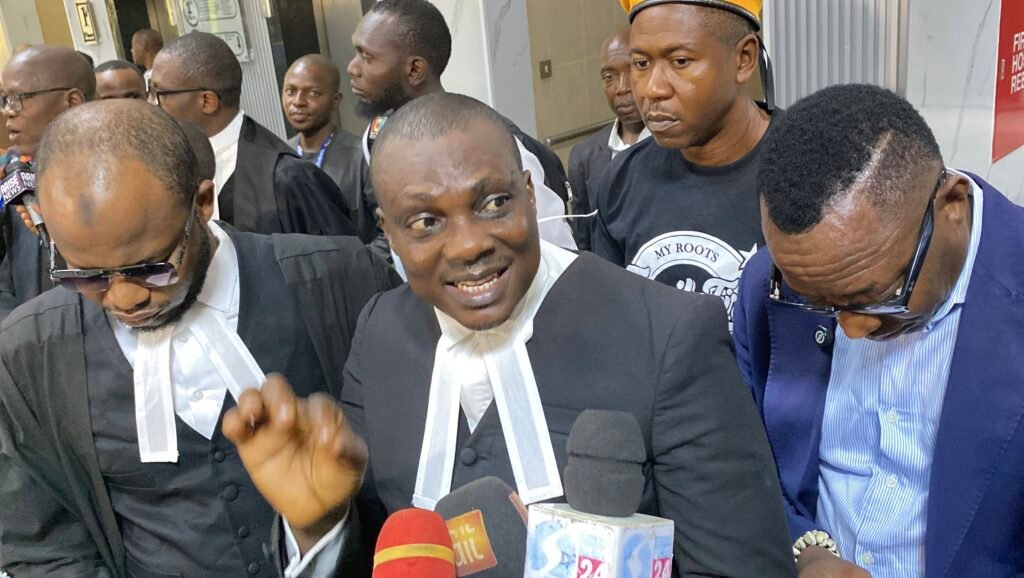
Human rights lawyer Tope Temokun has condemned the death of a female suspect in custody of the National Drug Law Enforcement Agency, describing the incident as a national alarm and warning that the agency may be normalising prolonged detention without arraignment.
In a strongly worded statement issued on April 1, 2026, Temokun called for an urgent and transparent investigation into the death, which reportedly occurred at the Federal High Court Benin City after the detainee collapsed during arraignment.
According to the lawyer, the deceased woman was arrested in January 2026 by the NDLEA Edo State Command and kept in custody for about three months without being charged to court, despite allegedly requesting medical attention during detention.
“We have received with deep shock and grave concern the tragic death of a female suspect in the custody of the National Drug Law Enforcement Agency, Edo State Command, who reportedly collapsed and died at the Federal High Court, Benin City, during her arraignment,” Temokun stated.
He described the development as disturbing and reflective of systemic failure within law enforcement institutions.
“The facts as reported are disturbing. The woman was arrested in January 2026 and kept in custody for about three months without arraignment, despite allegedly requesting medical attention. She was only brought to court this week, where she collapsed and died while awaiting her turn,” he added.
Temokun warned that the incident was not isolated, but rather part of a growing pattern of alleged unlawful detention and disregard for detainees’ welfare.
“This is not just unfortunate. It is a serious indictment of a system that is increasingly normalising unlawful detention, disregard for human dignity and promoting impunity. What happened in Edo State is not a one-off occurrence. It reflects a growing and dangerous pattern,” he said.
The human rights lawyer also cited another case involving Julius Ekujumi and Dupe Ekujumi in Ondo State, where he alleged prolonged detention without trial.
According to Temokun, Dupe Ekujumi was arrested on December 10, 2025 and detained for months without arraignment or administrative bail, despite repeated legal applications.
He said the agency only arraigned the couple after a fundamental rights enforcement suit was filed at the Federal High Court Akure.
“It was only after we filed a Fundamental Rights Enforcement action that the NDLEA hurriedly arraigned her, with her husband. Even at that, the arraignment only took place on March 2, 2026, after prolonged and unjustifiable detention,” he stated.
Temokun emphasised that detaining suspects for months without arraignment violates constitutional provisions and undermines the rule of law.
“The Constitution of the Federal Republic of Nigeria is clear. Every citizen is entitled to personal liberty, prompt arraignment before a competent court and fair hearing within a reasonable time. Detaining citizens for months without charge is an attack on the Constitution and rule of law. It is illegal. It is an abuse of power,” he said.
He warned that the Edo incident could represent a wider pattern of alleged abuse across commands.
“The incident in Edo is just the reported case representing thousands of unreported normalization of human suffering going on daily within the system,” he added.
Temokun therefore called on Mohamed Buba Marwa, Chairman of the National Drug Law Enforcement Agency, to order a full and transparent investigation into the incident and sanction officers found responsible.
He also urged the agency to issue nationwide directives prohibiting detention beyond constitutional limits and ensure strict compliance with Sections 35 and 36 of the Constitution.
“What happened in Edo is a tragedy. What is happening in Ondo too is a warning. If urgent steps are not taken, more lives may be lost. No agency is above the law. And no Nigerian life should be treated as expendable,” he warned.
The development has again raised concerns among human rights advocates over alleged abuse of detention powers and growing fears that prolonged custody without trial may be quietly becoming institutionalised within parts of Nigeria’s law enforcement system, a trend observers say threatens constitutional democracy and fundamental human rights.