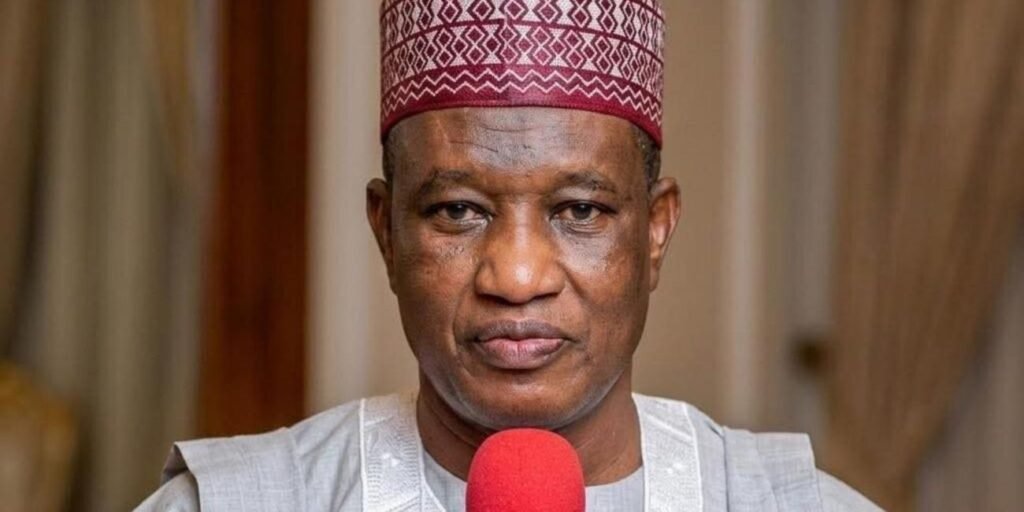
A fresh political tremor has hit Kano State following the sudden resignation of Deputy Governor Aminu Abdussalam Gwarzo, who stepped down from office amid mounting political tension and looming impeachment threats, declaring that his exit was necessary to prevent distractions within the administration.
In a resignation letter dated March 27, 2026, addressed to Governor Abba Kabir Yusuf, Gwarzo described his decision as voluntary, strategic, and taken in the broader interest of governance and stability in Kano State.
The resignation comes at a critical time when political divisions within the state government had begun intensifying, with the Kano State House of Assembly reportedly initiating moves to commence impeachment proceedings against the deputy governor.
In what appears to be a pre-emptive move to avoid an escalating political confrontation, Gwarzo stated that his resignation was the product of deep reflection and consultations with political stakeholders.
“I have taken this step in the spirit of responsibility and statesmanship, to allow the government and the state to move forward without undue distractions,” he wrote.
His resignation, according to political observers, signals internal fractures within the Kano political structure, raising questions about power dynamics, loyalty blocs, and underlying disagreements within the ruling political establishment.
Gwarzo, however, was quick to clarify that his decision should not be interpreted as an admission of wrongdoing.
“This resignation is made voluntarily and should not be construed as an admission of any wrongdoing, but a decision in the interest of public service,” he added.
The former deputy governor further cited Section 306(2) of the 1999 Constitution (as amended), emphasizing that public office holders reserve the constitutional right to step down when circumstances demand.
The move has sparked speculation across political circles, particularly as it coincides with heightened tension between executive and legislative arms in Kano State.
Sources within political circles suggest that the impeachment threat may have played a significant role in accelerating Gwarzo’s decision, although the former deputy governor maintained that his exit was purely motivated by the need to preserve stability and ensure effective governance.
Despite the tension, Gwarzo struck a conciliatory tone in his letter, expressing gratitude to Governor Abba Kabir Yusuf, members of the State Executive Council, lawmakers, traditional institutions, and the people of Kano State for their support during his tenure.
His resignation marks one of the most significant political developments in Kano State in recent months, and analysts believe the development could reshape the state’s political alignment ahead of future political calculations.
As Kano navigates the aftermath of the resignation, attention now shifts to Governor Abba Kabir Yusuf and the next line of succession, with expectations that a replacement will soon be announced to stabilize the administration and calm political tensions.
For now, Gwarzo’s departure underscores the fragile balance of power in Kano State politics — where alliances shift quickly, and governance can be disrupted by internal battles just as much as external opposition.