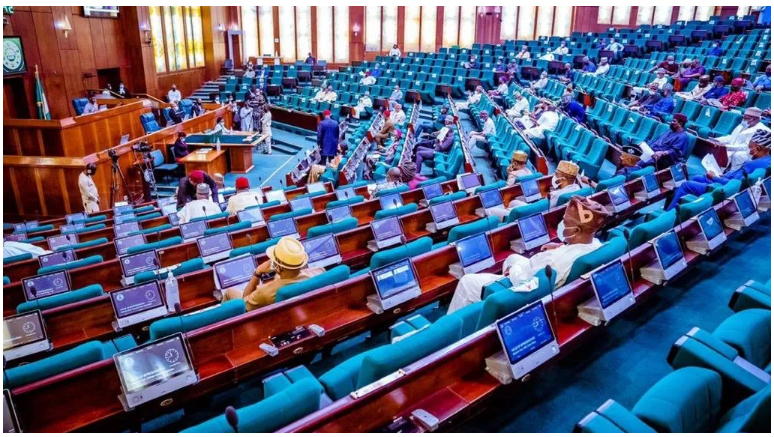
In a decisive move to tighten the rules of political engagement in Nigeria, the House of Representatives on Wednesday passed an amendment to the Electoral Act 2026, introducing stiff penalties for politicians found to hold membership in more than one political party.
Under the new provision, any individual discovered to be registered simultaneously with multiple political parties faces a fine of N10 million, a maximum of two years’ imprisonment, or both, if convicted. Lawmakers explained that the measure seeks to curb political opportunism and enforce stricter compliance with party affiliation rules across Nigeria’s electoral system.
The amendment comes just weeks after the controversial Electoral Act, 2022 (Repeal and Re-Enactment) Bill 2026 was signed into law by President Bola Ahmed Tinubu, following months of nationwide debates and protests, particularly over the electronic transmission of election results.
The legislative journey of the Electoral Act amendment has been fraught with tension. In February, the Nigerian Senate passed the bill amid hours of deliberations, with disagreements flaring over Clause 60, which mandates the electronic transmission of results from polling units. Senator Enyinnaya Abaribe (Abia South) demanded a formal division on the clause, triggering a rowdy session and a closed-door meeting at the Senate President’s desk.
Senate Leader Opeyemi Bamidele later moved a motion to return the bill to the Committee of the Whole, citing potential conflicts between the proposed February 2027 general elections and Clause 28 of the bill, which requires elections to be held at least 360 days before the expiration of elected officials’ tenure. Bamidele also raised concerns about the impact of conducting elections during Ramadan on voter turnout and logistics.
The House of Representatives, too, experienced chaotic scenes earlier this year when opposition lawmakers staged a dramatic walkout during deliberations on the amendment bill. Tensions escalated after Francis Waive, Chairman of the House Committee on Rules and Business, moved to rescind the earlier approval of the bill, which opposition members viewed as an attempt to undermine Clause 60(3) on compulsory electronic transmission of results.
The situation worsened when Speaker Tajudeen Abbas declared that the “ayes” had carried a voice vote despite loud objections from lawmakers insisting the “nays” were louder. Protests erupted on the floor, with some lawmakers physically blocking Deputy Speaker Benjamin Kalu and others staging a mass walkout that nearly emptied the chamber.
Despite these controversies, the House of Representatives pushed ahead with further amendments to the electoral law, cementing the provision that criminalises dual political party membership—a move seen as a clear signal against political opportunism and a step toward cleaner, more accountable party politics in Nigeria.
The new law is expected to have far-reaching implications for politicians and party operatives across the country as the 2027 general elections draw closer.