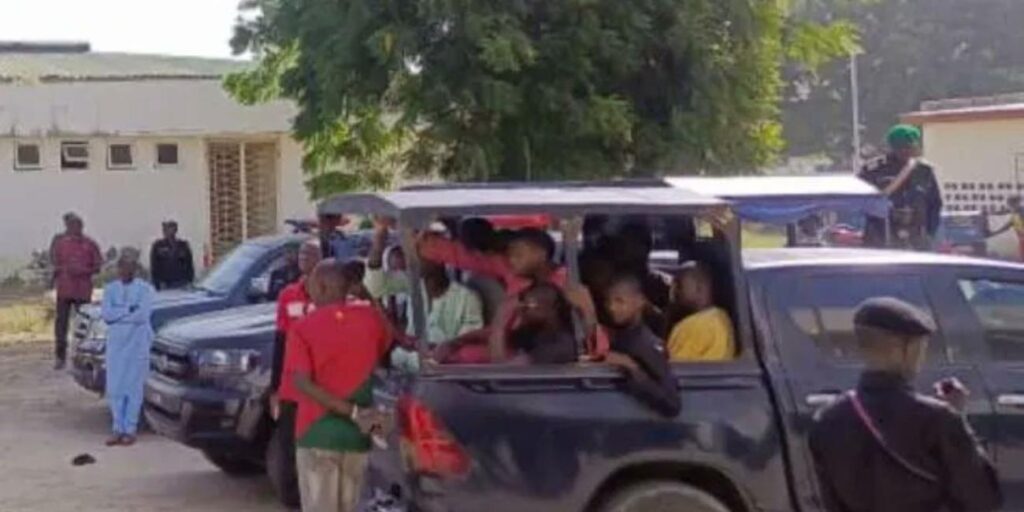
Human rights activist and convener of the #RevolutionNow Movement, Omoyele Sowore, has strongly criticised Borno State Governor, Babagana Zulum, over the conviction and sentencing of seven youths, many of whom are minors, for their involvement in the August 1–10, 2024, #EndBadGovernance protests.
In a statement shared via his verified X (formerly Twitter) account on Thursday, Sowore described the governor’s actions as “totally insane,” accusing him of targeting innocent young Nigerians.
Chronicles Reporters earlier reported that seven teenagers and youths were handed five-year prison sentences, community service punishments, and public flogging by a Borno court over their alleged roles in the protest.
Amnesty International Nigeria, which disclosed the development on Thursday through its official X handle, revealed that the minors—aged between 15 and 17 years—were charged under the directive of Governor Zulum’s administration for setting up a WhatsApp “Protest Group.”
The rights group identified the convicted youths as Mohammed Ali, Mohammed Gajimi (alias Bakura, 17), Muhammed Mustapha (alias Gudusu, 14), Muhammed Mustapha (alias Abbas, 15), Muhammed Kyari (alias Mome), Muhammed Bukar (alias Awana), and Ibrahim Muhammed (alias Babayo).
Amnesty International called on the Borno government to immediately quash the convictions and release the teenagers unconditionally, insisting that their fundamental rights had been violated.
Reacting further, Sowore, a former presidential candidate of the African Action Congress (AAC), also demanded the unconditional release of the minors.
He argued that, “It is totally insane that the overrated Governor of Borno State, Babagana Zulum, the same man who recently allocated billions of naira to so-called ‘repentant’ Boko Haram fighters, has now turned around to jail innocent youths, several of them minors, simply for creating a WhatsApp protest group to mobilise against bad governance in Nigeria.”
The activist accused Zulum’s administration of hypocrisy, saying it rewards insurgents while persecuting peaceful citizens.
“This outrageous act exposes the hypocrisy of a government that pampers terrorists while criminalising peaceful dissent. These young people committed no crime other than exercising their constitutional rights to association and expression in preparation for the 2024 #EndBadGovernance protest,” he declared.
Sowore insisted that the convicted youths must not only be freed but also compensated and given an apology.
“We demand their immediate and unconditional release, along with an official apology, compensation, and rehabilitation from Governor Zulum,” he said.
He equally blamed the Inspector General of Police, Kayode Egbetokun, holding him accountable for the arrests and subsequent trial.
“We also hold responsible the illegal Inspector General of Police, Kayode Egbetokun, whose men carried out these arrests and were complicit in this bogus prosecution,” Sowore alleged.
Reaffirming his defiance against the clampdown, Sowore maintained that repression would not silence Nigerians but instead fuel greater resistance.
“This repression will not silence Nigerians. If anything, it only strengthens the determination of citizens to confront tyranny,” he added.
The #EndBadGovernance protests, which spread nationwide between August 1 and 10, 2024, were largely youth-driven, as Nigerians took to the streets and online platforms to vent frustrations over deepening economic hardship, rising inflation, hunger, corruption, and worsening insecurity.
Initially starting as small demonstrations in cities such as Kano, Kaduna, Lagos, and Abuja, the protests quickly spread across states, including Borno, despite heavy deployment of security operatives.
The demonstrations carried the energy of the 2020 #EndSARS protests, with hashtags like #EndBadGovernance, #EndHunger, and #EndCorruption trending widely as young Nigerians mobilised support both offline and online.
Human rights groups documented widespread arrests, violent crackdowns by security forces, and multiple deaths linked to the demonstrations.
Amnesty International in particular reported that at least 24 protesters were killed by the Nigeria Police Force and other armed security operatives, who allegedly used live ammunition against unarmed demonstrators.
Despite evidence and identities of those killed being made public, President Bola Tinubu’s government insisted the protests were infiltrated by “subversive elements” and accused organisers of plotting to destabilise the nation.
Civil society organisations, however, continue to call for accountability, describing the convictions and violent crackdown as nothing short of an attempt to criminalise peaceful dissent.
🔗 Join our WhatsApp channel for updates: https://whatsapp.com/channel/0029VabITrvEAKW7DSkTfP0J