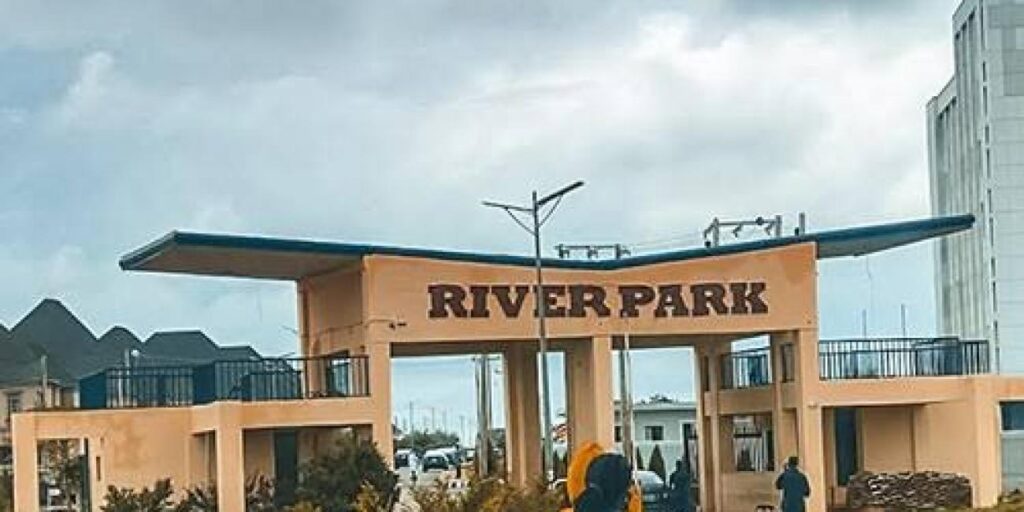
A Nigerian lawyer, Abu Arome, has appealed to the Attorney-General of the Federation and Minister of Justice, Lateef Fagbemi, SAN, to conduct a thorough review of all criminal investigations related to the controversial River Park Estate land conflict in Abuja. In a statement made public on Friday, Arome alleged that the police are being manipulated by influential land speculators to subvert justice.
Arome’s plea, as seen by Chronicles Reporters, claims the Nigeria Police Force is colluding with certain vested interests to concoct false criminal charges against his clients, a group of Ghanaian investors, with the intent of illegally dispossessing them of land they acquired legally.
In a detailed piece titled “My Odyssey: Battling Land Grabbers in the Pursuit of Justice”, Arome narrated how his clients—foreign investors who followed legal channels in acquiring property—became victims of criminal accusations when they resorted to court actions to safeguard their investments.
“For 13 years, no one raised any forgery claims against my clients. The narrative suddenly shifted the moment they took steps to defend their rights. Documents such as company resolutions, legitimately signed by directors, are now being branded as forgeries. Regular legal filings, which lawyers process routinely, are now cited as criminal evidence,” Arome stated.
He further disclosed that he himself has been accused of offences allegedly committed in 2009 and 2013, years he pointed out he was still a student at university.
According to Arome, these fabricated charges reflect a wider pattern, where some notorious land dealers in Abuja use criminal law as a weapon to intimidate and unlawfully seize properties in disputes that are purely civil in nature.
“It’s disturbing that criminal law is being misapplied in civil property cases. It says a lot about the level of decay within our justice system. Investigations into alleged forgeries are being initiated without basic steps like obtaining and comparing signatures,” he lamented.
The legal practitioner criticised the apparent lack of understanding among some law enforcement personnel about corporate and commercial law, arguing that decisions are often skewed in favour of those with the financial means to influence state agencies.
He recommended urgent reforms, stressing the need for the Attorney-General’s office to oversee all criminal investigations in civil land matters before any charges are filed.
“We can’t have a functional justice system if innocent people must go through hell to prove their innocence, or if lawyers are punished for doing their job with integrity,” Arome said.
This statement comes amid escalating tensions over ownership of the River Park Estate in Abuja—a conflict already fraught with allegations of police bias, falsified narratives, and forceful tactics.
Chronicles Reporters earlier revealed that the Ghanaian businessmen embroiled in the conflict have accused the police of acting under the influence of one Paul Odili, who they say is exploiting police power to bypass legal procedures and seize the estate unlawfully.
After a meeting on July 2, 2025, with the Inspector-General of Police, Kayode Egbetokun, the businessmen’s legal team pointed out inconsistencies in the police’s handling of the matter.
During that meeting, the IGP reportedly reiterated that the Nigeria Police Force does not have jurisdiction over civil land disputes—a position backed by Section 32(2) of the Police Act, 2020.
Contrary to police claims of non-cooperation, official records confirm that directors representing the Ghanaian investors, including Sam Jonah and Kojo Ansah, attended no fewer than five investigative sessions between February and May 2025.
Nonetheless, in June, the police held a press conference where Odili was introduced as the “owner” of the estate, a move that sparked widespread criticism.
The Ghanaian investors insist that Odili’s group, emboldened by police support, has carried out intimidation, extortion, and forceful occupation of estate infrastructure — going as far as blocking access gates and disrupting residents.
Currently, more than ten lawsuits relating to the land are pending before courts across Nigeria. A court order issued on July 9, 2025, explicitly prohibits the allocation or redistribution of the contested land until all legal matters are resolved.
Legal experts and concerned observers warn that this land dispute showcases a dangerous blend of police interference, commercial manipulation, and systemic corruption. Diplomats and international investors are reportedly monitoring the saga, viewing it as a critical test of Nigeria’s judicial independence and commitment to the rule of law.
Arome’s appeal to the Attorney-General reveals a deepening distrust in the ability of both the police and judiciary to remain impartial and immune to political and financial pressures.
“In the end, this battle isn’t just about a piece of land. It’s about whether our legal system can still serve justice,” Arome concluded.
The broader implications of this case continue to cast a shadow over Abuja’s embattled real estate sector and threaten Nigeria’s already fragile climate for foreign investment.
🔗 Stay updated via our WhatsApp Channel: https://whatsapp.com/channel/0029VabITrvEAKW7DSkTfP0J