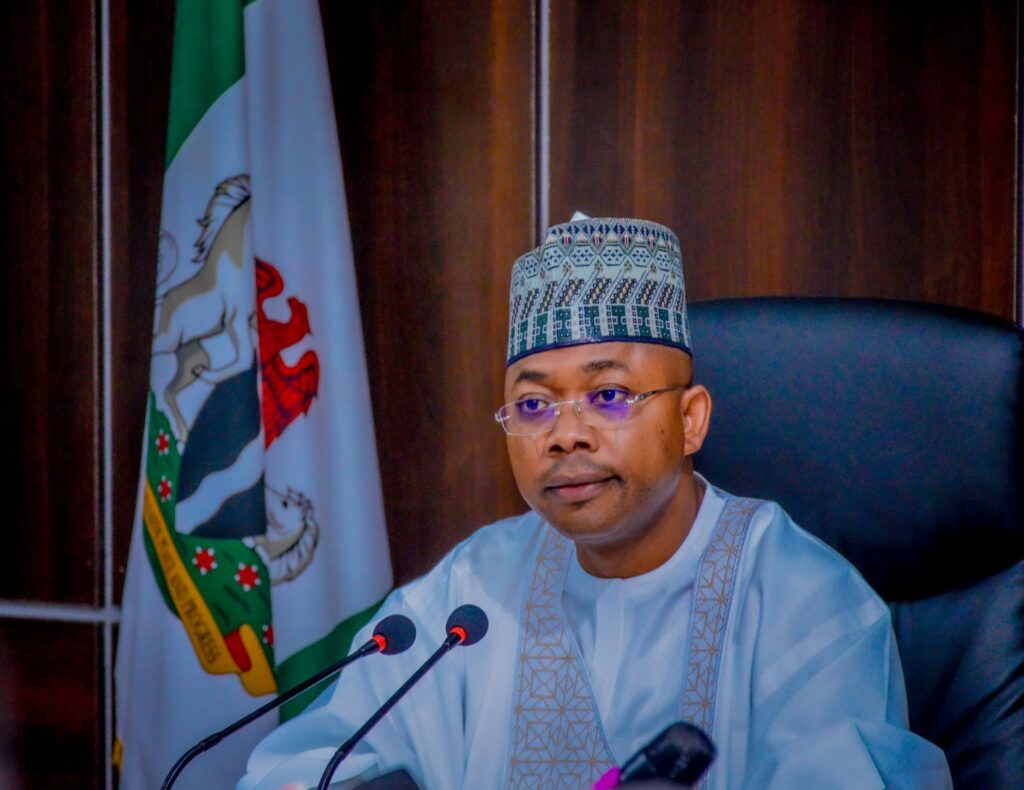
The Kogi State Government, under Governor Ahmed Usman Ododo, has come under renewed scrutiny following revelations that it spent a staggering ₦6.28 billion on refreshments and meals between January and September 2026, amid persistent complaints by civil servants over unpaid salary arrears, outstanding entitlements and worsening economic hardship.
An analysis of the Kogi State Government’s 2026 Third Quarter Budget Implementation Report, published on October 28, 2026, revealed that the administration expended ₦6,285,130,336.14 on refreshments and meals during the first nine months of the year, with ₦3.31 billion spent within the third quarter alone.
The expenditure represents approximately 70.6 per cent of the revised annual budgetary allocation of ₦8.9 billion for refreshments and meals, raising questions about the government’s spending priorities at a time when public sector workers continue to complain about delayed payments and outstanding welfare benefits.
According to the report, the government spent ₦1.95 billion on publicity and advertisements between January and September, including ₦842.86 million in the third quarter.
Another ₦274.93 million was spent on celebrations and remembrance days, while ₦18.31 million went into honoraria and sitting allowances. The government also recorded ₦108.24 million in expenditure on internet access charges within the same nine-month period.
Additionally, the state government spent ₦2.77 billion on foodstuff and catering material supplies between January and September 2026.
When combined, expenditure on refreshments and meals, foodstuff and catering supplies, publicity and advertisements, celebrations and remembrance days, honoraria and internet access amounted to approximately ₦11.42 billion within the first three quarters of the year.
The figures are contained in the expenditure-by-economic-classification section of the state’s budget implementation report, particularly pages 46 to 49.
The expenditure, however, excludes other administrative costs, including travel, workshops, conferences, official engagements, consultancy and other services, which further widen the scope of the government’s spending on administrative activities.
The revelations have intensified concerns about the welfare of civil servants who have repeatedly raised complaints over delayed salaries, outstanding allowances, promotion-related benefits and other entitlements.
For many public workers in the state, the rising cost of food, transportation, accommodation, education and healthcare has made the situation increasingly difficult, with some reportedly struggling to meet basic household responsibilities.
On November 2, 2026, a Kogi State civil servant, Bode Olatunde, renewed an appeal to Governor Ododo over outstanding leave allowances, promotion entitlements, accumulated salary increments and the need for affordable housing for workers.
Olatunde reportedly expressed concern over the growing financial pressure on civil servants and their families, noting that increasing expenses on food, transportation, accommodation, education and healthcare had made it increasingly difficult for workers to cope.
He urged the governor to direct relevant ministries, departments and agencies to review outstanding payments and ensure that eligible workers receive their legitimate entitlements.
The concerns are not limited to individual appeals.
On May 7, 2026, members of the Judiciary Staff Union of Nigeria (JUSUN), Kogi State chapter, staged a peaceful protest in Lokoja over outstanding leave bonuses, delayed promotions and other welfare-related concerns.
The union’s state chairman, Emmanuel Nda Waniko, said the protest followed unsuccessful attempts to engage the state government over issues affecting its members.
The protest further highlighted the growing dissatisfaction among sections of the state’s workforce over unresolved welfare concerns.
More significantly, the government’s own third-quarter budget implementation report revealed that the state recorded zero expenditure under its specific budget allocation for salary arrears.
The revised 2026 budget provided ₦100 million for salary arrears. However, the implementation report showed that no expenditure was recorded against the allocation between January and September.
This means that while the government recorded billions of naira in expenditure on refreshments, meals and other administrative activities, the specific budget line created for salary arrears remained untouched during the first nine months of the year.
However, the report does not establish that all civil servants went unpaid during the period. It separately recorded cumulative expenditure of ₦46.13 billion under the general salary payment line.
Nevertheless, the absence of expenditure against the specific salary-arrears allocation raises questions about how the government intends to address outstanding salary obligations and other accumulated payments owed to workers.
Beyond refreshments and meals, the report also revealed that Kogi State recorded ₦124.98 billion in cumulative overhead expenditure between January and September 2026, representing 54.1 per cent of its revised annual overhead budget of ₦231.07 billion.
Of this amount, ₦56.44 billion was expended in the third quarter alone.
The state also recorded ₦65.65 billion in expenditure under other general services, ₦13.85 billion on consulting and professional services, and ₦5.71 billion on travel and transportation during the nine-month period.
Although some of these expenditures may be necessary for government operations and the delivery of public services, the scale of the spending has raised questions about the balance between administrative expenses and the welfare needs of ordinary citizens and public sector employees.
The revenue figures contained in the same report have further brought the government’s spending priorities into focus.
According to the document, Kogi State generated ₦136.34 billion in recurrent revenue between July and September 2026, exceeding its revised quarterly revenue target of ₦117.50 billion.
The state also recorded ₦40.53 billion in internally generated revenue between January and September, representing 92.2 per cent of its revised annual target.
The figures indicate that the state recorded substantial revenue inflows during the period under review, making the questions surrounding expenditure priorities and outstanding workers’ entitlements even more significant.
For civil servants who depend on their monthly earnings to provide food for their families, pay rent, cover transportation expenses and educate their children, the contrast between the government’s administrative spending and unresolved welfare concerns remains a major issue.
The revelations have consequently placed renewed attention on the Ododo administration’s management of public resources, particularly the amounts committed to refreshments, catering, publicity and other administrative activities.
While the budget implementation report provides a breakdown of government expenditure, it does not, by itself, explain the individual transactions, beneficiaries or circumstances behind every spending category.
The Kogi State Government is therefore expected to provide further clarification on the expenditure, particularly the billions recorded under refreshments and meals, as well as the status of outstanding salaries, leave allowances, promotion benefits and other entitlements owed to workers.
At the centre of the controversy is a fundamental question of public accountability: how can a government justify billions of naira in administrative spending while workers continue to demand the payment of outstanding entitlements and clearer assurances about their welfare?
For the affected civil servants, the issue goes beyond budgetary figures. It concerns their livelihoods, families and ability to survive the prevailing economic hardship.
As questions continue to emerge from the state’s own financial records, workers and taxpayers will be looking to Governor Ododo’s administration for explanations, transparency and concrete action on the outstanding welfare concerns.