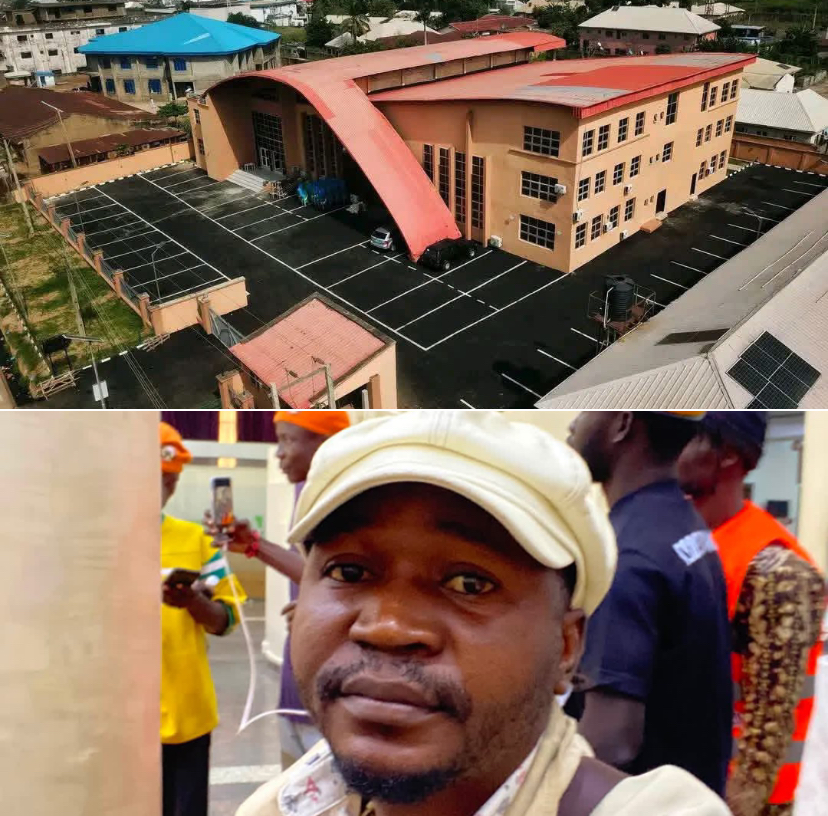
Human rights activist and community organiser, Manasseh B.P., alongside his crew and a correspondent of Chronicles Reporters Newspaper, was reportedly denied access to the main hall of an event at the Gwagwalada Town Hall, preventing the team from covering and reporting the proceedings.
According to Manasseh B.P., the team had passed through the various security checkpoints without difficulty, with police officers and personnel of the Nigeria Security and Civil Defence Corps (NSCDC) allowing them access. However, the situation reportedly changed when they attempted to enter the main hall.
Manasseh explained that a council official, alongside a bouncer stationed at the entrance, allegedly informed the team that Chronicles Reporters could not be allowed into the hall. The reported restriction came despite the team’s successful passage through the earlier security checkpoints.
He further stated that police officers attempted to intervene and calm the situation, apparently seeking to resolve the disagreement and allow the team access. However, according to his account, the council official maintained the position that Chronicles Reporters could not enter the main hall.
Following the unsuccessful intervention, Manasseh B.P. and the Chronicles Reporters correspondent had no option but to leave the premises without carrying out their intended coverage of the event.
The incident raises questions about media access, transparency and the treatment of journalists seeking to report public events at a government facility. Where access restrictions are imposed, the reasons for such decisions and whether they are applied consistently to media organisations are matters of legitimate public interest.
The reported involvement of a council official in denying access, even after security personnel had permitted the team to pass through the checkpoints, also raises questions about who authorised the restriction and the grounds on which it was imposed.
Journalists play an important role in informing the public, documenting public events and promoting accountability in governance. While event organisers and public institutions may establish reasonable security and accreditation procedures, such arrangements should be applied transparently and consistently, without arbitrary discrimination against media organisations.
As of the time of this report, the specific identity of the council official involved, the reason for the restriction and the official position of the Gwagwalada Area Council on the incident had not been established from the account provided.
Chronicles Reporters considers the incident a matter worthy of clarification and urges the relevant authorities to explain why its correspondent was allegedly denied access after passing through the security checkpoints. The council’s response, as well as any explanation from the event organisers, will be important in establishing the full circumstances surrounding the incident.
The newspaper remains committed to professional journalism, public-interest reporting and the promotion of accountability in public institutions.