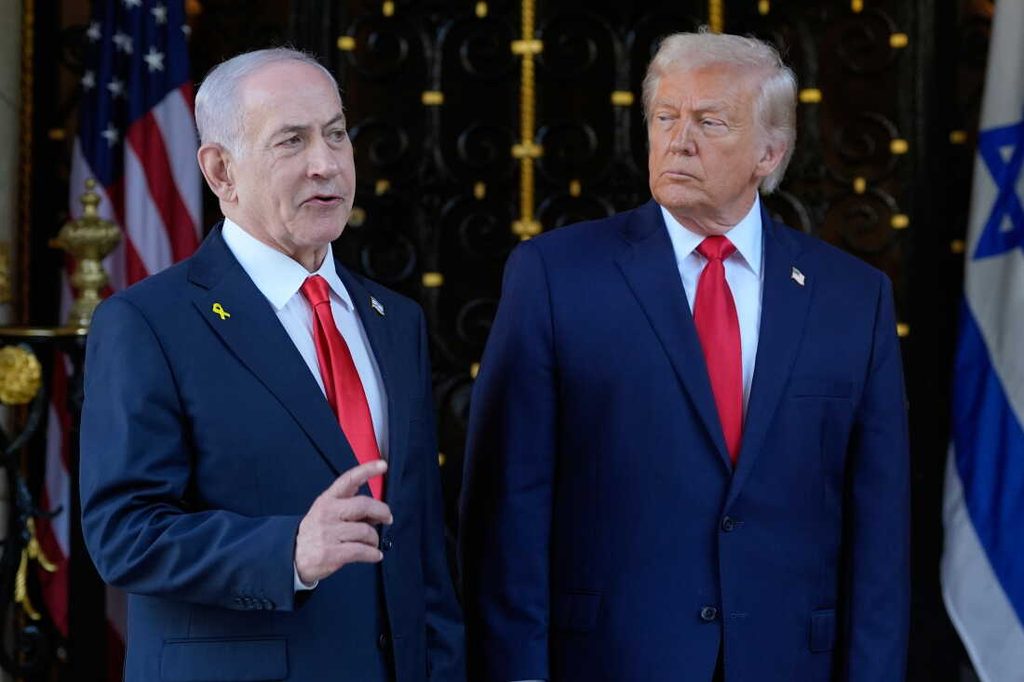
American political commentator Tucker Carlson has warned that the administration of United States President Donald Trump could be days away from launching a nuclear strike against Iran, alleging that Israeli Prime Minister Benjamin Netanyahu is exerting intense pressure on Washington to resume major military operations against Tehran.
Carlson made the claims in a lengthy post on X, arguing that the United States could be considering the use of a nuclear weapon to destroy an alleged Iranian nuclear enrichment facility beneath Pickax Mountain in central Iran.
According to Carlson, Israeli intelligence claims that the Iranian government has restarted its nuclear enrichment programme at the underground facility, which he said is protected by approximately 300 feet of solid granite.
He alleged that no conventional weapon in the American military arsenal could penetrate the mountain sufficiently to destroy the tunnels housing the suspected enrichment activities, leaving a nuclear strike as the only military option being considered.
Carlson further claimed that Netanyahu has been pushing aggressively for such an attack, alleging that the Israeli leader speaks with Trump about the possibility almost daily.
He described Netanyahu as politically desperate and argued that the Israeli prime minister’s political survival could be influencing his determination to keep the conflict with Iran going.
According to Carlson, Netanyahu would struggle to remain in office following recent election developments unless Trump intervenes directly in Israeli politics and helps broker an agreement with other political parties that would give him the required 61 seats in the Knesset, Israel’s parliament.
He claimed that losing power could expose Netanyahu to political disgrace, investigations and possible imprisonment, making his continued relationship with Trump particularly important.
Carlson also alleged that Netanyahu has been applying pressure on influential figures within the Trump administration, including United States Secretary of Defense Pete Hegseth and United States Central Command commander Brad Cooper.
He claimed that both officials oppose a negotiated settlement to the conflict and are pushing for a resumption of major military operations against Iran.
He further alleged that Secretary of State Marco Rubio and CIA Director John Ratcliffe were also following Netanyahu’s position, while claiming that Democratic Party leaders were equally opposed to a diplomatic resolution.
Carlson also made a controversial claim about former United States President Barack Obama, alleging that during a recent meeting on the conflict, Obama expressed opposition to the proposed Iran peace agreement reportedly being negotiated in Doha.
However, Carlson said America’s longstanding allies in the Middle East were increasingly frightened by the prospect of another escalation, particularly because of the economic consequences already associated with the conflict.
He claimed that Netanyahu secretly travelled to Abu Dhabi on September 27 to persuade the United Arab Emirates to join his lobbying efforts for what he described as a final military attack against Iran.
According to Carlson, the Emirati authorities rejected the proposal, with Gulf countries increasingly concerned about the devastating economic consequences of an extended conflict.
He warned that eight months of hostilities had placed Gulf economies under severe pressure while disrupting global energy and fertiliser markets, with the consequences expected to persist long after the fighting ends.
Carlson also raised concerns about the security of international oil transportation, claiming that approximately 850 supertankers are used globally to transport oil from producing countries to the rest of the world.
He alleged that 11 of the vessels were badly damaged in the Strait of Hormuz in October alone, warning that continued attacks and disruptions could push the global economy towards a depression.
He argued that a nuclear attack on Iran would dramatically worsen the situation, particularly if the weapon detonated underground or at the mountainous facility.
Carlson warned that radioactive fallout from a ground-level nuclear explosion at Pickax Mountain could contaminate the Persian Gulf and potentially threaten the water supply of approximately 100 million people across the region.
Beyond the immediate consequences for the Middle East, he warned that an American nuclear attack on Iran could trigger a wider international nuclear conflict, potentially pushing the world towards World War III.
He argued that the United States remains the only country to have used nuclear weapons in warfare and warned that another American nuclear attack would establish a dangerous precedent that other nuclear-armed countries could exploit.
Carlson claimed that Russia had already informed at least two other governments that an American nuclear strike against Iran would give Moscow justification to use nuclear weapons against Ukraine.
He further warned that tensions between India and Pakistan could escalate into a nuclear confrontation, while North Korea could also be encouraged to consider using nuclear weapons against South Korea.
According to him, the first nuclear strike could remove the restraint that has prevented nuclear-armed countries from deploying such weapons against one another, potentially triggering a global conflict with catastrophic consequences.
Carlson also alleged that the Trump administration had quietly revised America’s nuclear doctrine since February to make the first use of so-called battlefield nuclear weapons easier and more likely.
He criticised both Republicans and Democrats in Washington for allegedly failing to raise sufficient concerns about the implications of the reported changes.
The commentator further claimed that Trump could make a final decision on whether to deploy nuclear weapons against Iran by the weekend of November 7, describing the coming days as a critical period for international security.
However, Carlson said Trump was still hesitating and had been listening to Vice President JD Vance and his special envoy and close associate, Steve Witkoff, who reportedly believe that a diplomatic agreement with Iran remains possible.
He supported their position, arguing that although negotiations with Tehran would be difficult, a peaceful settlement remained preferable to another devastating military confrontation.
Carlson acknowledged that negotiations could prove complicated, particularly following the killing of Iran’s Supreme Leader, Ayatollah Ali Khamenei, and members of his family in February.
He claimed that the deaths had strengthened more radical elements within the Iranian government and complicated the country’s political decision-making process.
He also argued that decades of isolation had created significant misunderstandings between Iranian leaders and Western governments, alleging that some relatively moderate figures in Tehran were confused about how political decisions were made in the United States and its allies.
Carlson cited what he described as a widespread belief in Tehran that the United States government effectively controls Israel as an example of the mistrust and misunderstandings complicating diplomatic relations.
Nevertheless, he maintained that people who had spoken with Iranian decision-makers believed there was a consensus within the country’s leadership that further warfare would be disastrous for all sides and that reaching an agreement was worth pursuing.
In his concluding remarks, Carlson criticised the failure to consult the wider international population over decisions that could potentially determine the survival of millions of people.
He argued that hundreds of millions of people, including future generations, could face devastating consequences if Trump yielded to Netanyahu’s alleged pressure and authorised a nuclear strike against Iran.
He called on people around the world to speak out against the possibility of nuclear warfare, warning that the consequences would extend far beyond the United States, Israel and Iran.
Carlson’s claims about an imminent American nuclear strike, internal policy changes and the positions of officials have not been independently established in the material provided. The allegations should therefore be treated as his assertions rather than confirmed United States military plans.