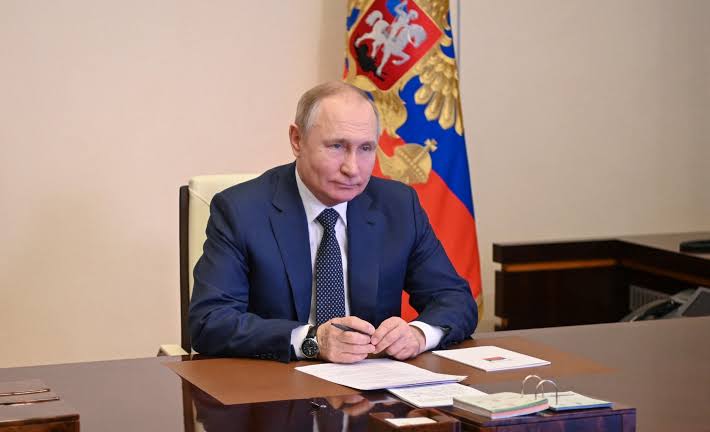
Russian President Vladimir Putin has ordered the Russian operations of Swiss food giant Nestlé and French retail giant Auchan placed under temporary administration, handing control of the businesses to a little-known Moscow company in another dramatic escalation of Russia’s intervention in the assets of Western companies that have remained in the country since the outbreak of the Ukraine war.
The move was contained in a presidential decree signed by Putin on September 17, 2026, transferring 100 per cent of the Russian subsidiaries of Auchan and Nestlé to L.E.V. Management. The same company was also placed in charge of assets belonging to other foreign-linked businesses, including Bati Logistics, FM Logistics and Le Monlid, the company associated with the Lemana PRO retail chain, formerly Leroy Merlin.
The decision effectively puts major Western commercial operations under Russian management, despite the companies retaining their broader international ownership. Russian authorities describe the arrangement as “temporary administration”, rather than an outright permanent confiscation, but the move has renewed questions over how much control foreign companies can realistically retain over their Russian investments.
The identity of the new administrator has also attracted attention.
L.E.V. Management was established in Moscow in 2024 with a registered capital of only 15,000 roubles. According to Russian business records cited by RBC, the company recorded a loss of 15,000 roubles in 2025 and lists business and management consulting among its principal activities. Its appointment to oversee substantially larger corporate operations has therefore drawn scrutiny.
The scale of the businesses involved is striking.
RBC reported that Auchan Russia had registered capital of about 16.7 billion roubles as of September 17, while Nestlé Russia had registered capital of approximately 880 million roubles. The figures underscore the considerable size of the corporate structures now placed under the temporary administrator.
For Nestlé, the development represents a significant new challenge after years of reducing its Russian presence following the 2022 invasion of Ukraine.
Reuters reported that Nestlé has six factories in Russia and employs about 7,000 people there. The company said on September 18 that it was assessing the Kremlin’s decision and considering all options to protect its rights and interests, while stressing its concern for employees and other stakeholders. Russia accounted for roughly 1 per cent of Nestlé’s global sales in more recent estimates, down substantially from its pre-war position.
Nestlé had previously cut back its Russian business, including suspending investments and advertising and withdrawing a number of products. However, it continued manufacturing and selling products it considered essential, including infant nutrition and specialised medical and pet nutrition products.
Auchan took a different approach after the invasion, choosing to maintain its Russian retail operation. The French supermarket group has continued operating its extensive Russian network, arguing that its stores serve the civilian population. Russian reporting has described the company as one of the major foreign businesses that continued operating in the country despite the war.
The latest decree is part of a wider Russian policy that has placed foreign-owned assets under state-directed administration.
Putin introduced the temporary-administration mechanism in 2023 amid escalating sanctions and the departure of numerous Western companies. Since then, the system has been used in cases involving major international corporations, including French food company Danone and Danish brewer Carlsberg.
The Kremlin has defended such measures as responses to what it considers hostile actions by Western governments and companies. But for international businesses, the system has created a stark commercial dilemma: leaving Russia can mean accepting substantial financial losses and difficult exit conditions, while staying can expose assets to increasing regulatory and political intervention.
The Nestlé and Auchan case makes that dilemma even more visible.
The companies did not simply announce their withdrawal from Russia and abandon their operations. Instead, after years of navigating sanctions, political pressure and changing Russian regulations, control of their local corporate structures has now been transferred to a Russian entity through a presidential decree.
Reuters reported that analysts see the development as potentially increasing the likelihood of asset impairments or forced disposals for affected foreign companies, particularly because compensation and the eventual fate of the assets remain uncertain.
The episode also illustrates how dramatically the business environment for Western companies in Russia has changed since 2022.
What began for many corporations as a decision between staying, scaling back or leaving has increasingly become a question of whether ownership on paper still guarantees meaningful control on the ground.
With Nestlé, Auchan and other international businesses now subject to Russian temporary-administration measures, the distinction between operating in Russia and retaining control over a Russian operation is becoming increasingly difficult to ignore.