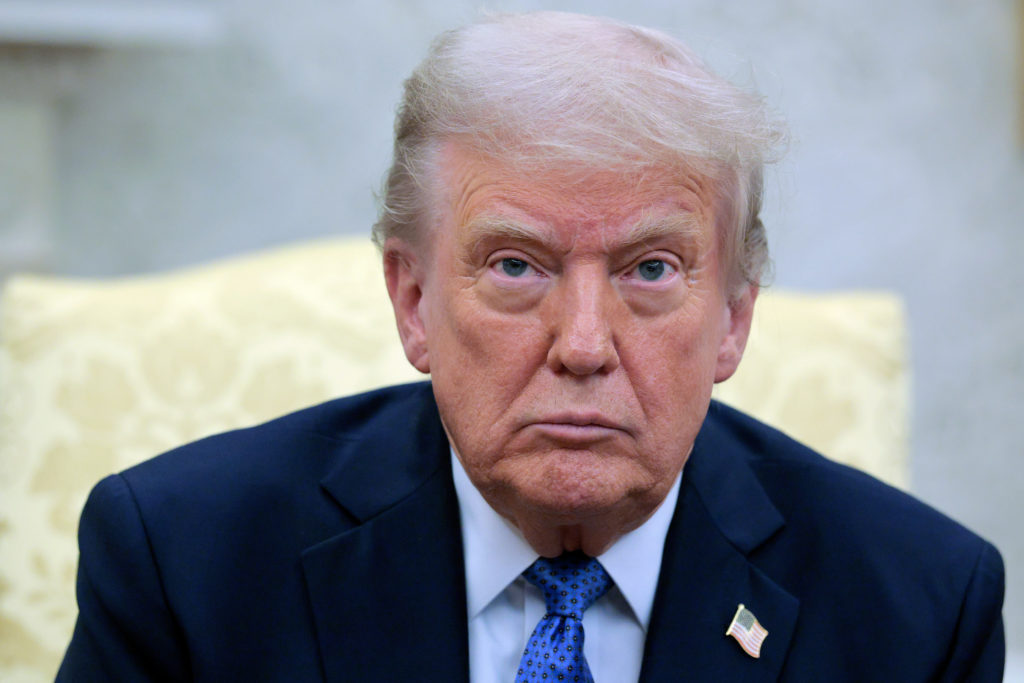
US President Donald Trump has proposed renaming the strategically important Strait of Hormuz “Trump Strait”, claiming that the vital waterway is now under the control of the United States amid escalating military confrontation with Iran.
Trump made the proposal on Wednesday in a post on his Truth Social platform, suggesting that the waterway should bear his name following the latest escalation between US forces and Iran.
“Now that we have it under U.S.A. control, should we change the name Hormuz Strait to TRUMP STRAIT??? Like America itself, it would be ‘hotter’ than ever before!” Trump wrote.
He concluded the post by thanking his followers for their attention and signing it as “President DONALD J. TRUMP.”
Trump’s proposal comes as military hostilities between the United States and Iran have intensified around the strategically significant waterway, with Washington announcing fresh strikes against Iranian targets near the Strait of Hormuz.
The US president said the strikes were carried out in response to what he described as an Iranian attempt to lay sea mines in the strait, as well as an Iranian missile attack on a US military base in Jordan.
In an earlier statement, Trump said American forces were striking Iranian targets in the vicinity of the Strait of Hormuz and warned that Iran would face an even more severe military response if it retaliated against the United States.
The development has heightened concerns over the security of the waterway and the possible consequences of further military escalation between Washington and Tehran.
The Strait of Hormuz is one of the world’s most important maritime chokepoints. It connects the Persian Gulf with the Gulf of Oman and the Arabian Sea and serves as a major maritime route for crude oil, petroleum products and liquefied natural gas exports from several major Gulf producers.
Any prolonged disruption to the waterway could therefore have significant consequences for international energy markets, shipping and global commodity prices.
According to the US Energy Information Administration, about one-fifth of global liquefied natural gas trade passes through the Strait of Hormuz, underlining its importance to the world’s energy supply chain.
The United Nations Conference on Trade and Development has also identified the waterway as one of the world’s most critical maritime chokepoints.
UNCTAD reported in March that approximately one-quarter of global seaborne oil trade passed through the strait, in addition to substantial volumes of liquefied natural gas and fertiliser.
The strategic importance of the waterway has made it a major flashpoint in the confrontation between the United States and Iran. Any attempt to restrict or disrupt shipping through the strait could create immediate pressure on global energy supplies and trigger further increases in oil and gas prices.
Trump’s proposed name change has also drawn attention because the Strait of Hormuz is internationally recognised by its existing name and is a crucial international maritime passage separating Iran from the Arabian Peninsula.
His remarks came against the backdrop of growing fears that further military action in and around the waterway could disrupt commercial shipping and expose energy infrastructure across the Gulf to increased risks.
With millions of barrels of oil and large quantities of gas moving through the region, any sustained closure or serious disruption of the Strait of Hormuz could reverberate far beyond the Middle East, affecting energy-importing countries and economies around the world.
The latest US-Iran confrontation has therefore placed the waterway at the centre of renewed geopolitical and economic concerns, while Trump’s “Trump Strait” proposal adds an unusual political dimension to an already highly volatile military crisis.