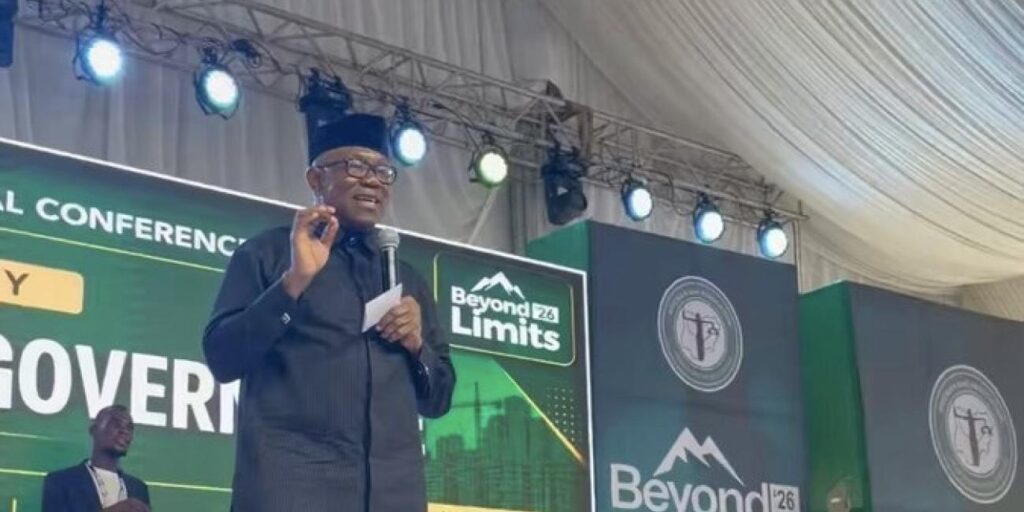
The presidential candidate of the Nigeria Democratic Congress (NDC), Peter Obi, has reaffirmed his support for the removal of fuel subsidy, insisting that alleged mismanagement of the resources recovered from the policy should not be used as justification for returning Nigeria to the subsidy regime.
Obi made the position on Monday during a panel session at the Nigerian Bar Association (NBA) Annual General Conference in Port Harcourt, Rivers State, where he argued that subsidy removal was necessary but should have been implemented alongside a clear, organised and transparent plan for deploying the resources recovered.
The former Anambra State governor said the controversy surrounding the policy should not be about whether subsidy should have been removed, but about how the government has managed the enormous resources generated or saved since its removal.
“Well, I subscribe, and I maintain that you need to remove subsidy. Mismanagement of the proceeds should not be the reason for not removing it,” Obi said.
He argued that Nigerians should have been given tangible alternatives from the resources released by the removal of subsidy, particularly as citizens continue to endure higher fuel prices, increased transportation costs and a broader rise in the cost of living.
“What we should have done is that when we remove subsidy, we would have given the people an alternative usage for the subsidy. What we have today is that that removal and attendant resources being recovered are also being mismanaged and stolen,” he said.
Obi maintained that the resources should have been deliberately invested in critical sectors capable of improving the living conditions of Nigerians and strengthening the country’s economy.
He specifically identified healthcare, education and infrastructure as areas that should have received substantial investment from the funds recovered through subsidy removal.
According to Obi, the Federal Government’s claim that about N16 trillion has been received from the subsidy removal process raises serious questions about how such a huge amount of public resources has been utilised.
“For example, we have received, according to them [the Federal Government], N16trillion. I said it before; go to my manifesto and see where I said I would remove subsidy.
“We’ll do it in an organised manner, and whatever we recover will be invested appropriately, and I’ll just give you an example because we have no time,” he said.
The former governor stressed that the fundamental problem was not the removal of subsidy itself but the manner in which the resulting resources were being handled.
“So it’s what you use the money for that is the problem,” Obi told the gathering.
He further argued that if government did not have immediate and properly designed projects capable of absorbing the recovered funds, the resources could have been saved instead of being spent without sufficient transparency or accountability.
Obi cited Nigeria’s sovereign wealth fund as an example, arguing that the country could have built significant financial reserves by deliberately saving the resources generated from subsidy removal.
“We will use the money in an organised manner, or you save it. If they had saved the money and decided to do like any other country, we would have had $10billion added to the sovereign wealth fund, which, if you add it today, will be getting about $10billion every month, which we can use for a purpose,” he said.
His comments come amid sustained public anger and political debate over the impact of fuel subsidy removal, which has been blamed by many Nigerians for worsening transportation costs, inflation and the general cost of living.
While critics of subsidy removal have argued that the policy has placed an unbearable burden on citizens, Obi maintained that reversing the policy would not address the underlying problem.
Instead, he argued that the government should be held accountable for how the resources released by subsidy removal are being managed.
His position could further intensify the political debate over fuel subsidy ahead of the 2027 general elections, with political parties and presidential aspirants expected to face increasing pressure to explain whether they would retain, reverse or restructure the policy.
For Obi, however, the issue is not simply about removing or retaining subsidy, but ensuring that every resource recovered from such a major economic policy is transparently managed and converted into tangible benefits for Nigerians.